Mechanics of Firearm Operation
Internal Ballistics and Ignition
From Strike to Spark
The pull of the trigger ends one mechanical process and begins another. The firing pin or striker, driven forward by a spring, carries kinetic energy. Its destination is the primer, a small, pressure-sensitive explosive cup set in the base of the cartridge. This is where the firearm's action transforms from purely mechanical to chemical.
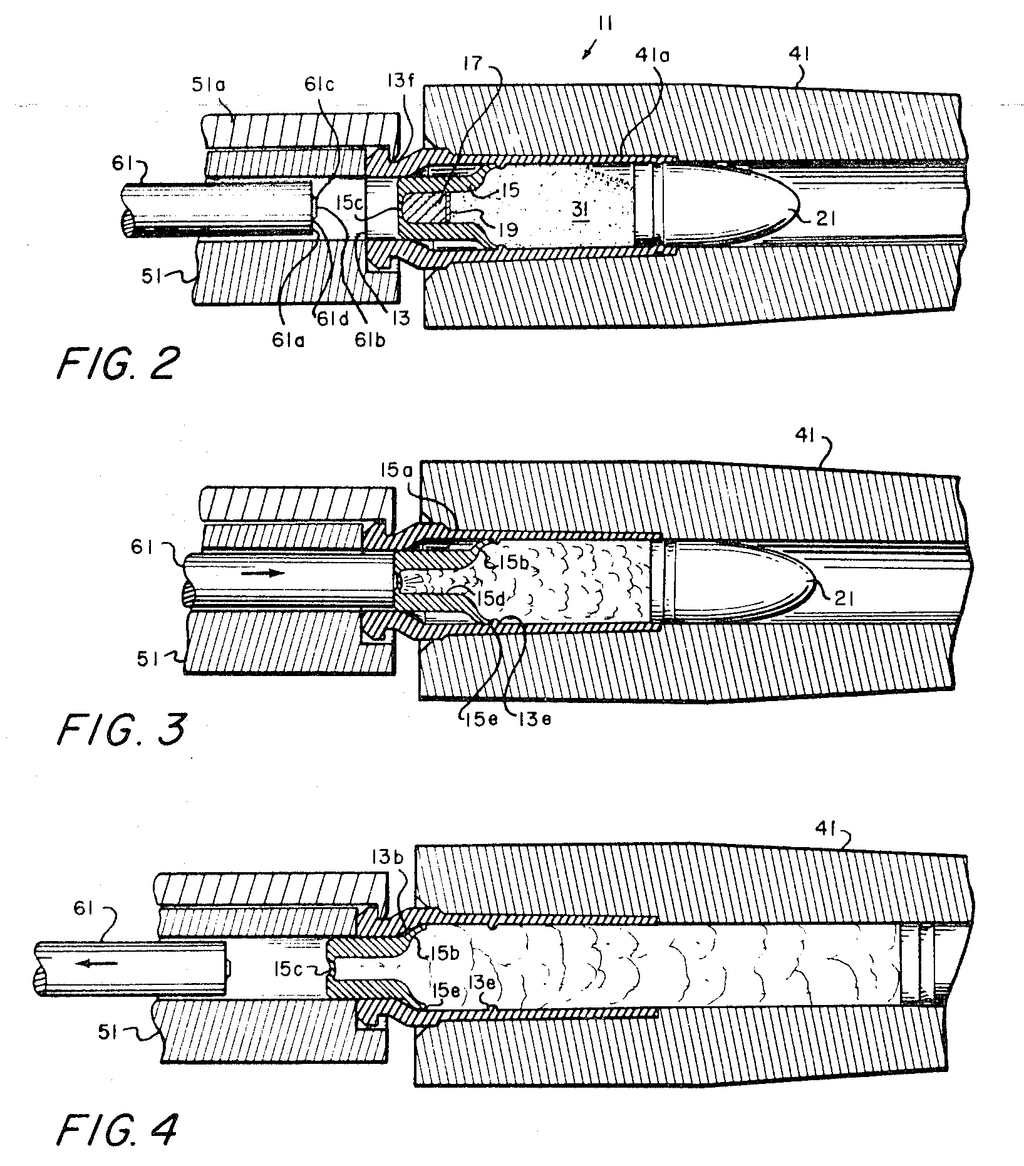
The firing pin's focused impact crushes the primer compound against an internal anvil. This sharp blow is enough to detonate the highly sensitive material, typically a compound like lead styphnate mixed with other chemicals. The result is a tiny, intense jet of flame that shoots through a small hole, called the flash hole, into the main body of the cartridge case.
The Main Event
That jet of flame ignites the main propellant charge. Modern firearm propellant, often called smokeless powder, isn't a powder in the conventional sense. It consists of small granules of nitrocellulose and sometimes nitroglycerin. Crucially, this propellant is designed to deflagrate—to burn extremely quickly—rather than detonate. An explosion is too violent and unpredictable. A controlled burn is what's needed.
Detonation is a supersonic shockwave. Deflagration is a subsonic burn front. For a firearm to work safely, the propellant must deflagrate.
As the propellant burns, it releases a massive volume of hot, high-pressure gas in a fraction of a second. This is the heart of the internal ballistics cycle: converting the stored chemical energy of the propellant into the thermal and kinetic energy of the gas. The shape and size of the propellant grains are carefully engineered to control the burn rate, which in turn shapes the pressure curve inside the chamber.
This pressure exerts force equally in all directions. It pushes forward on the base of the projectile, backward on the breech face, and outward against the walls of the cartridge case. This outward pressure is essential. It forces the malleable brass case to expand and press tightly against the steel walls of the chamber. This process, called , creates a near-perfect gas seal, preventing the dangerous high-pressure gases from leaking back into the action and toward the shooter.
Propulsion and Cycling
The force on the projectile's base is what matters for propulsion. Governed by Newton's second law (), this immense pressure accelerates the projectile from a standstill to over a thousand feet per second, all within the confines of the barrel. As the bullet moves forward, the volume behind it increases, causing the pressure to drop off from its peak, as seen in the pressure curve.
In the case of an engine, the expansion of gases following the ignition of fuel in the combustion chamber exerts a linear force as it attempts to push the piston down the cylinder.
At the same time, the rearward pressure on the breech face provides the force needed to cycle the action in semi-automatic and automatic weapons. Whether through direct impingement, a short-stroke piston, or simple blowback, this repurposed energy is what ejects the spent casing and chambers a new round. The entire violent, controlled process, from the firing pin's strike to the bullet's exit, is over in just a few milliseconds.
Time to check your understanding of the process.
What is the primary function of the primer in a firearm cartridge?
The process where the malleable cartridge case expands under pressure to seal the chamber is known as ______.
This rapid sequence of events forms the foundation of how every modern firearm operates, turning a small mechanical motion into powerful projectile motion.