Mechanics of Acceleration and Motion
Vector Velocity Foundations
More Than Just Speed
You already know that speed tells you how fast something is moving. A car traveling at 60 miles per hour has a speed. But if you want to know where it will end up, you need more information. You need its direction. Is it going 60 mph north or 60 mph east? This combination of magnitude (speed) and direction is called velocity.
In physics, quantities are classified as either scalars or vectors. A scalar is a quantity that only has magnitude. Your age, the temperature outside, or the price of a coffee are all scalars. They're just numbers. A vector, on the other hand, has both magnitude and direction. Velocity is a classic example. So is force – a push has both a strength and a direction.
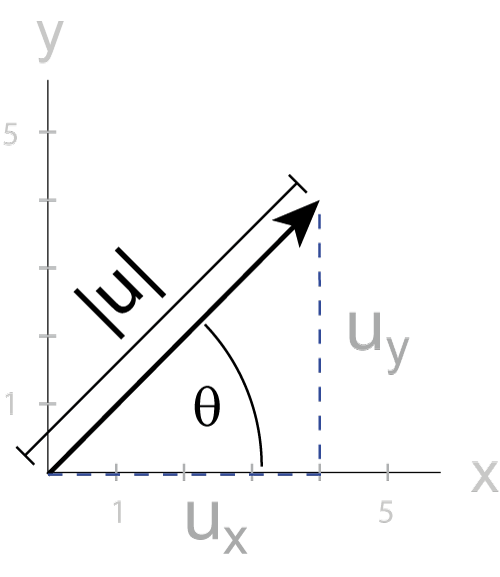
vector
noun
A quantity having direction as well as magnitude, especially as determining the position of one point in space relative to another.
Because velocity is a vector, we represent it with an arrow. The length of the arrow shows the speed, and the direction it points shows the direction of motion. Two objects can have the same speed but different velocities if they are moving in different directions.
Changing Direction Means Changing Velocity
This vector nature of velocity has a crucial implication. An object's velocity can change even if its speed does not. Imagine a car driving around a circular track at a constant 50 mph. The speedometer reading never changes, so its speed is constant.
However, its velocity is constantly changing. At the top of the track, it's moving east. At the bottom, it's moving west. Since its direction of motion is changing, its velocity vector is also changing from one moment to the next. This change in velocity is the foundation for understanding acceleration.
To find the change in velocity, we use vector subtraction. The change in velocity, denoted as , is the final velocity minus the initial velocity: . Remember that subtracting a vector is the same as adding its negative. So, we flip the initial velocity vector and add it to the final one tip-to-tail.
Instant vs. Average
Just as we can talk about your speed at a specific moment, we can also talk about your instantaneous velocity. This is the velocity of an object at a single point in time. It’s what the car's speedometer and compass would show at one exact instant.
Average velocity, on the other hand, describes the motion over a longer period. It is defined as the total displacement (the straight-line change in position) divided by the total time elapsed. A runner who completes a 400m lap on a circular track in 50 seconds has a final displacement of zero because they end up where they started. Their average speed is $400m / 50s = 8 m/s$, but their average velocity is zero! This highlights a key difference that arises from displacement being a vector.
To get the instantaneous velocity, we need to shrink the time interval, , until it's infinitesimally small. In calculus, this is expressed as the derivative of the position vector, , with respect to time.
Breaking It Down
Working with vectors directly can be tricky. It's often easier to break them down into their components. Using a Cartesian coordinate system (with x and y axes), we can express any 2D velocity vector as the sum of two separate, perpendicular vectors: one along the x-axis () and one along the y-axis ().
The velocity vector can be written in terms of its components and the unit vectors and , which point along the positive x and y axes, respectively. This simplifies calculations, as we can analyze the motion in each direction independently.
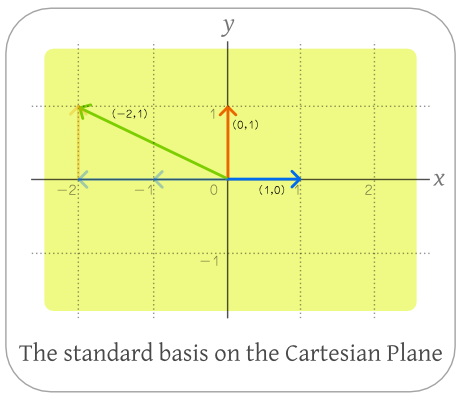
This component-based approach is incredibly powerful. To find the change in velocity, you simply find the change in each component separately. It turns a complex geometry problem into straightforward arithmetic. Understanding velocity as a vector with independent components is the key to analyzing everything from projectile motion to planetary orbits.
Which of the following is a vector quantity?
A satellite orbits the Earth at a constant speed of 17,000 mph. Is its velocity constant?
Grasping that velocity includes direction is a fundamental step. It changes how we look at motion, paving the way to understand why things speed up, slow down, or turn.