Mechanics of Absolute Power
Authoritarian Power Structures
Classifying Control
Not all dictatorships are created equal. While they all centralize power, the way they structure that power varies significantly. These structures determine how a leader rules, who they rely on, and how vulnerable they are to being overthrown. We can sort most authoritarian regimes into three main categories.
Personalist regimes revolve around a single individual. The leader's authority is based on personal charisma, patronage networks, and fear. Institutions are weak and exist only to serve the ruler. Succession is often chaotic, as power is tied directly to one person.
Single-party regimes place power within a dominant political party. The party is the core institution for recruiting elites, making policy, and controlling the state. The leader is often the head of the party, but their power is derived from and constrained by it. These regimes tend to be more durable because the party provides a stable structure for succession and power-sharing.
Military regimes are governed by the armed forces, usually after a coup d'état. A council of high-ranking officers, known as a junta, typically holds power. Their primary concerns are often national security and order, and they see themselves as guardians of the state against corrupt civilian politicians.
The Dictator's Dilemma
Every authoritarian ruler faces a fundamental problem of trust. To stay in power, they need information about potential threats, the loyalty of their inner circle, and the mood of the public. Yet, the very fear they use to rule prevents them from getting reliable information. Subordinates are terrified to deliver bad news, so they only report successes. This creates a dangerous feedback loop where the leader becomes increasingly isolated and reliant on flawed data. This is the core of the Dictator's Dilemma—the more absolute the power, the less the powerful person knows.
This information asymmetry is a constant source of insecurity. The dictator can never be sure who is truly loyal and who is just pretending, waiting for a moment of weakness. To counter this, they often create overlapping and competing security agencies that spy on each other as much as they spy on the population. This constant paranoia drives much of the institutional design in authoritarian states.
The Illusion of Democracy
Many dictatorships maintain institutions that look democratic on the surface, such as legislatures, elections, and courts. This isn't because they are transitioning to democracy. These institutions are strategically repurposed to help the regime survive. They serve as sophisticated tools of control, not as channels for popular will.
A parliament in an autocracy, for instance, isn't a forum for debate but a club for elites. It provides a way for the dictator to co-opt potential rivals by giving them a title, a salary, and a stake in the system. This makes them less likely to challenge the regime. Similarly, elections are held not to choose a leader, but to demonstrate overwhelming power, gather information on dissent, and provide a veneer of legitimacy to the outside world.
| Institution | Democratic Function | Authoritarian Function |
|---|---|---|
| Legislature | Represent citizens, pass laws | Co-opt elites, distribute patronage |
| Judiciary | Uphold rule of law, check power | Signal credible commitment, legitimize decrees |
| Elections | Ensure accountability, select leaders | Demonstrate dominance, gather information |
| Political Parties | Aggregate interests, compete for power | Control society, manage elite promotions |
Even courts can be useful. While they won't protect citizens from the state, they might be allowed to fairly enforce contracts between businesses. This creates a to investors that their assets won't be arbitrarily seized, which helps attract foreign capital. The key is that these institutions are completely subordinate to the executive. They exist at the leader's discretion and can be ignored or dissolved at any time. Their purpose is to manage the —the small group of essential supporters the leader relies on to maintain power.
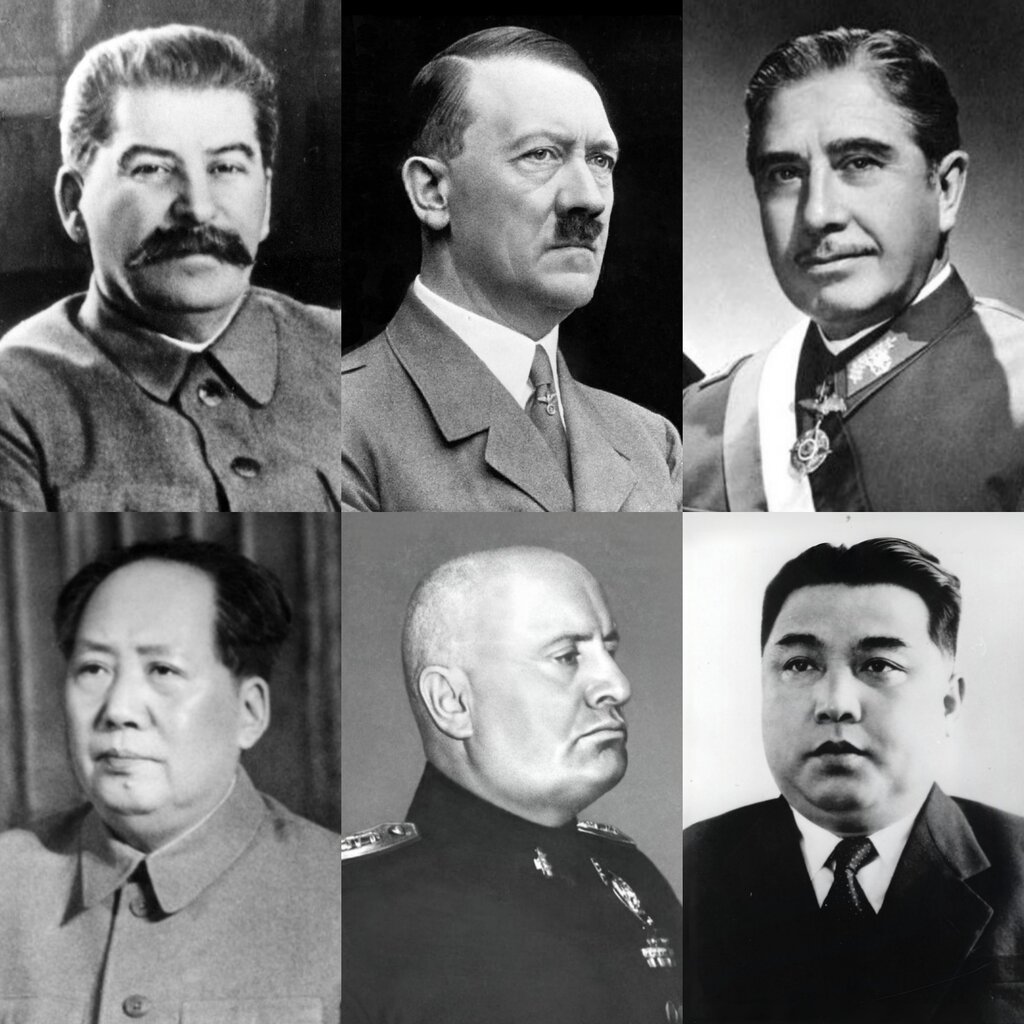
Understanding these institutional arrangements is key. It helps us see past the caricature of a single madman ruling by whim and instead analyze dictatorships as complex systems designed with a single goal in mind: keeping the leader in power.
Ready to test your knowledge?
What is the core problem described by the "Dictator's Dilemma"?
According to the text, why would an authoritarian regime hold elections if the outcome is predetermined?
By dissecting these frameworks, we can better understand why some regimes are brittle and collapse suddenly, while others prove remarkably resilient.