Mechanics and Risks of Debt Monetization
Open Market Mechanics
The Central Bank's Toolkit
Central banks, like the U.S. Federal Reserve, don't just print money. Their primary method for influencing the economy is through Open Market Operations, or OMOs. This is the day-to-day work of managing the money supply by buying and selling government securities, such as Treasury bonds. It’s a subtle but powerful mechanism that directly affects the amount of money available for banks to lend.
Open market operations take place when the central bank sells or buys U.S. Treasury securities in order to influence the quantity of bank reserves and the level of interest rates.
An important distinction here is where these transactions happen. A central bank doesn't buy bonds directly from the government when they are first issued—that would be the primary market and would be a direct monetization of government debt. Instead, it operates in the secondary market, buying securities from and selling them to commercial banks and other financial institutions that have already purchased them.
Expanding the Balance Sheet
When a central bank decides to increase the money supply, it goes into the secondary market and buys government bonds from a commercial bank. This transaction has a dual effect on the central bank's balance sheet. The bonds it just bought are now an asset. To pay for them, the central bank creates new money in the form of reserves, which it credits to the commercial bank's account held at the central bank. This new liability on the central bank's balance sheet—the reserves—is a new asset for the commercial bank.
The result is that the commercial bank has swapped a less liquid asset (bonds) for a highly liquid one (reserves). With more reserves, the bank can now lend more money to businesses and consumers, expanding the overall money supply in the economy.
This process—buying assets to create new bank reserves—is the fundamental mechanic of asset-side balance sheet expansion for a central bank.
From OMOs to QE
The primary goal of these operations is to influence short-term interest rates. When the central bank buys bonds, it increases the demand for them, which pushes their price up and their yield (interest rate) down. This helps steer the federal funds rate—the rate at which banks lend to each other overnight—toward the target set by the (FOMC).
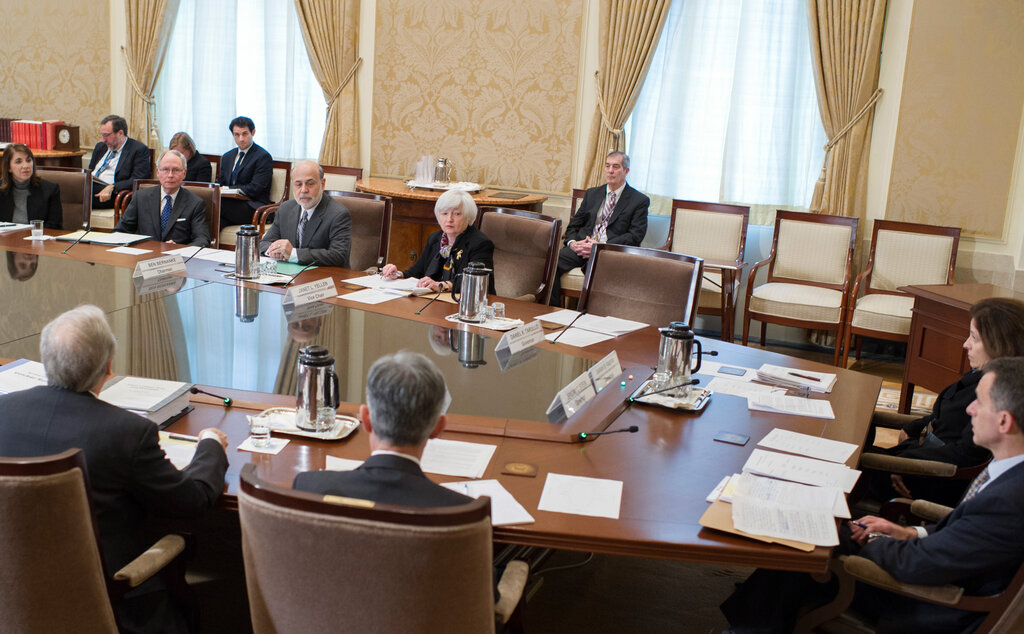
In normal times, these operations can be temporary, using repurchase agreements (repos) to inject or withdraw reserves for short periods. However, during times of economic stress, central banks may turn to large-scale, permanent asset purchases. This is widely known as , or QE.
Under QE, a central bank commits to buying a large, predetermined amount of bonds over a period of time. This significantly expands its balance sheet and floods the banking system with reserves. While technically operating in the secondary market, the scale and intent of QE move it closer to debt monetization, as it effectively absorbs a large portion of government debt issuance, keeping interest rates low for government borrowing.
Let's check your understanding of these mechanics.
What is the primary method central banks use for the day-to-day management of the money supply?
Where do central banks conduct Open Market Operations?
By understanding the nuts and bolts of open market operations, we can see how standard monetary policy can evolve into large-scale interventions that blur the line with direct government financing.