Mechanical Industry 2025 Strategic Analysis
Macroeconomic Outlook 2025
A World of Many Poles
The global stage for the mechanical industry is no longer dominated by a single script. We're living in an era of unbalanced multipolarity—a landscape with several centers of economic and political power, primarily the US, China, and an increasingly influential Global South. This shift fundamentally changes the rules for industrial demand. The once-predictable flows of goods and capital are now being rerouted by national interests and strategic competition. For manufacturers of mechanical hardware, this means navigating a more complex and fragmented world where supply chains are not just about efficiency, but also about geopolitical resilience.
Tariffs and the Tech Race
The most direct consequence of this new era is the rise of protectionist trade policies. Strategies like America First have led to increased tariffs, which act as a tax on imported goods. When a tariff is placed on a component like a specialized gear or a motor imported from another country, the cost to the US-based manufacturer who needs that part goes up. This ripples through the entire production process. The company must either absorb the higher cost, cutting into its profit margins, or pass it on to customers, making its final product more expensive and less competitive.
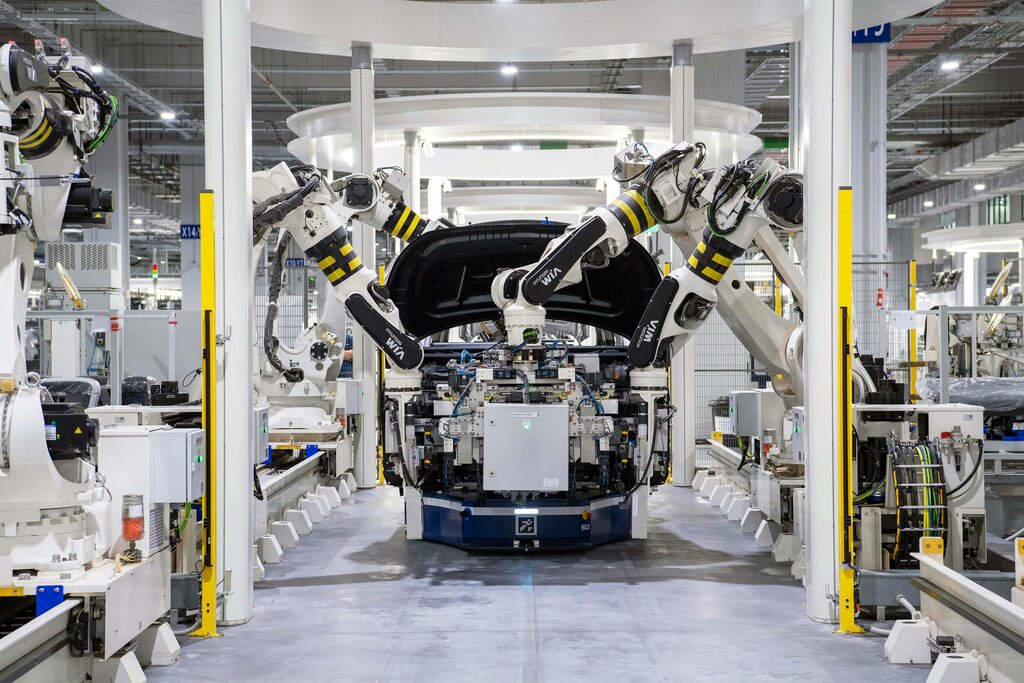
This is compounded by the intense technological race, especially between the US and China. Both nations are pushing for dominance in advanced manufacturing, robotics, and AI. This competition fuels innovation but also creates friction. For mechanical hardware producers, it means pressure to align with national strategic goals and navigate restrictions on technology transfer. A machine part isn't just a piece of metal anymore; it's a piece in a much larger geopolitical puzzle.
The High Cost of Upgrading
Beyond trade politics, the simple cost of money is reshaping the industry. Decisions to invest in large-scale industrial machinery—known as CAPEX—are highly sensitive to interest rates and inflation. When central banks raise interest rates to combat inflation, it becomes more expensive for companies to borrow money. A multi-million dollar plan to upgrade a factory floor with new robotic arms or CNC machines suddenly looks much less appealing when the loan to finance it comes with a higher interest rate.
Higher interest rates increase the hurdle for new investment. A project that was profitable at a 2% interest rate might be a money-loser at 5%.
This creates a difficult trade-off. Delaying CAPEX might save money in the short term, but it risks falling behind more technologically advanced competitors. Companies are forced to weigh the immediate cost of capital against the long-term price of obsolescence. This dynamic is a key macroeconomic indicator for forecasting the health of the mechanical sector.
Regional Hotspots
The impact of these global forces varies significantly by region. Asia, led by China, remains the powerhouse of industrial production. China alone accounts for over half of the global market for industrial robots, a clear indicator of its manufacturing scale and ambition. The region benefits from massive domestic demand and established supply chains, though it faces headwinds from US tariffs and a slowing property market.
In North America, the trend is toward reshoring and building regional resilience. Spurred by supply chain vulnerabilities exposed during the pandemic and geopolitical tensions, there is a push to bring manufacturing back home. This creates demand for new factories and machinery, a bright spot for the domestic mechanical industry, but it comes with higher labor costs and the challenge of rebuilding a skilled workforce.
Europe sits somewhere in the middle. Its advanced manufacturing sector, particularly in Germany, is a global leader. However, it faces pressure from high energy costs, regulatory burdens, and stiff competition from both the US and Asia. European firms must balance their legacy of quality engineering with the need for agility in a rapidly changing global market.
| Region | Key Driver | Major Headwind |
|---|---|---|
| North America | Reshoring & Regional Supply Chains | High Labor Costs & Interest Rates |
| Asia | Massive Domestic Demand (esp. China) | US-China Trade Friction & Slowing Growth |
| Europe | High-End Advanced Manufacturing | High Energy Costs & Regulatory Hurdles |
Understanding these macroeconomic drivers is the first step in building a sound industrial strategy for 2025. It's no longer enough to build a better machine; you have to build it for a world that is constantly being reshaped by forces far beyond the factory floor.
The term "unbalanced multipolarity" in the context of the global mechanical industry primarily describes a landscape with:
When a central bank raises interest rates to fight inflation, what is the most likely immediate effect on a company's plan for a large-scale CAPEX project, like upgrading a factory with new robotics?