Measurement Theory for Latent Systems
Introduction to Latent Variables
Measuring the Unmeasurable
How would you measure happiness? You can't put a ruler to it or weigh it on a scale. The same goes for concepts like intelligence, brand loyalty, or political stability. These are things we know exist and have real effects on the world, but we can't observe them directly. They are hidden, or latent, lurking beneath the surface of the data we can collect.
Latent Variable
noun
A variable that cannot be directly observed and must be inferred from other variables that are observed and measured.
Think about a doctor diagnosing an illness. They can't see the 'illness' itself. Instead, they observe symptoms: a fever, a cough, a particular reading on a blood test. The illness is the latent variable, and the symptoms are the observed variables. The doctor uses the pattern of symptoms to infer the underlying condition.
In economics and social science, we do the same thing. An economist can't directly measure 'consumer confidence'. But they can measure things like spending habits, survey responses about future plans, and borrowing rates. By combining these observable pieces of data, they can build a picture of the unobservable concept of confidence.
Latent variables are the crucial concepts we talk about all the time but can't point to with a single measurement.
Why Bother with the Unseen?
Ignoring latent variables would mean ignoring some of the most powerful drivers of human behavior. Imagine trying to understand the stock market without considering 'investor sentiment', or studying educational outcomes without a concept of 'socioeconomic status'. Our understanding would be shallow and our predictions would often fail. Latent variables allow us to model the complex, abstract reality of social and economic systems.
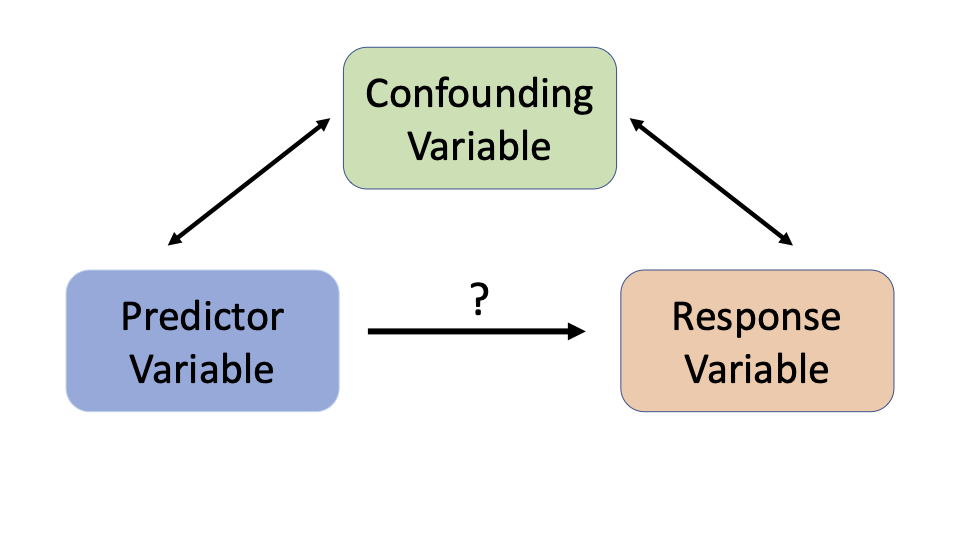
These hidden factors are what connect various observable behaviors. A person's performance on a math test, a vocabulary quiz, and a logic puzzle might seem separate. But the latent variable of 'general intelligence' helps explain why someone who does well on one often does well on the others. It's the underlying construct that influences the visible outcomes.
The Challenge of Inference
Of course, measuring something you can't see is tricky. The biggest challenge is making sure your observable indicators are actually good reflections of the latent variable. If you want to measure 'job satisfaction', is asking about salary enough? Probably not. You'd also want to ask about work-life balance, relationships with coworkers, and feelings of accomplishment. Choosing the right indicators is crucial.
Researchers must carefully design their studies to capture these concepts. They often use multiple indicators and look for consistency among them. If several different questions all point to the same underlying level of 'job satisfaction', we can be more confident in our measurement. This process combines theory about what 'job satisfaction' is with statistical methods to test if the data fits that theory.
By using multiple, carefully chosen indicators, we can triangulate the position of the hidden variable we care about. This allows social scientists and economists to bring abstract but essential concepts into their models, giving us a richer and more accurate understanding of the world.
Which of the following best defines a latent variable?
A sociologist wants to measure the latent variable 'community engagement'. Which of the following would be an appropriate observable indicator to use?
Understanding latent variables is a key step in seeing how researchers model the complexities of our social and economic lives.