MBA Product Management Networking
Understanding Product Management
What Is Product Management?
Product management is the art and science of guiding a product's success from its initial idea to its launch and beyond. It sits at the intersection of business, technology, and user experience. A product manager (PM) is responsible for defining the 'why,' 'what,' and 'when' of the product that the engineering team builds.
Product management is the process of guiding a product from concept to market success.
Think of a product manager as the conductor of an orchestra. The conductor doesn't play every instrument, but they have a deep understanding of how each one contributes to the overall piece. They set the tempo, guide the musicians, and ensure everyone is playing in harmony to create a beautiful symphony. Similarly, a PM doesn't write the code or design the interfaces, but they orchestrate the efforts of engineering, design, marketing, and sales to build a successful product.
Core Responsibilities
A product manager's role is dynamic, but it generally revolves around a few key areas. They are the voice of the customer inside the company and are passionate about solving user problems.
Their responsibilities include:
- Setting the Vision: The PM defines the long-term vision for the product. They ask the big questions: Who are our users? What problems are we solving for them? How does this product align with our company's overall strategy?
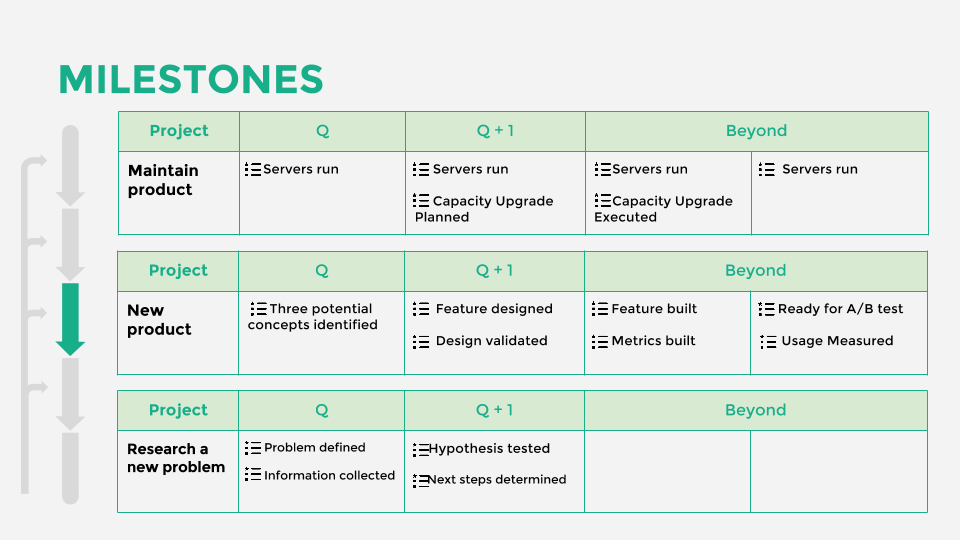
- Creating the Roadmap: This is a high-level plan that outlines how the product will evolve over time. The PM prioritizes features and initiatives, making tough decisions about what to build now, what to build next, and what not to build at all.
- Gathering Requirements: They work with customers, data analysts, and internal stakeholders to understand needs and translate them into clear requirements for the design and engineering teams.
- Leading the Team: Product managers lead through influence, not authority. They align the cross-functional team around the product vision and ensure everyone is moving in the same direction.
Essential Skills
Successful product managers blend hard and soft skills. While the exact mix can vary by company and product, a few are universally critical.
The most important skill is communication. You must be able to articulate the product's vision and value to executives, engineers, marketers, and customers, tailoring your message for each audience.
Other key skills include:
- Strategic Thinking: The ability to see the big picture, understand market trends, and make decisions that support long-term goals.
- User Empathy: A genuine curiosity about users and a deep desire to understand their motivations, pain points, and behaviors.
- Data Fluency: Comfort with metrics and analytics. PMs use data to identify opportunities, measure success, and make informed decisions, moving beyond simple intuition.
- Technical Literacy: You don't need to be an engineer, but you must understand the fundamentals of how your product is built. This allows for credible conversations with the development team about feasibility and trade-offs.
The MBA Advantage
An MBA provides a powerful foundation for a career in product management. The curriculum is uniquely suited to developing the business and leadership skills that are essential for the role. Your training in finance, marketing, and strategy provides the business context that many technically-focused candidates lack.
| MBA Skill | Product Management Application |
|---|---|
| Financial Modeling | Building business cases, forecasting revenue, assessing profitability. |
| Marketing Strategy | Defining target markets, positioning, and go-to-market plans. |
| Competitive Analysis | Using frameworks like Porter's Five Forces to understand the landscape. |
| Stakeholder Management | Aligning diverse groups (executives, sales, legal) around a single vision. |
| Leadership & Influence | Leading cross-functional teams where you have no direct authority. |
By combining this business acumen with a deep understanding of technology and user needs, MBA graduates can become highly effective product leaders who drive innovation and deliver significant business value.
Ready to test your knowledge?
Product management is often described as the intersection of which three key areas?
A product manager's primary role in relation to the engineering team is to write the code for the most critical features.
This foundation sets the stage for understanding how to build products that customers love and that achieve business goals.