MBA Business Fundamentals
Financial Accounting
The Language of Business
Financial accounting is how a company tells its story in numbers. It’s a standardized way to report on financial performance, mainly for people outside the company, like investors, lenders, and regulators. The goal is to create a clear, consistent picture of a company's financial health.
Think of it as a common language. Just as grammar rules help us understand sentences, accounting principles ensure that financial reports are understandable and comparable. These reports, called financial statements, are the final product of the accounting process.
Recording Transactions
At the heart of all accounting is a simple, powerful idea: the accounting equation. It states that everything a company owns (its assets) must be equal to the claims against those assets. There are two types of claims: what it owes to others (liabilities) and what the owners have invested (equity).
This equation must always be in balance. Let's break down the parts:
- Assets: Resources the company owns that have future economic value. This includes cash, equipment, inventory, and buildings.
- Liabilities: The company's debts or obligations to others. Think of loans from a bank or bills from suppliers.
- Equity: The owners' stake in the company. It's the residual value after liabilities are subtracted from assets ().
Imagine you start a food truck. You buy the truck for 💲50,000. You paid 💲10,000 of your own money and took out a 💲40,000 loan. Your asset is the 💲50,000 truck. Your liability is the 💲40,000 loan. Your equity is your 💲10,000 contribution. The equation balances: 💲50,000 = 💲40,000 + 💲10,000.
Every time a business transaction occurs, it's recorded in a way that keeps this equation balanced. This system, known as double-entry bookkeeping, ensures that for every change on one side of the equation, there is an equal and opposite change.
The Three Key Statements
The accounting process culminates in three primary financial statements. Each one provides a different lens through which to view the company's performance and position.
- The Balance Sheet
- The Income Statement
- The Statement of Cash Flows
Together, they provide a comprehensive overview of a company's financial story. It's rare to analyze one without looking at the other two.
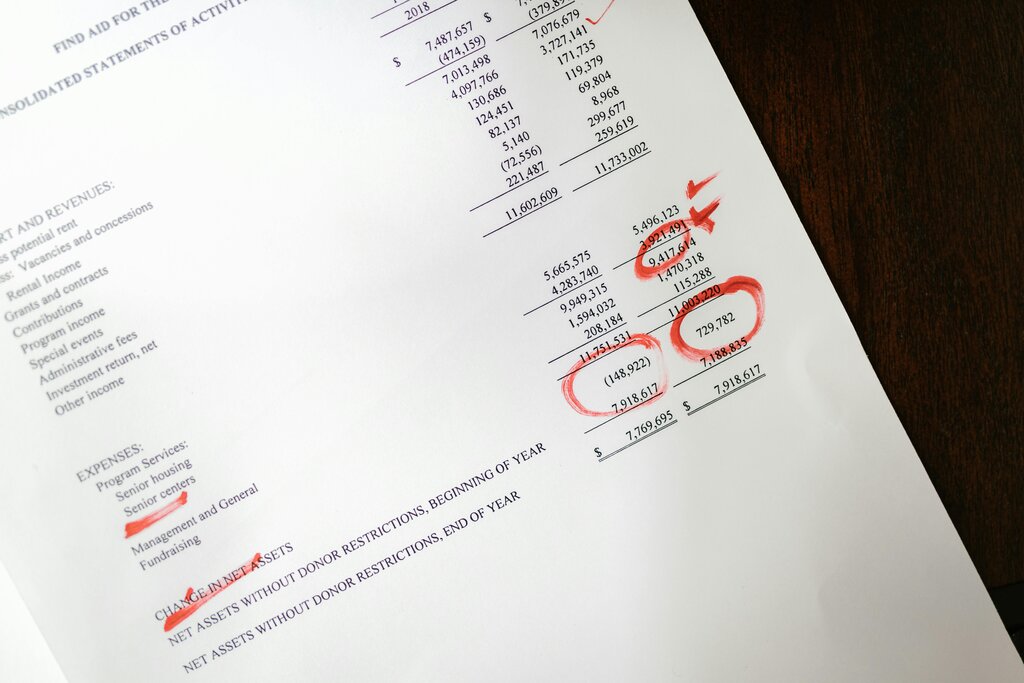
Let’s look at what each statement tells us.
One critical step to understanding effective financial statement analysis is gaining in-depth knowledge of the balance sheet, income statement, and cash flow statement.
A Financial Snapshot
The Balance Sheet is a snapshot of a company's financial position at a single point in time, like the last day of a quarter or a year. It's a direct expression of the accounting equation, showing exactly what a company owns and owes.
It gets its name because the two sides must balance. The assets on one side must equal the sum of liabilities and equity on the other.
The Income Statement, sometimes called the Profit and Loss (P&L) statement, shows a company's financial performance over a period of time, such as a month or a year. It summarizes revenues and expenses to arrive at the bottom line: net income.
Here’s the basic formula:
If revenues are greater than expenses, the company has a profit. If expenses exceed revenues, it has a loss. This statement answers the fundamental question, "Is the company profitable?"
The Statement of Cash Flows tracks the movement of cash into and out of the company over the same period as the income statement. It's crucial because profitability doesn't always equal cash. A company can be profitable on paper but still run out of money.
This statement breaks down cash movements into three activities:
- Operating: Cash from the main business activities, like sales and paying employees.
- Investing: Cash used to buy or sell long-term assets, like equipment or buildings.
- Financing: Cash from investors or banks, or cash paid out to them (like dividends or loan repayments).
Putting It All Together
These three statements are interconnected. The net income from the income statement flows into the equity section of the balance sheet (as retained earnings). The cash balance on the balance sheet is the ending cash balance from the statement of cash flows.
Analyzing these documents allows you to assess a company's financial health from multiple angles. Is it profitable? Can it pay its bills? Is it funding its growth through debt or through its own operations?
By learning to read and interpret these statements, you gain the ability to understand the financial story of any organization. It's a foundational skill for making smarter business decisions, whether you're an entrepreneur, a manager, or an investor.
Ready to check your understanding? This quiz will cover the core principles we've discussed.
What is the primary purpose of financial accounting?
Which of the following correctly represents the fundamental accounting equation?
Mastering these basics is the first step toward financial literacy. It provides the framework for understanding how a business truly operates.