Max Stirner's Egoism
Introduction to Max Stirner
The Forgotten Radical
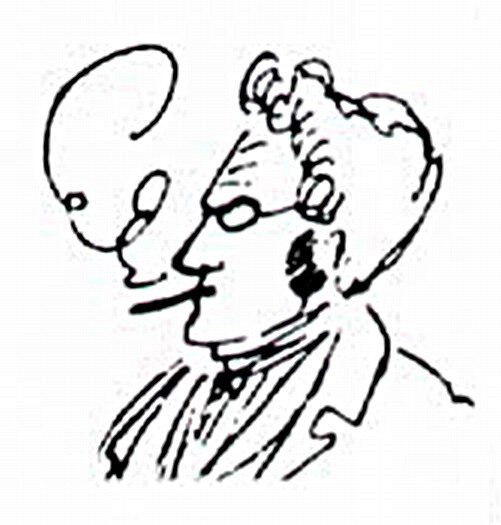
In the whirlwind of 19th-century German philosophy, one figure stands out for his sheer audacity. His name was Johann Kaspar Schmidt, but he is known to the world by his pseudonym, Max Stirner. Unlike many of his contemporaries, Stirner didn't lead a dramatic public life. He was a schoolteacher in Berlin, living a relatively quiet and unremarkable existence.
His ideas, however, were anything but quiet. In 1844, he published his masterwork, The Ego and Its Own (in German, Der Einzige und sein Eigentum). The book was a philosophical bomb. It was so radical, so uncompromising in its focus on the individual, that it shocked even the most revolutionary thinkers of his day. For a brief moment, Stirner was the talk of Germany's intellectual circles, only to fade back into obscurity for decades.
A Circle of Radicals
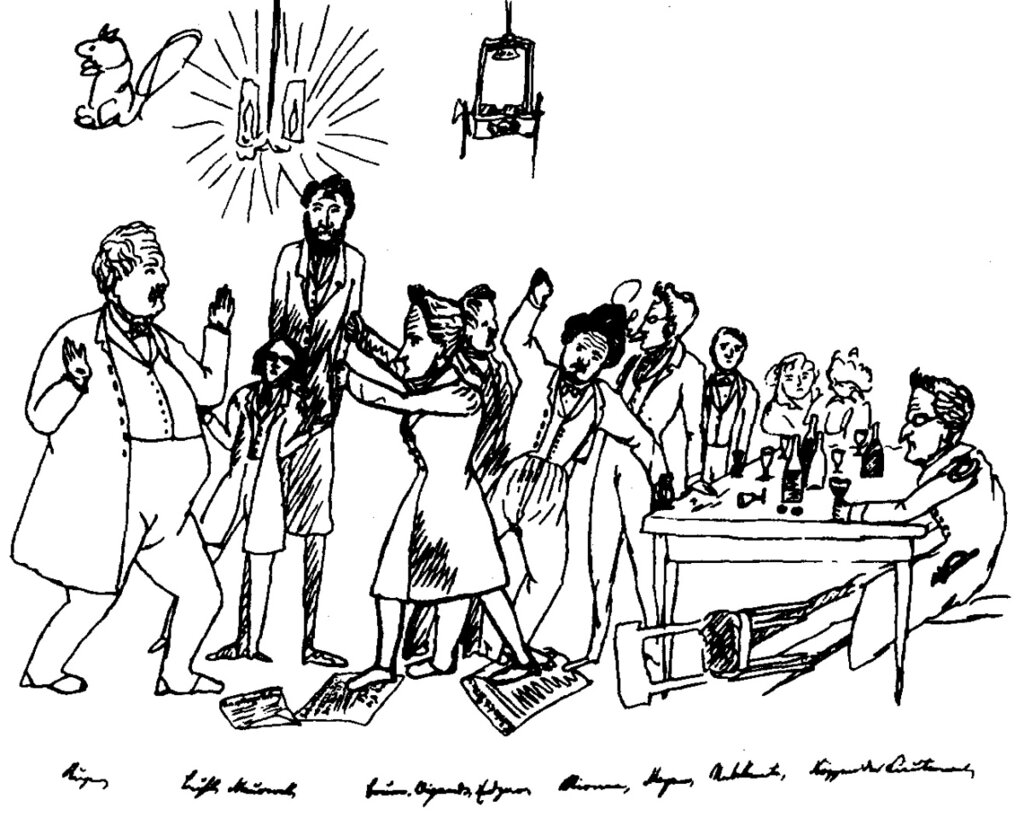
To understand Stirner, you have to understand the company he kept. He was part of a group of intellectuals in Berlin known as the Young Hegelians, or Die Freien ("The Free Ones"). This circle of thinkers, which included figures like Bruno Bauer and Karl Marx, gathered in wine bars to debate philosophy, religion, and politics.
The Young Hegelians all started from the work of the great philosopher G.W.F. Hegel. But where Hegel saw the world progressing toward a rational state and the realization of a universal Spirit, the Young Hegelians took his ideas in a much more radical direction. They were atheists who believed that religion, and many of the ideas propping up the Prussian state, were human creations that needed to be dismantled.
Even within this group of rebels, Stirner was an outlier. While his peers wanted to replace old authorities like God and King with new ones like "Humanity," "Reason," or "The People," Stirner saw these as just another set of chains. He argued that any abstract idea held above the individual was a form of mental bondage.
The Ego and Its Own
Stirner's book is a relentless attack on these abstract ideas, which he famously called "spooks" or "phantasms." For him, concepts like the state, morality, religion, and even society itself are not real entities with claims on us. They are simply ideas in our heads that we have been taught to treat as sacred.
The central argument of The Ego and Its Own is that the only thing that is truly real is the unique, individual ego — you. Nothing is more important than yourself.
Stirner isn't arguing for selfishness in the typical sense of hoarding wealth or being unkind. He's making a deeper philosophical point: you should be the master of your own mind and actions, free from the dictates of any external authority or abstract ideal. Your life, your thoughts, and your values should belong to you and you alone. He encourages the individual to see the world not through the lens of duty or obligation, but as something to be used for one's own purposes and enjoyment.
This radical individualism set him apart. He didn't just critique the old world of monarchy and church; he critiqued the new world of liberalism, socialism, and humanism that his fellow radicals wanted to build. In his view, they were all just trading one set of spooks for another. This foundational challenge is what we will begin to explore.
What was the real name of the philosopher known as Max Stirner?
What did Max Stirner famously call abstract ideas like 'the state,' 'morality,' and 'humanity' that are held as sacred authorities over the individual?