Max Stirner and the Philosophy of Egoism
The Unique One
The Unique One
Max Stirner's philosophy starts and ends with a single, radical point: you. Not you as a member of a species, a citizen of a state, or a follower of a creed. Just you, in your irreducible, unrepeatable existence. He gives this a name: der Einzige, or The Unique.
This isn't another philosophical label. It's the opposite. Think of concepts like 'humanity', 'reason', or 'morality'. These are boxes that philosophers have historically tried to fit individuals into. Stirner argues that you exist before any of these boxes are drawn. The Unique is not what you are in an essential sense, but that you are, prior to any external definition. It is the concrete, living individual that defies all attempts at categorisation.
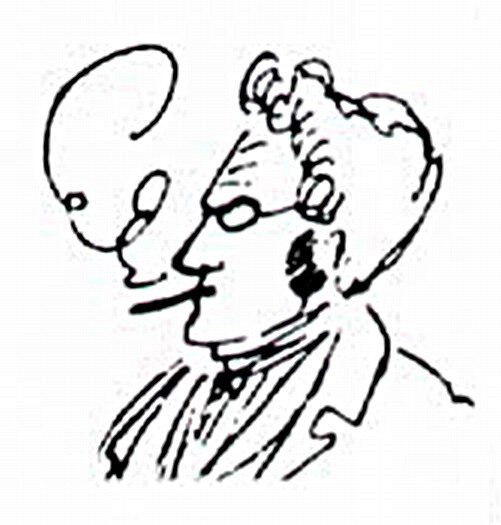
The Unique is not a fixed self or a soul. It is a process of self-creation. While other philosophies might give you a blueprint for what a 'good person' or a 'rational being' should be, Stirner hands you an empty canvas. The starting point for this creation is what he calls das schöpferische Nichts—the creative nothing.
The Creative Nothing
This sounds nihilistic, but it's a profoundly empowering idea. The 'nothing' Stirner refers to is not a void of emptiness or meaninglessness. It is 'nothing' in the sense of being free from predetermined essences, purposes, or definitions imposed from the outside.
I am not nothing in the sense of emptiness, but I am the creative nothing, the nothing out of which I myself as creator create everything.
From this 'nothingness', the Unique creates everything: its values, its thoughts, its property. It is the owner of itself. Concepts like 'God', 'the State', or even 'Man' are what Stirner calls 'spooks'—fixed ideas or abstractions that people treat as sacred, allowing these ideas to rule over them. The Unique, by recognizing its own creative power, dissolves these spooks and reclaims ownership of its own world.
Beyond Language
There's a built-in paradox here. How can we talk about something that is, by its nature, beyond definition? Stirner knew this. He called der Einzige a 'thoughtless word' or a non-predicate.
When we say, "The sky is blue," we are applying a predicate ('blue') to a subject ('the sky'). But you cannot say, "The Unique is..." and finish the sentence with a concept, because any concept you choose would limit it and turn it into just another box. 'The Unique' is simply a pointer. It's a name that indicates the individual who is speaking or being spoken to, in their entirety, without trying to capture their essence in words.
This is Stirner's crucial break from other philosophies. The concept of 'humanity', for example, is an abstraction. No one has ever met 'humanity'. We only ever meet unique, concrete individuals. To demand that an individual serve 'humanity' is to demand they sacrifice their concrete reality for an abstract idea. The Unique is not a representative of a species; it is the whole thing, an end in itself.
What does Max Stirner call the irreducible, unrepeatable existence of the individual, prior to any external categorisation?
According to Stirner's philosophy, which of the following would be considered a 'spook'?