Matlab MCP Server Setup
Introduction to MCP
Connecting the Pieces
Imagine you have several amazing gadgets, but each one has a different, unique plug. You'd need a different adapter for every single one. It would be a mess. This is the problem the Model Context Protocol (MCP) solves, but for software.
MCP is a standardized framework, an open set of rules, that allows different applications to communicate with each other. Specifically, it helps AI models connect with external tools, databases, and services.
Instead of building a custom connection every time an AI needs to use a new tool, MCP provides a universal plug. This makes it much easier to build powerful, flexible systems where different components can work together seamlessly. It’s like having a USB-C port for all your AI tools.
MCP and MATLAB
So where does MATLAB fit in? MATLAB is a powerhouse for numerical computing, data analysis, and algorithm development. Many specialized, high-performance tools are written in MATLAB. MCP allows us to unlock that power and make it available to other applications, like an AI agent.
MCP uses a client-server model. In this setup, a MATLAB application can be packaged as an MCP server. This server exposes MATLAB's functions as tools that other applications, or "clients," can use. The client doesn't need to know anything about MATLAB itself; it just sends a request to the server using the MCP standard, and the server runs the MATLAB code and sends back the result.
Biomedical Engineering Applications
This integration is particularly powerful in biomedical engineering, a field that relies heavily on complex data analysis. For instance, a doctor could interact with an AI assistant to analyze a patient's medical scans. The AI assistant (the client) could send the scan data to a MATLAB MCP server that runs a specialized image segmentation algorithm. The server would process the image, identify key features, and send the results back to the AI, which then presents them to the doctor.
Other applications include:
- Genomic Analysis: Running complex bioinformatics algorithms written in MATLAB to analyze DNA sequences.
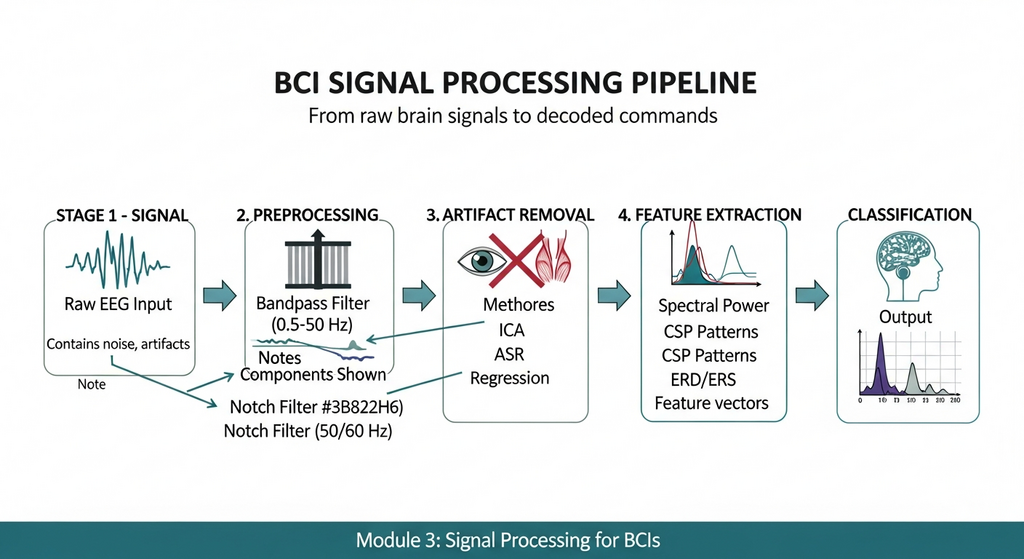
- Signal Processing: Real-time processing of signals from devices like EEGs or ECGs for diagnostics or brain-computer interfaces (BCIs).
- Drug Discovery: Using MATLAB-based models to simulate molecular interactions, made accessible to broader research platforms via MCP.
In each case, MCP acts as the bridge, turning sophisticated MATLAB functions into modular, accessible tools for larger, intelligent systems.
What is the primary analogy used to describe the function of the Model Context Protocol (MCP)?
In an MCP client-server model, what role does a MATLAB application typically fulfill?
By providing a common language for software components to speak, MCP simplifies the creation of powerful, integrated applications.