Math Adventures for Tiny Explorers
Place Value Powers
From Sticks to Stacks
Counting a large pile of objects one-by-one is slow and prone to error. A smarter way is to group them. Our number system does exactly this, using groups of ten. Think of the number 34. It's not just a collection of thirty-four individual things; it's 3 groups of ten and 4 single items left over.
This grouping system is called the base-ten system because everything revolves around the number ten. Each position, or 'place,' a digit holds in a number tells us its value. The digit on the right is the 'ones place,' telling us how many single items there are. The spot to its left is the 'tens place,' telling us how many bundles of ten we have.
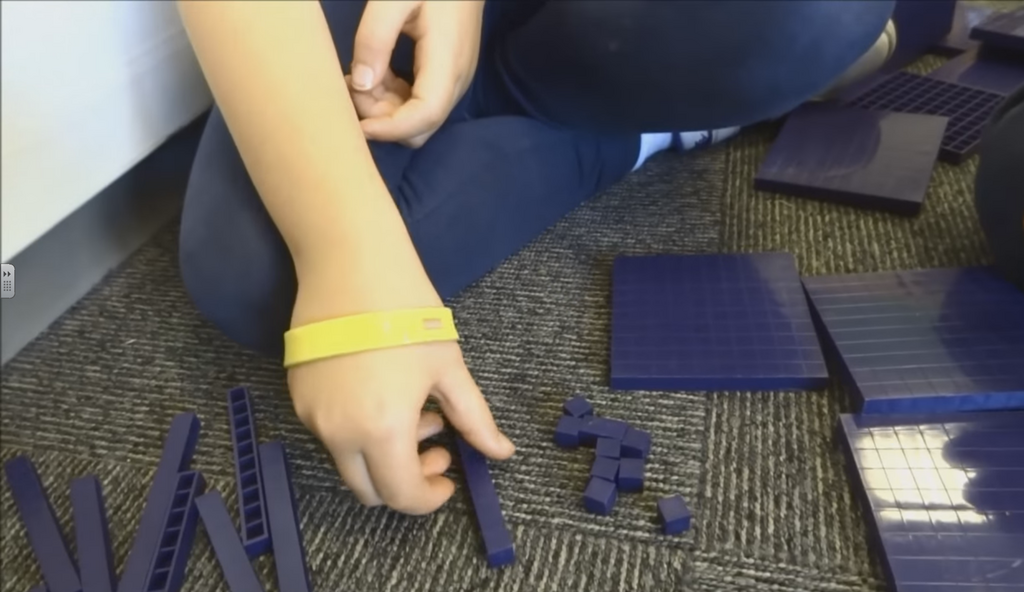
So, in the number 52, the 5 isn't just a five. Its position in the tens place means it represents 5 groups of ten, or fifty. The 2, in the ones place, represents 2 single units. This is why 52 is a much larger quantity than 25. In 25, the 2 only represents 2 tens (twenty), while the 5 represents 5 ones.
| Number | Tens | Ones | Total Value |
|---|---|---|---|
| 52 | 5 | 2 | Fifty-two |
| 25 | 2 | 5 | Twenty-five |
Expanding Numbers
We can break numbers apart to see this structure more clearly. This is called writing a number in expanded form. It's a way to show the math behind the number's value. You write out the value of each digit and connect them with plus signs.
For example, the number 68 can be broken down into its tens and ones.
This works for any two-digit number. The number 91 is simply 9 tens and 1 one.
Beyond the Bundles
What happens when we get 10 bundles of ten? We group them again. Ten groups of ten make one hundred. This gives us a new spot to the left of the tens place: the hundreds place.
The number 345 has three distinct parts:
Its expanded form shows the value of each place, all added together.
Understanding this structure is the key to working with any number, no matter how large. Each place to the left is always ten times bigger than the place to its right. It’s a simple pattern that lets us write down enormous quantities using just ten simple symbols.
In the number 72, what does the digit 7 represent?
What is the primary reason for grouping objects into tens when counting a large number of them?
This system of tens is the foundation for almost all the math you'll ever do.