Mastery of Chemical Compounds
Chemical Bonding Mechanisms
The Drive for Stability
Atoms, like people, seek stability. For most atoms, this stability is achieved by having a full outer shell of electrons. This tendency is known as the octet rule, which states that atoms are most stable when their outermost electron shell is filled with eight electrons. Gaining, losing, or sharing electrons to reach this state is the fundamental reason chemical bonds form.
Think of it as an energetic drive. An atom with an incomplete outer shell is in a higher, more reactive energy state. By forming a bond, it settles into a more stable, lower-energy state.
Ionic Bonds: Give and Take
One way to achieve a full octet is for one atom to completely transfer one or more electrons to another. This happens between atoms with a large difference in their attraction for electrons, a property called electronegativity. A metal, which holds its outer electrons loosely, will often donate them to a nonmetal, which has a strong pull for electrons.
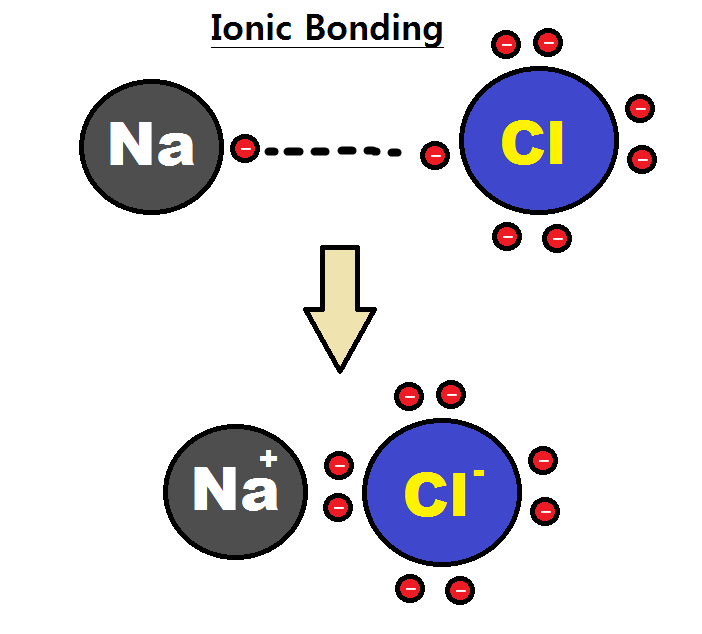
When an atom loses an electron, it becomes a positively charged ion (a cation). When it gains an electron, it becomes a negatively charged ion (an anion). The chemical bond itself isn't the transfer, but the powerful electrostatic attraction that follows between these oppositely charged ions. This force pulls the ions together into a highly ordered, three-dimensional structure called a crystal lattice. The strength of this structure is measured by its —the energy required to completely separate the ions.
Materials formed by ionic bonds, like table salt (NaCl), are typically hard, brittle solids with high melting points. They don't conduct electricity as solids but do when melted or dissolved in water, as the ions are then free to move and carry a current.
Covalent Bonds: The Art of Sharing
When two atoms have similar, high electronegativities (typically two nonmetals), neither can completely pull electrons away from the other. Instead, they achieve stability by sharing electrons. A is the electrostatic attraction between the positively charged nuclei of the bonded atoms and the negatively charged electrons they share.
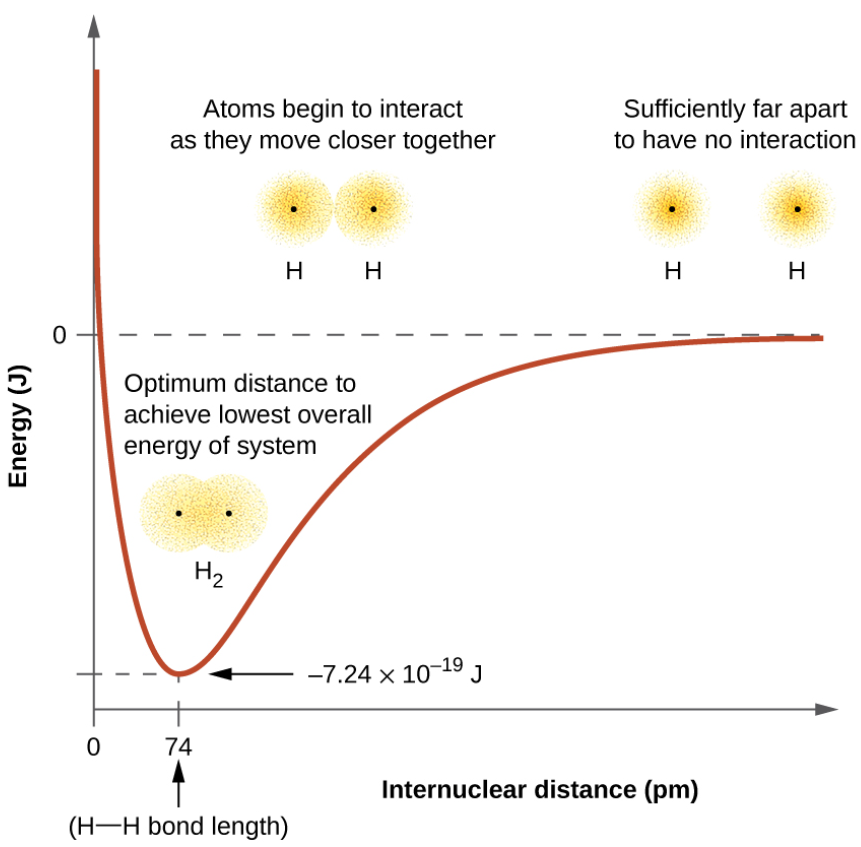
This sharing can be equal or unequal. In a nonpolar covalent bond, electrons are shared equally because the two atoms have identical or very similar electronegativity. A great example is the bond between two oxygen atoms in an O₂ molecule.
In a polar covalent bond, one atom has a stronger pull on the shared electrons. This creates a slight negative charge (δ-) on the more electronegative atom and a slight positive charge (δ+) on the less electronegative one. Water (H₂O) is the classic example, where oxygen pulls the shared electrons closer, making it the negative pole.
Covalent compounds form discrete molecules and have lower melting and boiling points than ionic compounds because the forces between molecules are weaker. They are also generally poor conductors of electricity.
Metallic Bonds: A Sea of Electrons
Metals have a unique way of bonding. In a metallic bond, the outer electrons of the metal atoms are not held by any single atom. Instead, they form a delocalized "sea" of electrons that moves freely throughout the entire solid.
The metal atoms become positively charged cations, which are held together by their collective attraction to this mobile sea of electrons. This model explains many classic properties of metals: they are excellent conductors of electricity and heat because the electrons are free to move and carry energy. They are also malleable and ductile because the atoms can slide past one another without breaking the metallic bond.
| Bond Type | Electron Behavior | Common Between | Material Properties |
|---|---|---|---|
| Ionic | Transferred | Metal & Nonmetal | High melting point, brittle, conductive when molten/dissolved |
| Covalent | Shared | Nonmetal & Nonmetal | Low melting point, poor conductor |
| Metallic | Pooled (Sea of electrons) | Metal & Metal | Variable melting point, conductive, malleable |
Let's test what you've learned about these fundamental forces.
What is the primary motivation for most atoms to form chemical bonds?
In a molecule of water (H₂O), the oxygen atom has a stronger pull on the shared electrons than the hydrogen atoms. What type of bond is formed, and what is the result?
Understanding these three types of bonds—ionic, covalent, and metallic—is the key to predicting how atoms will combine and what the properties of the resulting substance will be.