Mastery of Business Strategy and Leadership
Integrated Strategic Analysis
Uncovering Your Real Strengths
You already know how to scan the competitive landscape. But lasting advantage rarely comes from just playing the same game better. It comes from having resources and capabilities your rivals can't match. This is the core of the Resource-Based View (RBV) of strategy: your unique internal assets are your greatest strategic weapon.
But how do you know if a resource is truly strategic? The VRIO framework provides a systematic way to test your assets. It's a four-question gauntlet that separates everyday resources from those that can build a long-term competitive moat.
| Question | Valuable? | Rare? | Costly to Imitate? | Organized to Capture Value? | Competitive Implication |
|---|---|---|---|---|---|
| Is the resource valuable? | No | - | - | - | Competitive Disadvantage |
| Is it rare? | Yes | No | - | - | Competitive Parity |
| Is it hard to imitate? | Yes | Yes | No | - | Temporary Advantage |
| Is the company organized for it? | Yes | Yes | Yes | No | Unused Advantage |
| The Sweet Spot | Yes | Yes | Yes | Yes | Sustained Competitive Advantage |
Think of a pharmaceutical company's patent on a breakthrough drug. It's valuable because it treats a condition. It's rare because no one else has it. It's costly to imitate due to legal protection and R&D costs. And if the company is organized with a great sales force and manufacturing, it can capture immense value, creating a sustained competitive advantage.
Finding Uncontested Waters
While VRIO helps you assess your existing strengths, Blue Ocean Strategy pushes you to create entirely new ones. The core idea is simple: stop fighting bloody battles with competitors in crowded "red oceans." Instead, find or create new markets—blue oceans—where competition is irrelevant.
This isn't about outperforming rivals; it's about making them obsolete. It involves a fundamental shift in perspective, moving from competing to creating. The framework uses a simple tool called the Four Actions Framework to challenge an industry's strategic logic.
Cirque du Soleil is a classic example. They didn't try to make a better circus. They eliminated costly elements like animal acts and star performers. They reduced the traditional humor. At the same time, they raised the uniqueness of the venue and created new elements of theme, artistry, and sophisticated dance. They created a new market at the intersection of circus and theater, making traditional circuses irrelevant to their audience.
Making Strategy Stick
Having great resources and a brilliant market idea isn't enough. A winning strategy requires that your internal activities fit together in a way that is hard for rivals to copy. This concept is called strategic fit, and it's about creating a chain where every link reinforces the others.
Think of Apple. Their hardware (iPhone), software (iOS), and retail stores all work in harmony. The elegant hardware makes the software a joy to use. The exclusive software drives hardware sales. The retail stores provide a premium experience that reinforces the brand's value. A competitor can copy one piece—say, by making a nice phone—but they can't easily replicate the entire interlocking system. This system of reinforcing activities creates a powerful defensive barrier.
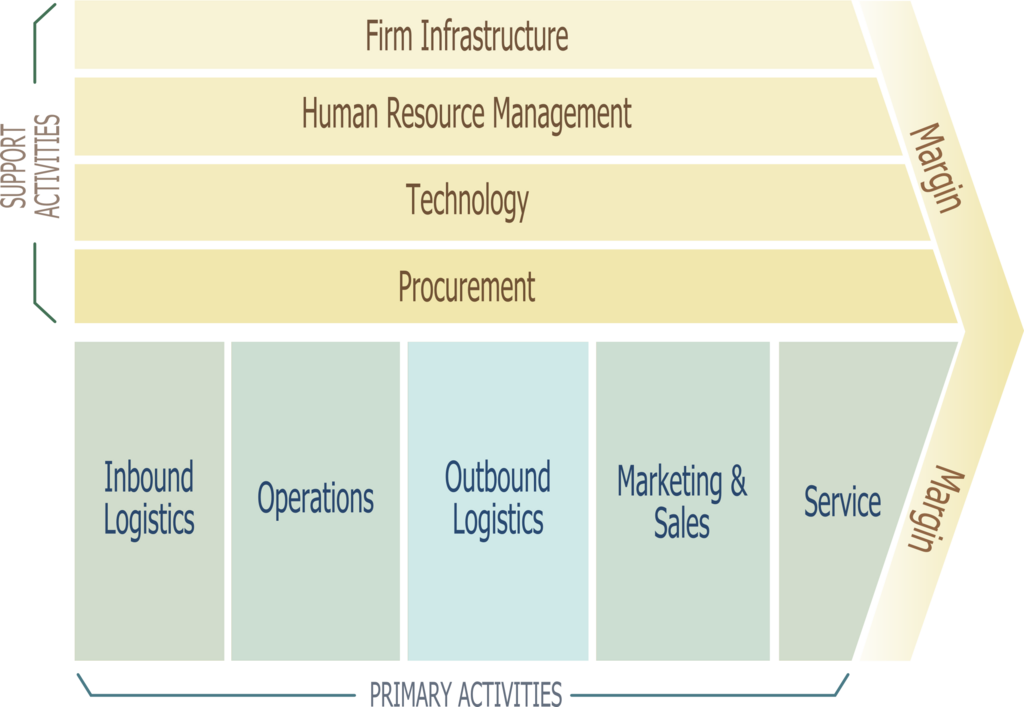
Plotting these connections creates an Activity System Map. You start with the company's value proposition and then map all the supporting activities, drawing lines to show how they reinforce one another. A dense, interconnected map signals a strong, defensible strategy. A sparse map with few connections suggests a strategy that's vulnerable and easy to imitate.
This is where everything comes together. Your VRIO-tested resources enable key activities on the map. Your Blue Ocean move defines the unique value proposition at the center of the map. And the map itself illustrates the strategic fit that makes your advantage sustainable.
Ready to test your understanding of these integrated frameworks?
According to the Resource-Based View (RBV), where does a company's most sustainable competitive advantage come from?
A tech company has a proprietary algorithm that significantly improves data processing speed. It is valuable and rare. However, if the company lacks the necessary sales team and infrastructure to market the product effectively, which VRIO criterion is not being met?
These frameworks provide a powerful, integrated way to look at strategy. By combining an internal view of your resources (VRIO) with an external view of market opportunities (Blue Ocean) and a holistic view of your internal activities (Strategic Fit), you can build a strategy that is not just clever, but also durable.