Mastery of Advanced Hindi Linguistics and Literature
Advanced Morphological Variations
Beyond Khari Boli Norms
In advanced Hindi, the standard morphological rules inherited from Khari Boli begin to show their limitations, especially in literary and formal registers. The predictable patterns of pluralisation and case marking give way to more complex systems heavily influenced by Sanskrit. This is most apparent with tatsam words, which often resist standard declensions, retaining vestiges of their original grammatical behaviour.
For instance, while a common masculine noun like लड़का (laṛkā) pluralises to लड़के (laṛke), many tatsam nouns ending in -ā remain unchanged. A leader is a नेता (netā), and multiple leaders are also नेता (netā). The same applies to many masculine nouns ending in -i or -u, such as कवि (kavi) or साधु (sādhu). The context, not the morphology, signals the number.
This invariance is a direct echo of Sanskrit grammar, where number was often marked by different mechanisms than the simple vowel changes that typify modern Hindi.
| Singular (एकवचन) | Plural (बहुवचन) | Contextual Clue |
|---|---|---|
| नेता (netā) | नेता (netā) | नेता आए (netā āe) - Leaders came |
| कवि (kavi) | कवि (kavi) | अनेक कवि (anek kavi) - Many poets |
| साधु (sādhu) | साधु (sādhu) | सब साधु (sab sādhu) - All sages |
| वस्तु (vastu) | वस्तुएँ (vastuẽ) | A common exception; originally neuter in Sanskrit, it follows the feminine -एँ pluralisation rule. |
The Oblique Case in High Register
The oblique case, which alters a noun before a postposition, also has its own set of high-register exceptions. Standard rules dictate that a plural noun like लड़के (laṛke) becomes लड़कों (laṛkõ) in the oblique case, as in लड़कों को (laṛkõ ko). However, many of the invariant tatsam plurals we just saw remain unchanged even in the oblique plural.
Consider the sentence, "I spoke to the leaders." A standard rendering would follow the pattern: मैंने नेताओं से बात की (maine netāõ se bāt kī). Yet, in highly formal or [{
}] prose, you might encounter: मैंने नेता से बात की (maine netā se bāt kī), where the plural is implied by context and the noun remains in its singular form.
This practice is an archaism, mirroring a time when case was handled more fluidly. It forces the reader to rely entirely on contextual cues and verb agreement to understand number. While grammatically sound in these specific registers, this construction is rare in conversational Hindi and can sound stilted if used improperly.
Morphophonemics and Agreement Exceptions
High-register Hindi also features morphophonemic changes—sound alternations that occur at the boundaries of morphemes. This is particularly evident in formal address. The honorific suffix -जी (-jī) can cause subtle shifts. For example, when addressing a गुरु (guru), adding the honorific creates गुरुजी (gurujī), a straightforward concatenation. However, with a word like श्रीमान् (śrīmān), a formal address for men, the oblique form used before a postposition becomes श्रीमान् जी से (śrīmān jī se), retaining its final consonant sound, which might otherwise be elided in faster speech.
Gender agreement with compound nouns presents another layer of complexity. Typically, the gender of a compound is determined by its final component. For instance, राजपुत्र (rājputra, 'king's son') is masculine because पुत्र (putra) is masculine. However, there are notable exceptions where semantic content overrides this structural rule.
The compound noun मंत्रिपरिषद (mantriparishad, 'council of ministers') is feminine, even though its components are masculine (मंत्री, mantrī) or neuter-derived (परिषद, pariṣad). This is because the collective concept of a 'council' or 'assembly' is grammatically feminine in Hindi. Therefore, one says मंत्रिपरिषद बैठी (mantriparishad baiṭhī, feminine verb).
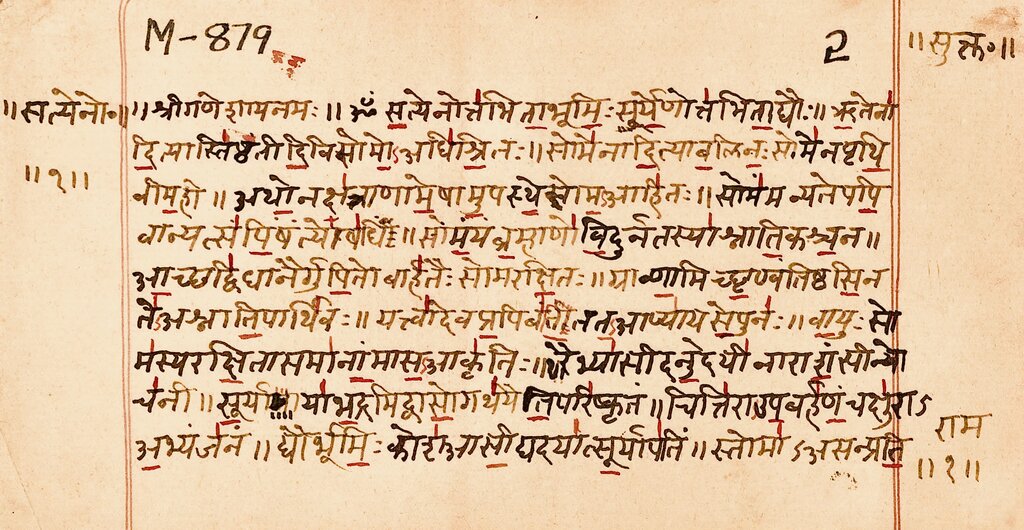
Recognising these advanced patterns requires moving beyond simple rules and developing an intuition for the language's historical layers. Each exception is a window into the evolution of Hindi, from its Sanskrit ancestry to its modern standard form.