Mastery and Meaning in The Razor's Edge
Postwar Disillusionment
The Shattered Blueprint
Before the war, life for a young man like Larry Darrell had a clear blueprint. Ivy League education, a promising job in finance, marriage to a beautiful socialite—it was the American dream, pre-packaged. Society offered a map where all the roads led to material success and comfortable certainty. Larry was on that exact path. But for him, and an entire generation, World War I tore that map to shreds.
The experience of industrial warfare—the trenches, the mustard gas, the sheer scale of the slaughter—was a profound shock. It invalidated the old certainties about progress, honor, and the inherent goodness of Western civilization. For Larry, this disillusionment became intensely personal during his time as an aviator.
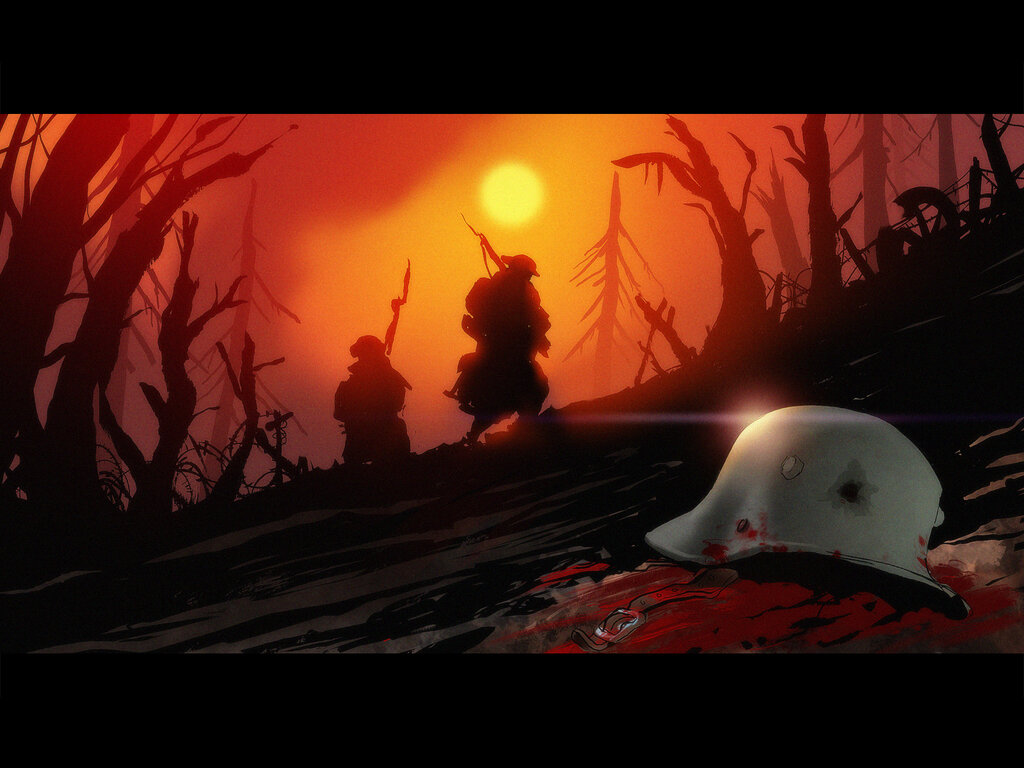
The defining moment was the death of his friend. In the sky, one moment his comrade was alive, a fellow human being full of plans and jokes. The next, he was gone, obliterated in a mechanical failure of his aircraft. The randomness and finality of it created an existential rupture. It wasn't just the grief of losing a friend; it was the horrifying realization that life could be extinguished for no reason at all. Suddenly, the questions that society ignored became the only ones that mattered: Why are we here? Is there a point to any of this if it can end so senselessly? The blueprint for a successful life in Chicago seemed utterly absurd in the face of such a stark, terrifying truth.
Moral Injury and the Great Divide
Larry's experience is a classic example of what psychologists now call moral injury—a wound not to the body, but to the soul. It occurs when a person's fundamental sense of right and wrong is betrayed by their own actions or the actions of others in high-stakes situations. For Larry, seeing a good man die for nothing shattered his belief in a just or meaningful world. This injury created a chasm between him and those who hadn't shared his experience.
Characters like his fiancée, Isabel, and his friend, Gray, represent the desperate pull of normalcy. They want to return to the pre-war world of debutante balls and stock portfolios. They see Larry's quest for answers not as a noble search for truth, but as a selfish refusal to grow up, a dereliction of his duty to get a job and settle down. Their world is built on social expectations and material comfort. Larry’s is now built on a single, burning question: How does one live a good life in a world that seems meaningless?
This is the great divide for survivors of extreme trauma. Some seek to rebuild the world exactly as it was, finding comfort in the familiar. Others, like Larry, find it impossible. The old world feels like a facade, and returning to it would be a betrayal of the profound and terrible truth they have witnessed.
Stress as a Catalyst for Growth
From a mental performance perspective, Larry’s journey shows how extreme stress can act as a radical catalyst. The trauma of the war didn't just break him; it broke him open. It forced a complete re-evaluation of his personal values. The goals that once motivated him—wealth, status, social approval—were rendered worthless by his experience. They were replaced by a drive for something deeper: understanding, purpose, and spiritual truth.
This is a pivot from seeking external validation to cultivating internal alignment. Instead of asking, “What does society expect of me?” he began to ask, “What is true for me?” This shift is the foundation of profound personal growth. His journey demonstrates that the aftermath of a crisis can become a powerful engine for building a more authentic and meaningful life, one that is not defined by acquiring things but by understanding the self. The trauma became the very thing that propelled him toward a higher purpose, far beyond the confines of his old life.
The twenty years following World War I were considered an Age of Anxiety because of the negative impacts the war had on most aspects of life at the time.
Larry’s refusal to “loaf” wasn't laziness; it was the hard work of rebuilding a soul from the ground up. He had to discard a blueprint for a life that no longer made sense to find a new way of being that could withstand the knowledge of life's fragility.
According to the text, what was the expected life path for a young man like Larry Darrell before World War I?
The text describes the profound psychological wound Larry suffered from witnessing his friend's death as a classic example of what?
His search was a direct consequence of a world that had lost its way.