Masterworks and Movements of 18th Century Britain
Augustan Satire Mechanics
The Augustan Algorithm
Early 18th-century Britain was a society in flux. The embers of civil war were still warm, the empire was expanding, and a new commercial class was rapidly gaining influence. For writers like Jonathan Swift and Alexander Pope, this brave new world of stock markets, print media, and political factions wasn't just a setting—it was a target. They saw a culture losing touch with classical reason and moral clarity. Their response was satire, but not just simple mockery. It was a highly structured, almost algorithmic form of social critique, rooted in the forms of ancient Rome but deployed against the chaos of modern London.
The Heroic Couplet as Constrained Optimization
For a data scientist, a model's performance is often a matter of optimizing an objective function under a set of constraints. The Augustan poets faced a similar challenge. Their chosen form, the heroic couplet, provided the constraints: two rhyming lines of iambic pentameter, often forming a self-contained, grammatically complete thought. The objective function was maximizing wit, moral force, and intellectual density.
Heroic Couplet
noun
A pair of rhyming lines written in iambic pentameter, a meter where each line has ten syllables, with an alternating pattern of unstressed and stressed syllables. In the Augustan period, these couplets were typically 'closed,' meaning each pair formed a complete syntactical unit.
This structure forced a remarkable compression of thought. Every word had to carry its weight. The rhyme wasn't just decorative; it created an expectation that the poet could satisfy with a clever turn of phrase or a surprising parallel. The pause in the middle of a line, the caesura, acted like a fulcrum, balancing ideas against each other. Consider this famous couplet from Pope’s An Essay on Criticism:
Working within these constraints, Pope achieves a definition of wit that is itself a perfect example of it. The form is not a limitation but a tool for precision. It’s an algorithm for generating potent, memorable ideas.
Parody as System Analysis
If the heroic couplet was the micro-level algorithm, the mock-epic was the macro-level system analysis. Pope’s The Rape of the Lock applies the grand, heroic conventions of Homer's and Virgil's epics to a trivial high-society squabble: the theft of a lock of hair. The goal wasn't just to make the trivial seem silly, but to use the contrast to critique the values of the society itself. By describing a card game with the gravity of a battlefield or a lady’s dressing table with the reverence of an arming ritual for a hero, Pope exposes the vanity and misplaced priorities of the burgeoning commercial aristocracy. This high-low stylistic shift is the engine of the satire. It takes the epic form, a cultural touchstone representing classical virtue and national glory, and uses it as a diagnostic tool to measure the moral decay of the present.
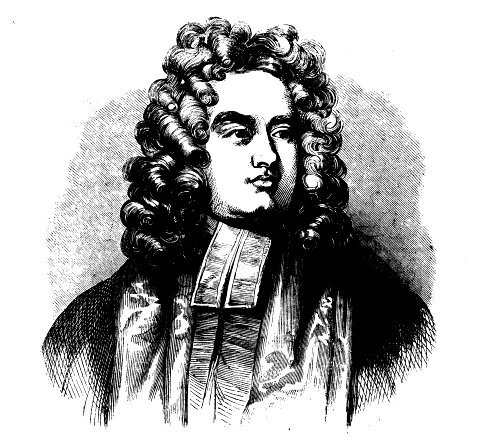
Swift performed a similar analysis in prose. His A Tale of a Tub is a classic example of Menippean satire, a form that attacks mental attitudes rather than specific individuals. It's a chaotic, digressive work that mixes allegory, parody, and scholarly nonsense to satirize the divisions in religion and the excesses of modern learning. The book's very structure—a core narrative constantly interrupted by rambling prefaces and digressions—is a parody of the pedantry and information overload Swift saw emerging in the new world of print. He wasn't just satirizing content; he was satirizing the form itself.
This explosion of print culture was a primary concern for the Scriblerus Club, an informal group that included Pope, Swift, John Gay, and John Arbuthnot. They saw the rise of professional writers, critics, and
The Scriblerians lamented the 'abuse of human learning,' coining the term 'bathos' to describe the art of sinking in poetry—a deliberate, ironic plunge from the sublime to the ridiculous.
They saw the new media landscape, enabled by laws like the Statute of Anne, as a chaotic space where true genius was drowned out by hacks and commercial interests. Their satires were a form of intellectual gatekeeping. By rigorously adhering to classical models (Neoclassicism), they tried to impose order on a world they saw as spinning into intellectual and moral chaos. Their use of Roman forms was not just an artistic choice but a political and cultural statement—a vote for stability, reason, and enduring standards in an age of dizzying, disorienting change.
Let's test your understanding of these satirical mechanics.
What was the main satirical technique used in a mock-epic like Pope's "The Rape of the Lock"?
For writers like Pope and Swift, the formal constraints of classical forms (like the heroic couplet) were seen as a limitation on their creativity.