Masterpieces of Global Poetry
Epic Scope and Structure
The Architecture of an Epic
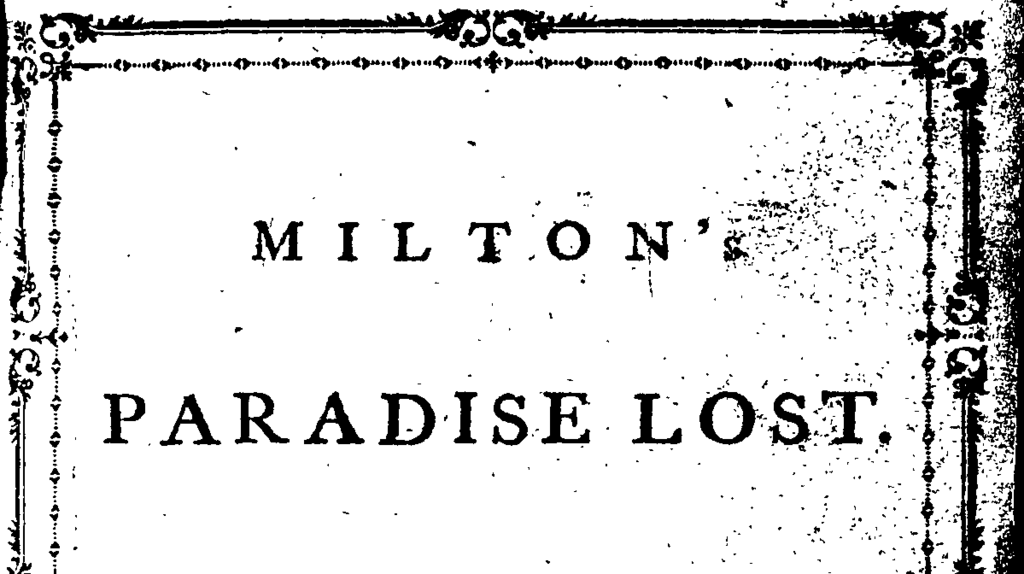
Epic poems aren't just long stories; they are monumental structures built with language. When John Milton decided to write Paradise Lost, his goal was to create an English epic that could stand beside the works of Homer and Virgil. To do this, he needed a poetic form that felt as vast and serious as his subject: the fall of humanity. He chose blank verse—unrhymed iambic pentameter.
Rhyming couplets, popular at the time, would have felt too neat, too confining for a story spanning Heaven, Hell, and Earth. Blank verse, in contrast, offered a continuous, flowing line that could mimic the rhythms of speech while maintaining a formal, elevated tone. It gave Milton the linguistic space to build his theological arguments and paint his cosmic landscapes without being constrained by the need to find a rhyme. The form itself contributes to the poem's sense of boundless scale and intellectual weight.
Starting in the Middle
Like the classical epics he emulated, Milton throws the reader directly into the thick of the action. This technique is called (Latin for "in the middle of things"). Paradise Lost doesn’t begin with the creation of the world or the war in Heaven. It opens with Satan and his fallen angels waking up in a lake of fire after already being defeated and cast out of Heaven. This immediately establishes high stakes and a sense of a vast, pre-existing history that the reader must piece together.
Immediately after this dramatic opening, Milton performs another crucial structural move: the invocation of the Muse. Where Homer called upon the Muse of epic poetry, Milton, writing a Christian epic, invokes a heavenly, divine source of inspiration. This is more than just a nod to tradition. It’s a claim of authority. The poet positions himself not as a mere storyteller, but as a vessel for divine truth, giving him the right to narrate the conversations of God and the secrets of creation.
Sustaining the Narrative
Once the stage is set, an epic poet needs tools to maintain momentum over thousands of lines. One of the most important is enjambment, the practice of continuing a sentence or clause across a line break without a pause. Instead of having each line be a self-contained thought, enjambment pulls the reader forward, creating a seamless and propulsive narrative flow. This technique prevents the steady rhythm of iambic pentameter from becoming monotonous and allows for the creation of long, cascading sentences that build tension.
Consider this from Paradise Lost:
...He trusted to have equaled the Most High, If he opposed; and, with ambitious aim Against the throne and monarchy of God, Raised impious war in Heaven and battle proud With vain attempt.
Notice how the thought doesn't stop at the end of each line. It rushes onward, mirroring the relentless ambition being described.
Another key device is the , also known as a Homeric simile. These are not brief comparisons. They are extended, highly descriptive metaphors that temporarily pause the main action to elaborate on a point of comparison. For example, Milton compares Satan’s massive shield, hanging on his shoulders, to the moon as seen through Galileo’s newly invented telescope. This does more than just say the shield is large and round. It links the demonic artifact to modern science, the mysteries of the cosmos, and the act of seeing the universe in a new way, adding layers of thematic depth to a simple description.
Why did John Milton choose blank verse (unrhymed iambic pentameter) for Paradise Lost?
Paradise Lost begins with Satan and his followers already defeated and waking up in Hell. This technique of starting the story in the middle of the action is known as:
Through these architectural choices—the grand canvas of blank verse, the dramatic in medias res opening, and the sustained tension from enjambment and epic similes—poets like Milton build a world that feels both monumental and intricate.