Mastering YouTube SEO Strategies
Strategic Keyword Mapping
From Keywords to Content Architecture
You've moved past stuffing tags and hoping for the best. The next level of YouTube SEO isn't about finding more keywords; it's about building a structure with them. Think of your channel not as a collection of random videos, but as a carefully planned library. Each video is a book, and they're all organized into specific, related sections. This is your —a strategic framework where every video supports the others, establishing your authority on a topic.
The goal is to create content clusters, or video silos. When you publish a series of videos that are tightly related, you signal to YouTube that you're an expert in that niche. This increases the chances that if someone watches one of your videos on the topic, the algorithm will serve them another one of yours right after. This creates a powerful feedback loop, boosting session watch time and cementing your channel's authority.
The Leaf Strategy
To dominate a topic, you need to think like a tree. Your main subject is the trunk. The major subtopics are the branches. The highly specific, long-tail keywords are the leaves. The Leaf Strategy is about winning the battle for these 'leaf' keywords first.
These 'leaf' keywords are typically longer, more specific search queries. They have lower search volume, but much higher intent. Someone searching for "how to fix leaking group head on Breville Barista Express" is much closer to a solution (and a potential sale or dedicated subscriber) than someone just searching for "coffee."
By creating a series of videos targeting these low-competition, high-intent leaves, you build topical authority. Over time, YouTube starts to see you as an expert on the entire 'branch', and eventually, the 'trunk.' This makes it easier to rank for more competitive, higher-volume keywords later on.
Mapping Keywords to Viewer Intent
Not all keywords are created equal because not all viewers are at the same stage of their journey. Your keyword strategy must account for different
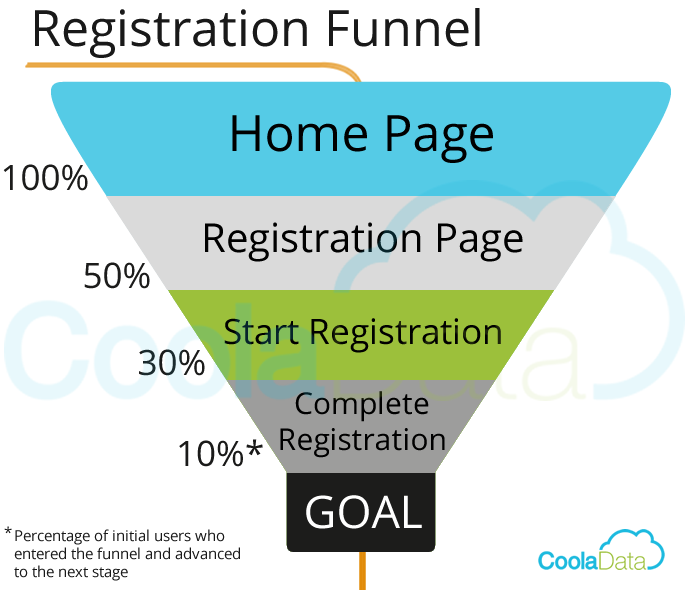
- Awareness (Top of Funnel): The viewer has a general problem or interest. They use broad search terms like "how to make better coffee at home."
- Consideration (Middle of Funnel): The viewer is exploring solutions. They search for comparisons and reviews, like "Chemex vs. V60" or "best budget espresso machine."
- Decision (Bottom of Funnel): The viewer is ready to act. They use highly specific, branded, or action-oriented terms like "Breville Barista Pro tutorial" or "buy Fellow Stagg EKG."
Your content plan should include videos that cater to each stage. This ensures you're capturing potential viewers no matter where they are in their journey, guiding them from initial curiosity to loyal subscriber.
Don't just chase views; chase the right views. A thousand views from viewers ready to make a decision are often more valuable than 100,000 views from casual browsers.
A crucial part of this process involves integrating semantically related keywords. This is where comes into play. Instead of just repeating your main keyword, you should sprinkle in synonyms and related concepts. If your main keyword is "iPhone 15 camera review," you should also include terms like "photograph quality," "low light performance," "cinematic mode," and "competitors like Pixel 8." This helps YouTube's algorithm understand the full context and nuance of your video, ranking it for a wider range of relevant searches.
Find Gaps and Hidden Queries
Your best keyword ideas might come from data you already have. Google Search Console and Google Analytics 4 (GA4) are treasure troves for finding what people are searching for to find your content.
In Search Console, look at the Performance report. Filter by queries and you'll find the exact search terms people used on Google to find your videos. You might discover you're getting impressions and even clicks for keywords you haven't intentionally targeted. These are golden opportunities. Create a new, dedicated video that directly addresses that 'hidden' query.
Similarly, you can use Google Keyword Planner not just for your own ideas, but to extract keywords from your competitors. By inputting the URL of a competitor's successful video or channel, you can see the keywords they rank for, providing you with a proven roadmap for topics that resonate with your shared target audience.
| Competitor Video Title | Primary Keyword | Viewer Intent | Potential LSI Keywords |
|---|---|---|---|
| The Ultimate Guide to Sourdough | sourdough for beginners | Awareness | starter, discard, proofing, baking schedule |
| La Marzocco Linea Mini Review | La Marzocco Linea Mini | Consideration | home espresso setup, prosumer machine, price |
| How to Change a Flat Tire FAST | change a flat tire | Decision | spare tire, jack, lug nuts, roadside safety |
By combining competitor analysis with your own analytics, you move from guessing to making data-driven decisions. You're not just creating content; you're filling specific gaps in the YouTube search ecosystem with videos designed to succeed.
What is the primary goal of building a 'content architecture' or 'video silo' on YouTube?
The 'Leaf Strategy' involves creating videos that target high-competition, high-volume keywords first.
Building a solid keyword architecture is a fundamental shift in how you approach content creation. It's the difference between throwing darts in the dark and executing a precise, strategic plan.