Mastering Your Sewing Machine
Sewing Machine Components
Meet Your Machine
A sewing machine might seem complex, but it's really just a team of parts working together. To get started, you only need to know the main players: the needle, the presser foot, the feed dogs, the bobbin, and the tension controls. Understanding how these five parts function will demystify the machine and give you the confidence to start sewing.
Understanding your sewing machine is essential to successful sewing.
Let's look at each one and see how they collaborate to create a perfect stitch.
The Action Zone
Three parts work in close coordination right where the magic happens: the needle, the presser foot, and the feed dogs. Think of them as a trio that guides, holds, and moves your fabric.
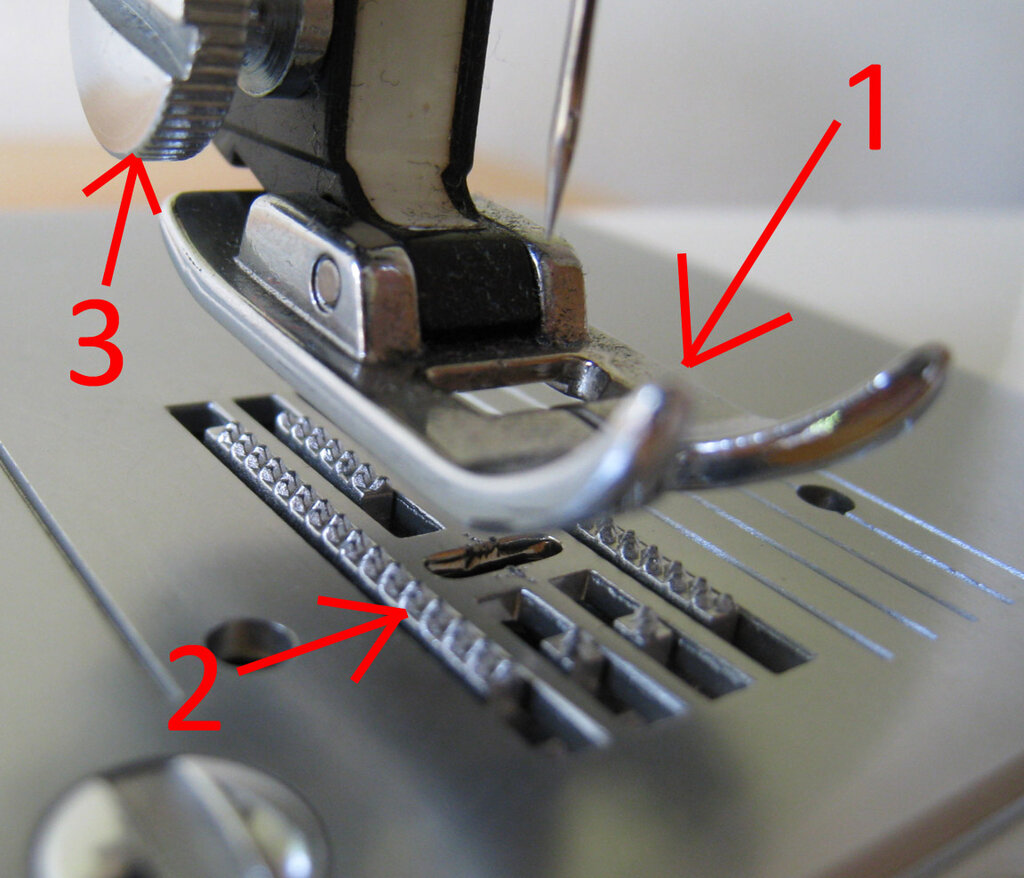
The needle carries the upper thread down through the fabric to create the top half of the stitch. Needles aren't one-size-fits-all. They come in different sizes and types for various fabrics. Using a sharp, correct needle is one of the easiest ways to get clean stitches. A universal needle is great for general sewing, while a ballpoint needle is better for knits, and a denim needle is tougher for heavy fabrics.
Presser Foot
noun
A small attachment that holds fabric flat against the feed dogs, ensuring it doesn't move or pucker while being stitched.
The presser foot does exactly what its name implies: it presses down on the fabric. This gentle pressure keeps the material flat and guides it smoothly. Most machines come with a standard foot, but you can swap it out for specialty feet designed for zippers, buttonholes, or quilting.
Finally, the feed dogs are the two small rows of metal teeth that stick up from the plate under the needle. They grip the bottom of the fabric and pull it through the machine at a consistent pace. The speed at which they move determines your stitch length.
The Stitch Makers
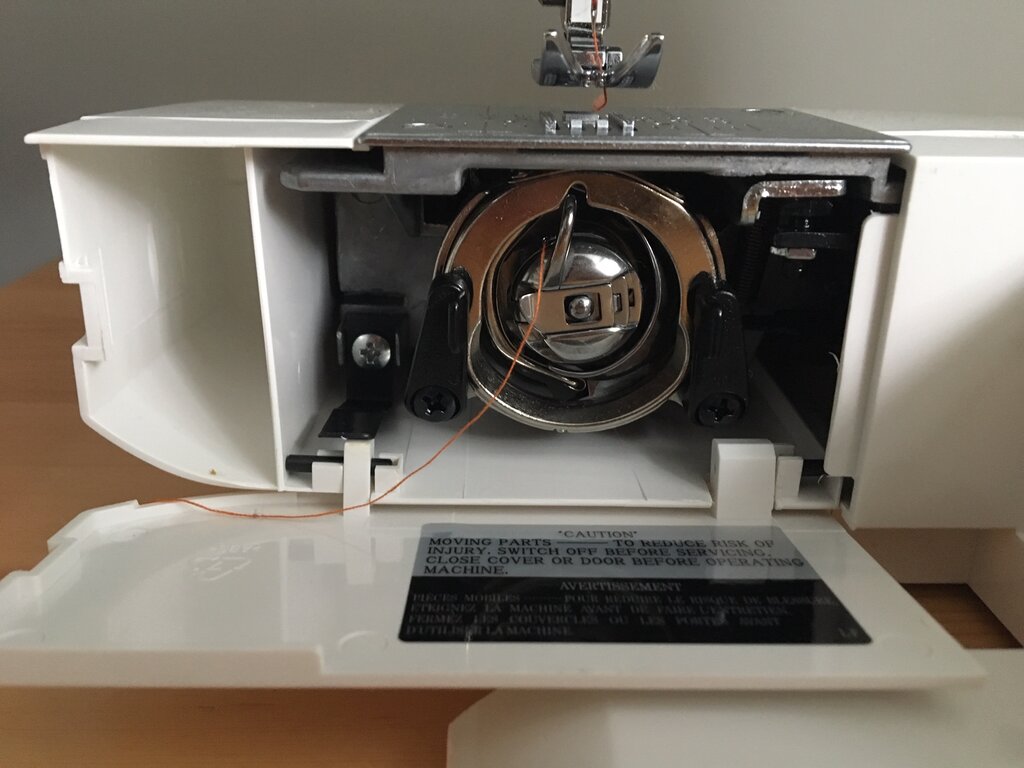
A sewing machine stitch isn't made from a single thread. It's an interlocking loop of two threads: one from the top spool and one from a small spool underneath called the bobbin.
The bobbin is a small spool that you wind thread onto. It sits in a special compartment, called the bobbin case, located under the needle. Getting the bobbin wound correctly and inserted properly is a fundamental skill. A poorly wound or inserted bobbin is a common cause of sewing problems.
For the upper and lower threads to form a balanced stitch, they need to have the right amount of pull, or tension. This is managed by the tension controls, usually a dial on the front of your machine. The numbers on the dial represent the amount of pressure on the thread. A higher number means more tension (a tighter pull), and a lower number means less tension (a looser pull).
If your tension is balanced, the stitch will look the same on the top and bottom of the fabric, with the knot hidden between the layers. If you see loops on the bottom, your top tension is too loose. If you see loops on top, your top tension is too tight.
Most of the time, you can leave the tension dial on the standard setting (usually marked or set to around 4). Only adjust it if you notice your stitches are unbalanced.
Now that you know the key players, you're ready to practice.
What is the primary function of the presser foot?
If you see loops of thread appearing on the top side of your fabric, what is the most likely adjustment you need to make?
Getting comfortable with these parts is the first big step in learning to sew. Everything else builds on this foundation.