Mastering Your Science Assignment
Advanced Experimental Design
Beyond the Basics of Design
You already know how to form a hypothesis and identify your variables. Now, let's bridge the gap between a good idea and a rigorous experiment. A sophisticated design doesn't just test a hypothesis; it defends itself against scrutiny. The key is justification. Why did you choose this method over another? Why this specific piece of equipment?
Every choice must be deliberate and rooted in the scientific principles you're investigating. For instance, if you're testing Hooke's Law (), simply hanging weights on a spring isn't enough for an advanced assignment. You need to justify why you chose a specific spring. Is its spring constant appropriate for the range of masses you're using? Using a stiff, industrial spring to measure the force from a few paperclips won't yield meaningful data.
Your methodology section is an argument. You are persuading the reader that your approach is the most logical and effective way to test your hypothesis.
Tackling Errors Head-On
No experiment is perfect. The goal is to acknowledge and minimise the two main types of experimental errors: random and systemic. You're likely familiar with these, but designing an experiment to actively combat them is a more advanced skill.
| Error Type | Description | Minimisation Strategy |
|---|---|---|
| Random Error | Unpredictable variations in measurements. Affects precision. | Increase sample size; repeat trials and calculate an average. |
| Systemic Error | Consistent, repeatable errors, often due to faulty equipment or flawed design. Affects accuracy. | Calibrate instruments; use a control group; refine methodology. |
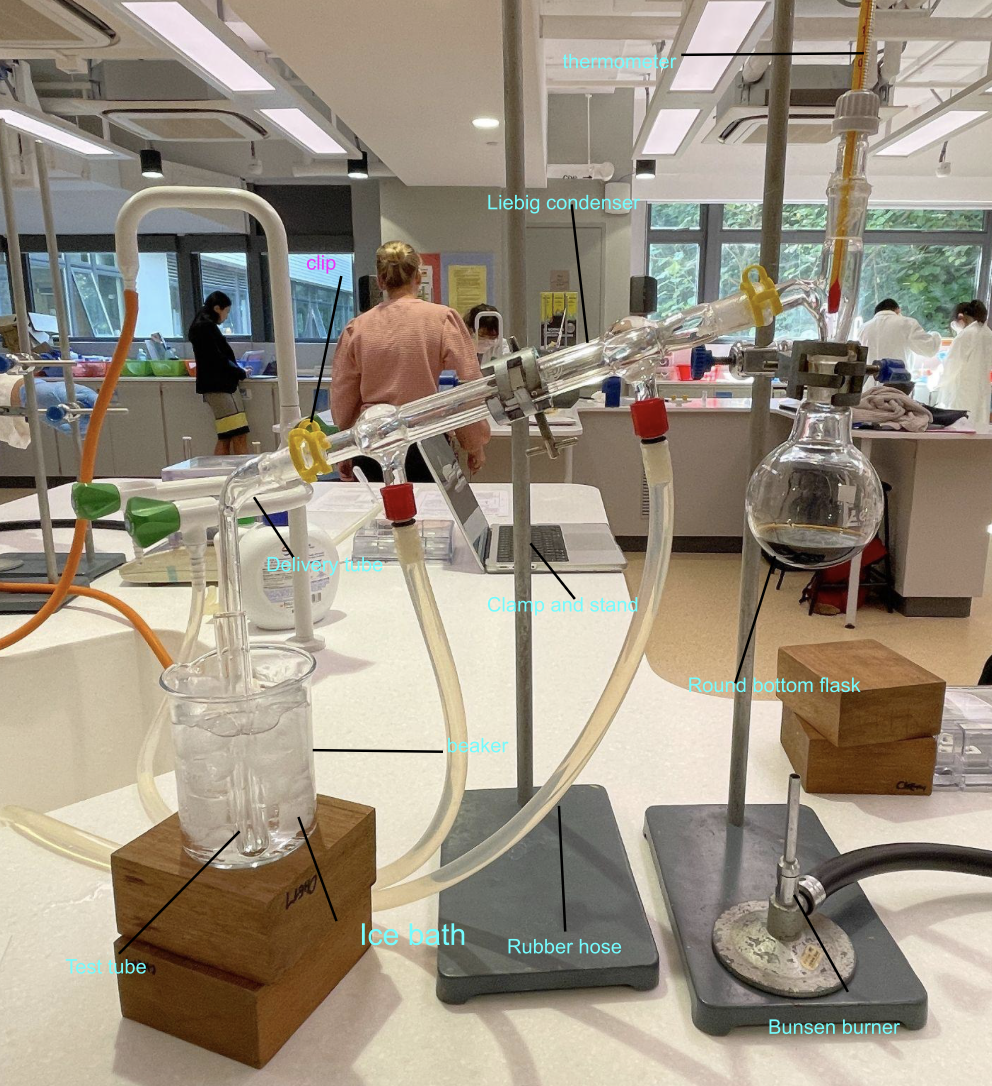
Imagine you're measuring the enthalpy change of a reaction in a simple calorimeter. A major source of systemic error is heat loss to the surroundings. Your design must account for this. You could use a lid, insulate the beaker, or even calculate the rate of cooling after the reaction and extrapolate back to find the true maximum temperature. This isn't just about being careful; it's about building error mitigation directly into your procedure.
Choosing Your Tools Wisely
The quality of your data is limited by the quality of your instruments. When selecting apparatus, you need to consider its precision and sensitivity. A school ruler marked in millimetres is fine for measuring the length of a pendulum, but it's useless for measuring the thermal expansion of a metal rod, which might only change by a fraction of a millimetre.
For that, you'd need a micrometer screw gauge or a travelling microscope. In your report, you must justify this choice. Explain that the expected change is smaller than the smallest division on a ruler, making a more precise instrument essential. The same logic applies to choosing a 100 cm³ measuring cylinder versus a 25 cm³ pipette for neutralising an acid. One is for approximate volumes; the other is for precise titration.
To test hypotheses, answer questions, and adhere to regulations, a study or trial must be designed to gather the appropriate data.
Controlling the Unseen
In a simple experiment, you have one independent variable and one dependent variable. In reality, countless other factors, or confounding variables, can influence your results. An advanced experimental design identifies and controls for these.
Let's say you're investigating how the concentration of an enzyme affects its rate of reaction. What are the confounders? Temperature is a big one; enzyme activity is highly temperature-dependent. pH is another. To control these, you would conduct all your experiments in a thermostatically controlled water bath and use a buffer solution to maintain a constant pH. Simply stating that you 'kept the temperature constant' is not enough. You must describe the exact mechanism you used to control it.
This is where theory and practice meet. Your knowledge of enzyme kinetics (a theoretical framework) informs your decision to control temperature and pH (an experimental setup). By demonstrating this link, you show a deeper understanding of the scientific process.
Time to test your understanding of these advanced design principles.
You are investigating Hooke's Law () by measuring the extension of a spring when small masses (e.g., 10g, 20g, 30g) are added. Which is the most appropriate choice of spring?
When measuring the enthalpy change of a reaction in a simple calorimeter (like a polystyrene cup), what is the primary purpose of placing a lid on the cup and wrapping it in insulation?
Thinking critically about your experimental design elevates a simple procedure into a piece of scientific inquiry. It's the difference between just following a recipe and understanding the chemistry of cooking.