Mastering Your First 10 Pull-ups
Understanding Pull-Up Mechanics
The Anatomy of a Pull-Up
The pull-up is a powerful exercise that works a surprising number of muscles, mostly in your upper body. Think of it as a symphony of muscles working together to lift you against gravity. The main performers are in your back, but your arms and even your core play crucial supporting roles.
The pull-up requires lifting one’s entire body weight against gravity, primarily targeting the large muscles of the back, especially the latissimus dorsi.
Let's break down the key players.
| Muscle Group | Role | What it Does |
|---|---|---|
| Primary Movers | ||
| Latissimus Dorsi (Lats) | Main engine | The large, wing-shaped muscles in your back that do most of the heavy lifting. |
| Biceps Brachii | Arm power | Helps bend your elbows and pull your body upward. |
| Secondary Movers | ||
| Trapezius (Traps) | Shoulder stability | Helps move and stabilize your shoulder blades. |
| Rhomboids | Scapular retraction | Pulls your shoulder blades together as you rise. |
| Teres Major | Shoulder adduction | Assists the lats in pulling your arms down and back. |
| Posterior Deltoids | Shoulder extension | The back part of your shoulder muscle, helps pull the arm backward. |
| Stabilizers | ||
| Core (Abdominals) | Body control | Keeps your body from swinging and maintains a rigid posture. |
A strong grip is also non-negotiable. Your forearm muscles work hard just to keep you hanging on the bar. Without a solid grip, you can't perform the movement, no matter how strong your back is.
Grip strength is a major factor for pull ups.
Executing the Perfect Pull-Up
Proper form is about more than just looking good. It prevents injury and ensures you're actually working the muscles you intend to. A pull-up can be broken down into four simple phases.
1. The Starting Position (Dead Hang) Grab the bar with an overhand grip, slightly wider than your shoulders. Your arms should be fully extended, and your body should hang straight. This is called a "dead hang." Engage your core slightly to prevent your legs from swinging.
Tip: Before you pull, think about pulling your shoulder blades down and back. This small movement, called scapular retraction, engages your lats right from the start.
2. The Ascent (Concentric Phase) Initiate the pull by driving your elbows down towards your ribs. Focus on using your back muscles, not just your biceps. Your body should move straight up. Continue pulling until your chin is above the bar.
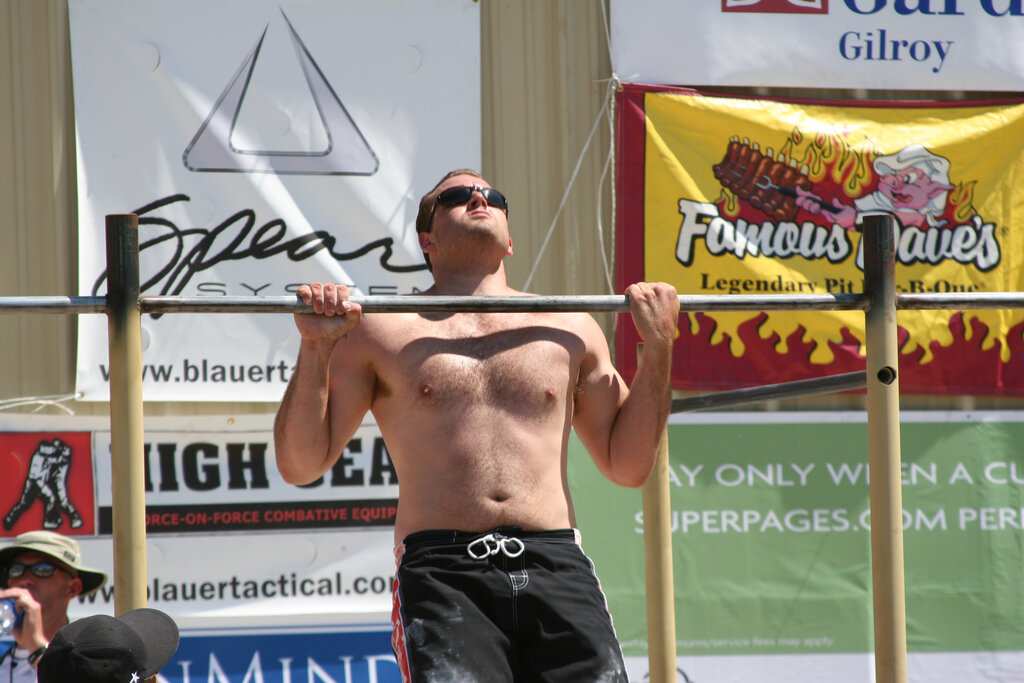
3. The Peak At the top, your chin should clear the bar. Pause for a moment. Your shoulder blades should be squeezed together, and your chest should be close to the bar.
4. The Descent (Eccentric Phase) Lower yourself back down in a controlled manner. Don't just drop. The descent should take at least as long as the ascent. Resist gravity all the way down until your arms are fully extended, returning to the dead hang position. This controlled lowering phase is crucial for building strength.
Common Mistakes to Avoid
Even with the best intentions, it's easy to develop bad habits. Watch out for these common errors, as they can limit your progress and lead to injury.
Using Momentum (Kipping) Swinging your hips or kicking your legs to get your chin over the bar is called kipping. While it's a technique in some sports like CrossFit, it's not a strict pull-up. It uses momentum instead of strength and can put your shoulders at risk. Stick to a straight, controlled movement.
Kipping reduces the time your muscles are under tension, which is what actually builds strength. To avoid it, keep your core tight and your legs still throughout the entire movement.
Half Reps Failing to fully extend your arms at the bottom or not getting your chin over the bar at the top are half reps. You're cheating yourself out of the full benefits of the exercise by avoiding the most difficult parts of the movement. Always aim for a full range of motion.
To fix this, focus on a controlled descent all the way to a dead hang on every single rep. Quality over quantity is key.
Shrugged Shoulders Letting your shoulders rise up towards your ears, especially at the top of the pull, puts unnecessary strain on your neck and shoulder joints. It also means your lats aren't fully engaged. Think about keeping your shoulders down and away from your ears throughout the lift.
Let's review the main ideas.
Time to check your understanding.
What is the primary muscle group you should focus on engaging to initiate the pull-up ascent?
The starting position of a pull-up, with arms fully extended while hanging from the bar, is called the:
Mastering these fundamentals will create a solid base. From here, you can work on building the strength to perform your first pull-up, or to increase the number of reps you can do with perfect form.