Mastering Your Document Structure
Document Purpose and Intent
Finding the Destination
Before analyzing any document, you need to ask a simple question: Why was this written? Every document has a purpose, a reason for being. Ignoring this is like starting a road trip without knowing your destination. You might see interesting things along the way, but you won't know if you're going in the right direction.
Think of the document's purpose as the destination on a map. The introduction is the starting point, and the sections that follow are the roads and landmarks. If you know you're driving from Chicago to Los Angeles, you have a clear goal. You can then evaluate whether each turn and highway gets you closer to that goal. It's the same with a document. Understanding its core purpose provides the context for everything else inside it.
Begin by identifying the purpose of the document you are examining.
An author's purpose, or intent, usually falls into one of three main categories:
- To inform: This is about presenting facts and details. Think of a news report, an encyclopedia entry, or a textbook chapter. The goal is to educate the reader without trying to sway their opinion.
- To persuade: Here, the author wants to convince you of something. They are making an argument and want you to agree with their point of view. Examples include movie reviews, political speeches, and advertisements.
- To instruct: This type of document gives you a set of steps to accomplish a task. Recipes, assembly manuals, and safety guidelines are all instructional. They are designed to be followed.
The Document's North Star
Luckily, most authors don't hide their purpose. They state it clearly, usually near the beginning of the document. This guiding statement acts as a North Star for the reader. Two key concepts help us locate this star: the problem statement and the thesis.
Thesis
noun
The main argument or central point the author is trying to prove. It's a specific, debatable claim that will be supported by evidence throughout the document.
A thesis isn't just a summary of a topic. A summary says, "This paper is about the effects of coffee." A thesis makes a claim: "While moderate coffee consumption can boost alertness, excessive intake leads to a significant decline in sleep quality."
The problem statement is the question or issue the document sets out to address. It's the gap in knowledge the author wants to fill. The thesis is the proposed answer to that problem. If the problem is, "How does social media affect teenage friendships?" the thesis would be the author's specific answer to that question.
The introduction is where the author sets the stage. It often provides background or historical context to help you understand why the topic is important right now.
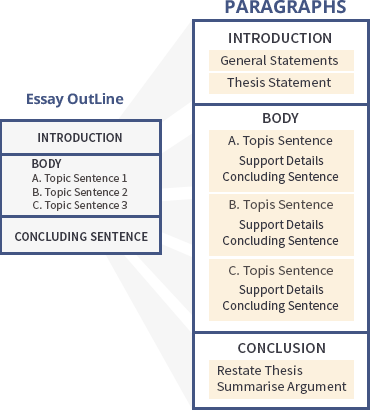
A good introduction also acts as a roadmap. It tells you what to expect and in what order. It might say something like, "This report will first examine the economic factors, then discuss the social implications, and finally propose a solution." This roadmap helps you follow the author's logic from one point to the next.
By identifying the author's intent, thesis, and roadmap at the start, you gain a powerful framework. You're no longer just a passenger; you're a navigator who understands the destination and the route.
Let's check your understanding of these core concepts.
What is the very first question you should ask before analyzing any document?
A movie review that argues why a film is the best of the year primarily has which purpose?
Identifying a document's purpose is the first and most critical step in analysis. It gives you the context needed to understand everything that follows.