Mastering Year 11 Chemistry Calculations
Mole Foundations
Counting Atoms
Atoms and molecules are incredibly small, far too small to count individually. Yet, in chemistry, we need to know how many particles are reacting. To solve this, chemists came up with a unit for counting large numbers of particles: the mole.
Think of a mole like a 'chemist's dozen'. Just as a dozen always means 12, a mole always means the same, very large number of particles.
mole
noun
The amount of any substance that contains the same number of elementary entities (e.g., atoms, molecules, ions) as there are atoms in 12 grams of pure carbon-12. The symbol for the mole is mol.
This specific number is called Avogadro's constant, named after the Italian scientist Amedeo Avogadro. It's the bridge between the microscopic world of atoms and the macroscopic world we can measure in the lab.
From Counting to Weighing
Counting particles is impossible, but we can weigh them. This is where molar mass comes in. The molar mass () of a substance is the mass in grams of one mole of that substance. Its unit is grams per mole (g/mol).
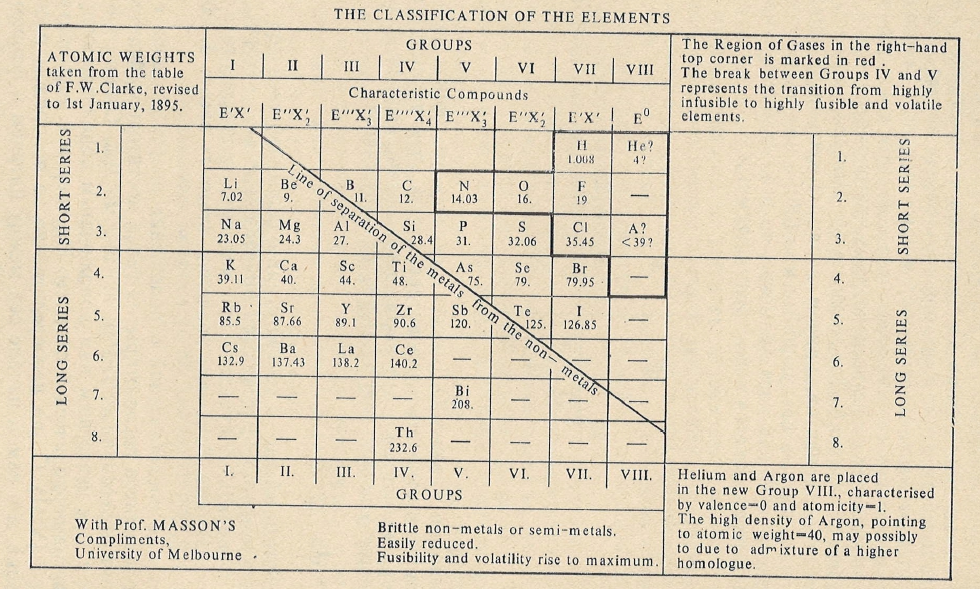
To find the molar mass of an element, you just look at the periodic table. The relative atomic mass (the number usually found below the element's symbol) is numerically equal to its molar mass in g/mol. For example, the atomic mass of carbon (C) is 12.01, so its molar mass is 12.01 g/mol.
To find the molar mass of a compound, you add up the molar masses of all the atoms in its formula. Let's calculate the molar mass for sulfuric acid ():
- Identify the atoms and their counts: Two hydrogen atoms, one sulfur atom, and four oxygen atoms.
- Find the molar mass of each element:
- H: 1.008 g/mol
- S: 32.07 g/mol
- O: 16.00 g/mol
- Calculate the total mass:
- () + () + () = 2.016 + 32.07 + 64.00 = 98.086 g/mol.
So, one mole of sulfuric acid weighs about 98.09 grams.
The Mole Formula
The relationship between moles (), mass (), and molar mass () is described by a simple and powerful formula. It's one of the most important equations you'll use in chemistry.
This formula allows you to convert between the mass of a substance (something you can measure on a balance) and the amount in moles (a count of the particles).
Let's say you have 11.7 g of table salt, sodium chloride (). How many moles do you have?
- Find the molar mass of NaCl:
- g/mol
- g/mol
- g/mol
- Use the formula:
- mol
To find the number of particles, you multiply the number of moles by Avogadro's constant:
Number of particles =
So, in our sample of salt, there are formula units of .
Special Cases and Applications
Some compounds, known as hydrated salts, incorporate water molecules into their solid crystal structure. A common example from school labs is hydrated copper(II) sulfate, . The dot indicates that five water molecules are associated with each formula unit of copper(II) sulfate.
To calculate its molar mass, you simply add the mass of the water molecules to the mass of the salt:
- g/mol
- g/mol
- g/mol
Another useful calculation is finding the percentage composition by mass. This tells you what percentage of a compound's total mass is made up of each element. This is crucial for verifying the purity of a substance.
The formula is:
Let's find the percentage composition of oxygen in water ().
- Molar mass of H₂O: 18.016 g/mol
- Mass of oxygen in one mole of H₂O: 16.00 g
- Calculate percentage:
This means that water is about 88.8% oxygen by mass.
What is the molar mass of glucose ()? (Atomic masses: C ≈ 12.01 g/mol, H ≈ 1.008 g/mol, O ≈ 16.00 g/mol)
How many moles of calcium carbonate () are in a 25.0 g sample? (Molar mass of is 100.09 g/mol)
With these tools, you can now connect the mass of a substance to the number of particles within it, a fundamental skill in chemistry.