Mastering XAUUSD Gold Chart Patterns
Gold Market Dynamics
Gold's Unique Personality
Trading gold, or XAUUSD, isn't like trading typical currency pairs. While you'll apply the same core principles of technical and fundamental analysis, gold has its own distinct behavior. It's a high-momentum asset driven by unique factors, which can cause standard price action patterns to play out with more speed and force.
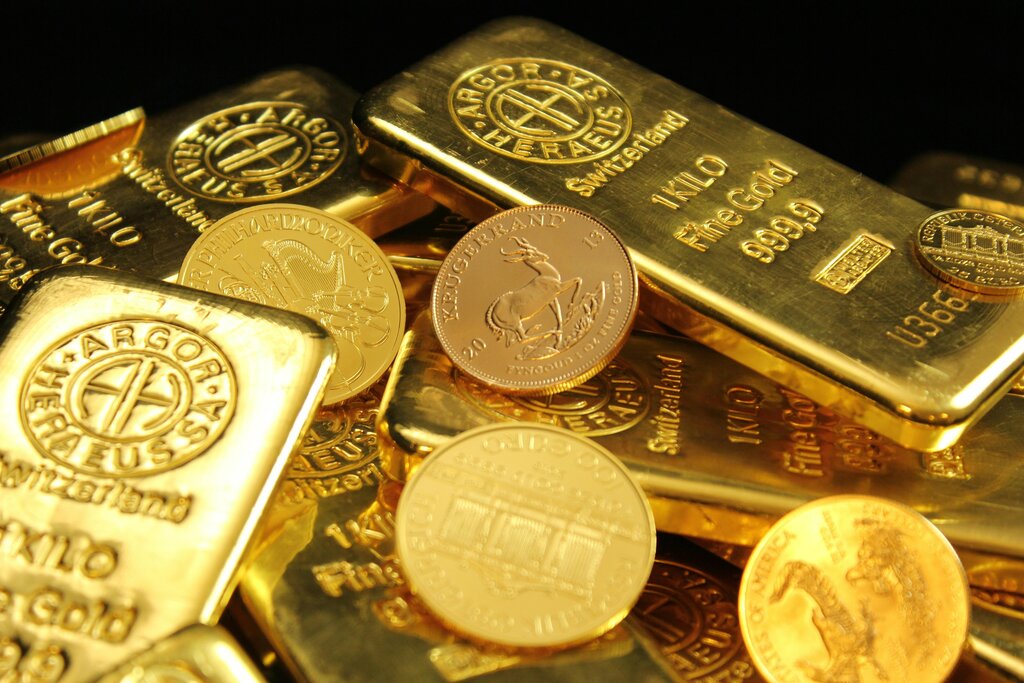
The primary reason for this is gold's status as a 'safe haven' asset. During times of economic uncertainty, high inflation, or geopolitical conflict, investors often move capital out of riskier assets like stocks and into gold. This is because gold is a physical commodity with a long history of retaining its value when confidence in fiat currencies wavers.
As history has shown, when uncertainty rises, gold remains the ultimate hedge—a tangible, universally recognised asset that has stood the test of time.
This flight to safety can cause powerful, sustained trends in the gold market that might seem disconnected from the movements in pairs like EURUSD or GBPJPY. Understanding this psychological driver is the first step to analyzing XAUUSD effectively.
Trading Sessions and Volatility
Like the forex market, gold trades 24 hours a day, but its volatility changes dramatically depending on which global market is most active. The three main sessions each bring a different character to the market.
| Session | Key Characteristics | Volatility |
|---|---|---|
| Sydney/Asia | Lower liquidity, often consolidates or ranges. | Low |
| London | High liquidity, major trends often begin here. | High |
| New York | Peak volume, especially during the overlap. | Highest |
The most significant period for XAUUSD traders is the London-New York session overlap, which typically occurs from 8:00 AM to 12:00 PM EST. During these four hours, the world's two largest financial centers are active. This convergence brings immense trading volume and liquidity, leading to the strongest and cleanest price movements of the day. Many key economic data releases from the U.S. also occur during this window, injecting further volatility into the market.
Key Fundamental Drivers
Beyond general market sentiment, two fundamental factors have an outsized impact on gold's price: the U.S. Dollar and central bank activity.
The U.S. Dollar Index (DXY) and gold have a strong inverse correlation. When the dollar strengthens, gold tends to fall, and vice versa.
This relationship exists because gold is priced in U.S. dollars globally. When the dollar becomes stronger, it takes fewer dollars to buy an ounce of gold, so its price falls. Conversely, a weaker dollar means it takes more dollars to buy the same ounce of gold, pushing its price higher. Traders often watch the DXY chart alongside XAUUSD to gauge potential directional shifts.
If the dollar falls, the price of gold usually rises and vice versa.
Central banks are another major player. They hold vast quantities of gold in their reserves to diversify their holdings and hedge against their own currency's depreciation. When central banks become net buyers of gold, it creates significant, sustained demand that can support higher prices over the long term. News reports on central bank purchases can be a powerful fundamental catalyst.
Market Structure and Liquidity
Gold's market structure contributes to its reputation for volatility. While overall liquidity is deep, it can thin out quickly, leading to sharp price spikes. These sudden moves often happen around major news events or at the open/close of key sessions. Unlike many forex pairs that might move gradually, gold has a tendency to jump from one price level to another with incredible speed.
It's also important to understand the contract specifications. A standard lot of XAUUSD represents 100 troy ounces of gold. This means that even a small price change can result in a significant profit or loss, amplifying the effect of its inherent volatility. This high-momentum nature is what attracts many traders, but it also demands disciplined risk management.
Let's check your understanding of these core concepts.
Why is gold often referred to as a 'safe haven' asset?
What is the typical relationship between the U.S. Dollar (USD) and the price of gold (XAUUSD)?
By understanding gold's safe-haven status, session-based volatility, and its inverse relationship with the dollar, you're better equipped to interpret its unique price action.