Mastering Workshop Tools and Safety
Advanced Workshop Tools
Beyond the Basics
You've mastered the hammer and the screwdriver. Now it's time to expand your toolkit with instruments that offer greater precision and open up new possibilities. These advanced tools are less about brute force and more about finesse, allowing you to shape, join, and finish projects with a professional touch.
Using tools correctly is crucial for ensuring safety and achieving the best results in your carpentry projects.
Shaping with Finesse
Two fundamental tools for shaping wood by hand are the chisel and the plane. While they both remove wood, they do so with very different goals in mind.
A chisel is designed for detailed carving, slicing, and cleaning out tight spaces, like the corners of a joint. They come in various widths and shapes, each suited for a specific task. For example, a wide bench chisel can quickly remove waste wood, while a narrow mortise chisel is built to chop out deep, rectangular holes for joinery.
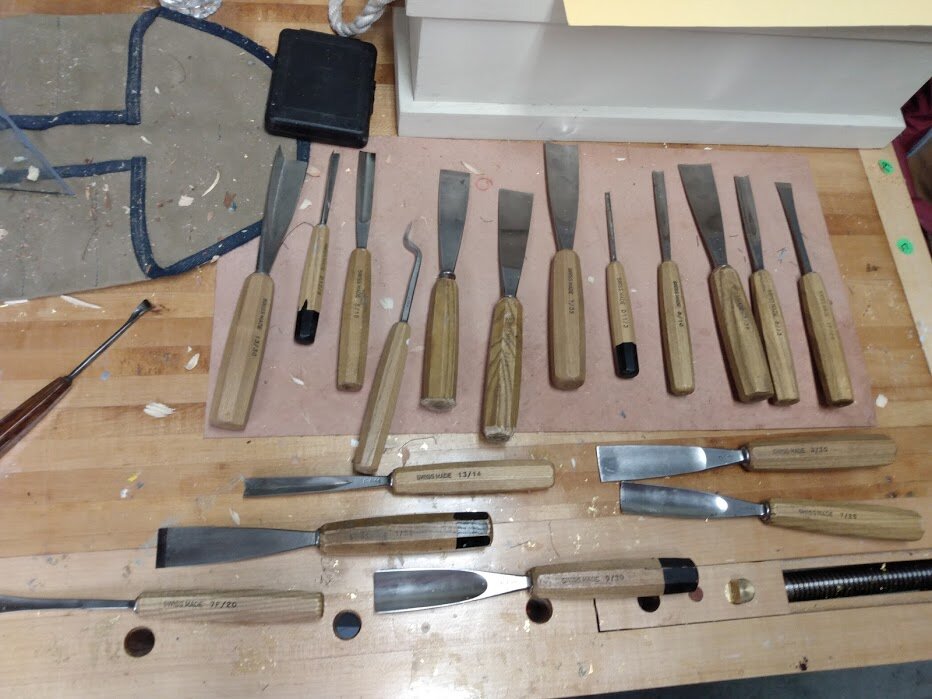
The key to using a chisel effectively is sharpness. A razor-sharp edge slices through wood fibers cleanly, giving you control. A dull chisel crushes and tears the fibers, requiring more force and leading to messy, inaccurate cuts.
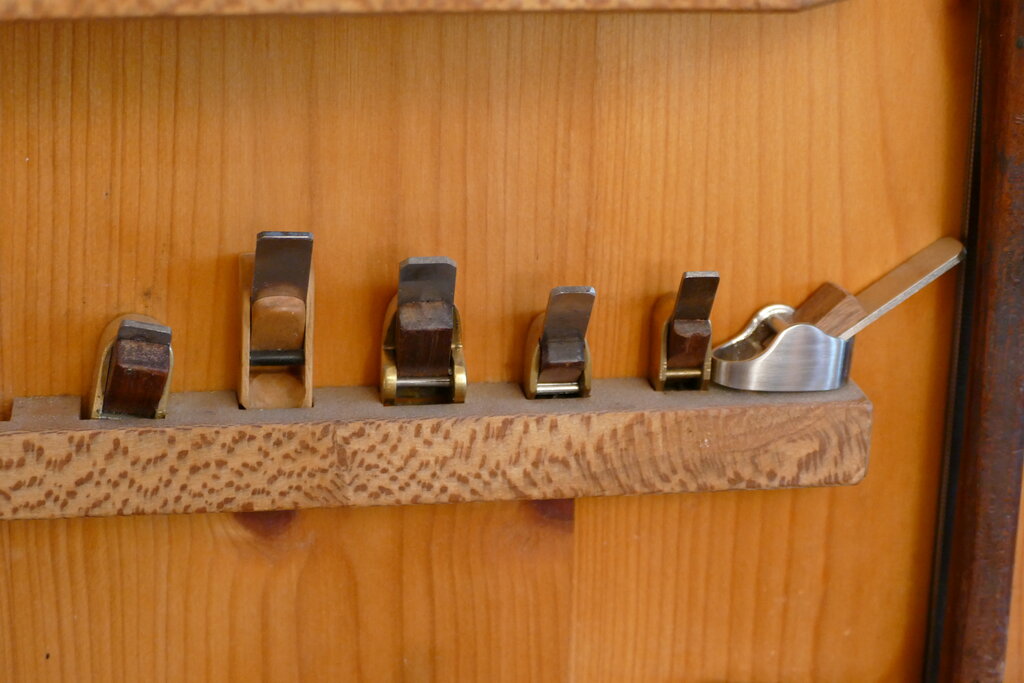
Hand planes, on the other hand, are used to flatten and smooth surfaces. They work by skimming off thin shavings of wood, much like a cheese slicer. A block plane is small enough to be used with one hand and is perfect for trimming end grain or easing sharp edges. A larger smoothing plane is used to create a glass-smooth surface on a board before finishing.
Holding It All Together
Clamps are the unsung heroes of the workshop. They act as a strong third hand, holding your work steady for sawing or chiseling. More importantly, they're essential for gluing pieces of wood together, applying firm and even pressure while the adhesive dries.
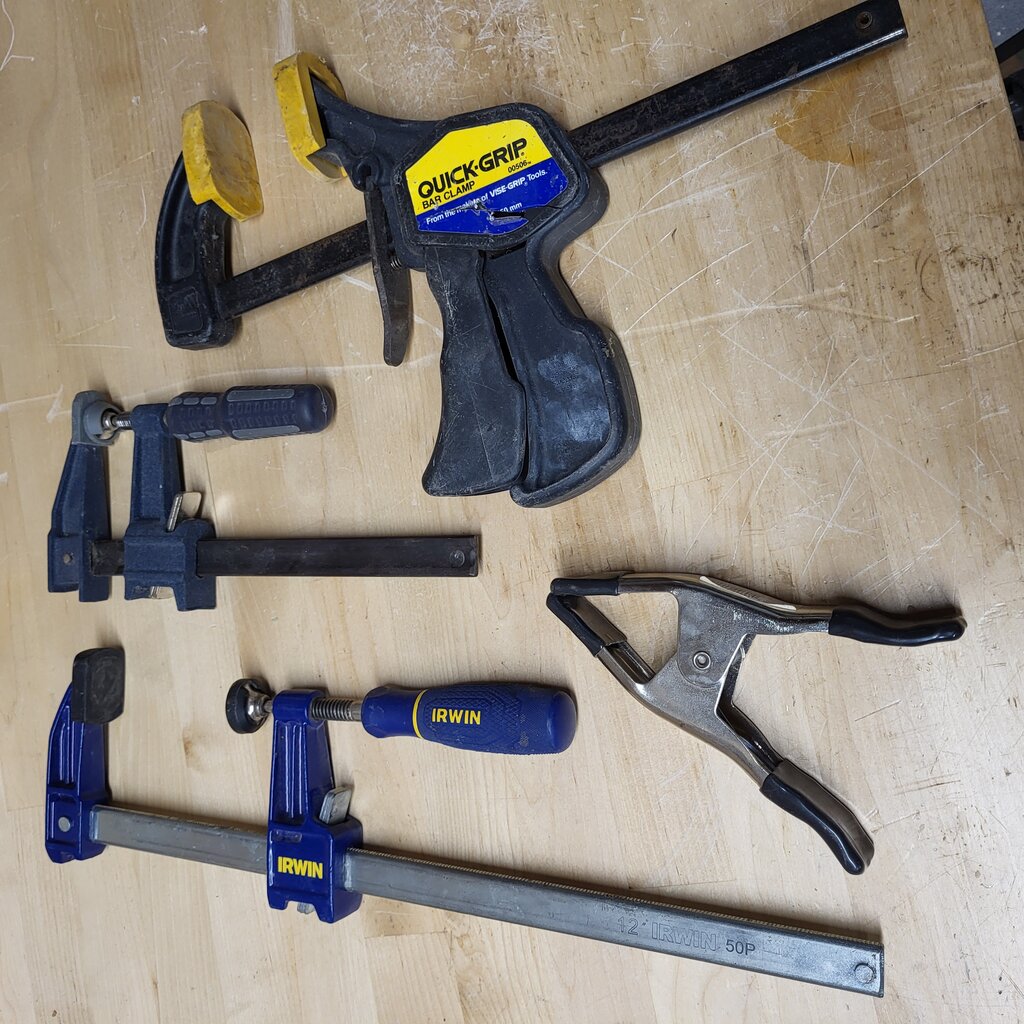
Choosing the right clamp is crucial. A small spring clamp is great for holding a template in place, but for gluing a tabletop, you'll need the long reach and significant pressure of several bar clamps.
| Clamp Type | Primary Use |
|---|---|
| C-clamp | High-pressure holding in a small area. |
| Bar / F-clamp | Spanning wider distances for panel glue-ups. |
| Quick-Grip | Fast, one-handed clamping and spreading. |
| Spring Clamp | Quick, light-pressure holding for small parts. |
Too much clamp pressure can starve a joint of glue and cause the wood to buckle. Aim for firm, even pressure that brings the pieces together snugly without squeezing out all the adhesive.
Entering the World of Power
Power tools take the principles of hand tools and add the efficiency of a motor. They don't replace the need for skill, but they allow you to work faster and perform tasks that would be difficult or impossible by hand.
The jigsaw is a master of curves. It uses a small, reciprocating blade to cut intricate shapes in wood, metal, or plastic. With the right blade and a steady hand, you can cut anything from a gentle arc to a complex pattern. It's the go-to tool for cutting circles or creating decorative cutouts.
The router is one of the most versatile power tools in a workshop. It's essentially a high-speed motor that spins a cutting bit. By changing the bit, you can perform an incredible range of tasks:
- Rounding edges: A round-over bit creates a soft, rounded edge on tables and shelves.
- Cutting grooves: A straight bit can plow a groove (a dado) to hold a shelf.
- Creating decorative profiles: Ornate bits can cut detailed, classical edge profiles for molding.
- Hollowing out areas: It can be used to carve out depressions for inlays or trays.
Learning to use a router opens up a new level of creativity and professionalism in your projects. It allows for precision joinery, smooth edges, and decorative touches that are the hallmark of fine craftsmanship.
Which tool is primarily designed for detailed carving, slicing, and cleaning out tight spaces like the corners of a joint?
A dull chisel is safer to use because it is less likely to cut you.
By understanding when and how to use these specialized tools, you can take your projects from simple construction to refined craftsmanship.