Mastering WCAG and Web Accessibility
Introduction to Web Accessibility
What Is Web Accessibility?
Web accessibility means designing websites, tools, and technologies so that people with disabilities can use them. The goal is to ensure everyone can perceive, understand, navigate, and interact with the web, as well as contribute to it.
Think of it like accessibility in the physical world. A building might have ramps, automatic doors, and elevators. These features are essential for someone in a wheelchair, but they also help a parent pushing a stroller, a delivery person with a cart, or someone on crutches. The same principle applies online.
An accessible web doesn't just help people with disabilities; it creates a better experience for all users.
Designing for Everyone
When we talk about disabilities, it's a broad spectrum. Accessibility aims to accommodate various impairments that can affect how someone uses the web.
| Disability Type | Examples Affecting Web Use |
|---|---|
| Visual | Blindness, low vision, color blindness |
| Auditory | Deafness or being hard-of-hearing |
| Motor | Inability to use a mouse, slow response time, limited fine motor control |
| Cognitive | Learning disabilities, distractibility, inability to remember or focus on large amounts of information |
However, accessibility isn't only for people with permanent disabilities. It also benefits people with temporary or situational limitations. Someone with a broken arm might rely on keyboard navigation (a temporary motor impairment). A person watching a video in a loud office needs captions (a situational auditory impairment). A user on a phone in bright sunlight benefits from high-contrast text (a situational visual impairment).
By designing for the widest range of users, we create a more robust and user-friendly product for everyone.
Rules of the Road
Beyond being the right thing to do, web accessibility is often a legal requirement. Many countries have laws mandating that digital resources, especially for government and public services, must be accessible to people with disabilities. This treats access to information as a basic human right.
To help developers and designers meet these standards, the World Wide Web Consortium (W3C) created the Web Content Accessibility Guidelines (WCAG). WCAG is a shared, global standard for web accessibility. It provides a detailed set of technical guidelines to follow, ensuring content is understandable and operable for all.
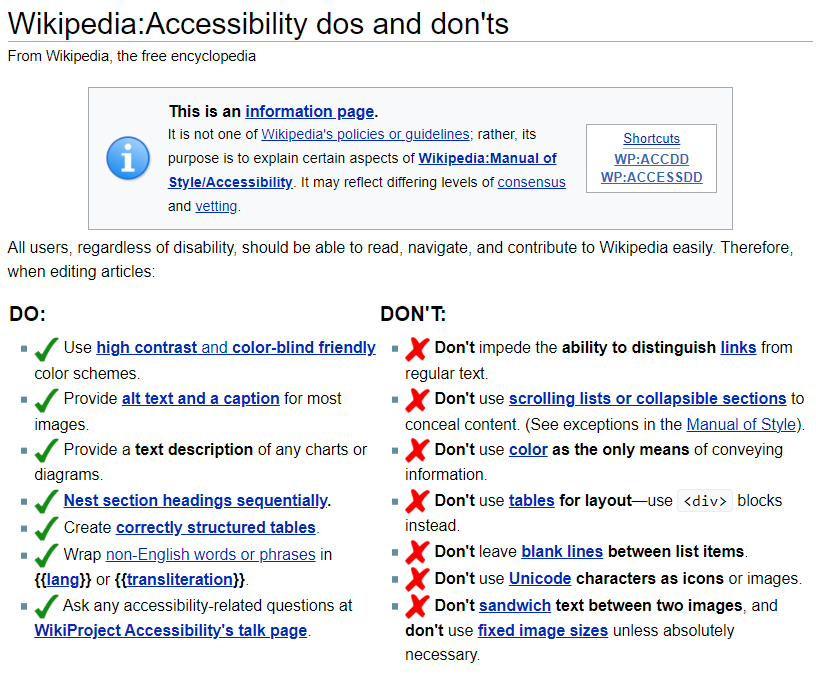
Making the web accessible is a fundamental part of creating a fair and inclusive digital world. It's about ensuring that technology empowers people, rather than creating new barriers.