Mastering Watercolour Techniques and Composition
Water Control Nuances
The Tea-to-Butter Scale
Controlling your water-to-pigment ratio is the key to moving from basic washes to intentional, vibrant paintings. Think of your paint consistency as a scale from tea to butter. This isn't just about transparency; it's about controlling how the pigment behaves on the paper.
| Consistency | Water Ratio | Pigment Ratio | Common Use |
|---|---|---|---|
| Tea | High | Low | Initial light washes, glazing, subtle backgrounds |
| Milk | Medium | Medium | Building mid-tones, defining shapes with soft edges |
| Cream | Low | High | Bold colour, fine details, layering over dry washes |
| Butter | Very Low | Very High | Opaque details, highlights with gouache, dry brushing |
Starting with a tea-like consistency allows you to lay down foundational colours without overwhelming the paper. As you build layers, you'll move towards milk and cream consistencies, adding richness and depth. A buttery mix, with very little water, is for those final, sharp details that sit right on top of your other layers.
Timing and Paper Sheen
The amount of water on your paper is just as important as the water in your brush. The 'sheen' of the paper is your guide to how the paint will react. Learning to read it tells you the perfect moment to add more colour.
Imagine you've laid down a wash of clean water. At first, it will be very glossy. Adding paint now (a technique called 'charging') will cause the pigment to explode across the wet area, creating soft, unpredictable blooms. This is great for skies or loose backgrounds.
Wait a few moments. As the water soaks in, the gloss will fade to a satin-like sheen. This is the sweet spot for controlled wet-on-wet work. Adding paint now allows colours to 'bleed' into each other, creating beautiful, soft-edged transitions. You have control, but the water still does some of the blending for you.
Once the sheen is gone and the paper looks matte, it's considered dry. Any paint applied now will have sharp, defined edges. This is your classic wet-on-dry technique, perfect for details.
Knowing when to add pigment is only half the battle. You also need to know how to take water away.
The Thirsty Brush Technique
A 'thirsty' brush is a powerful tool for lifting water and pigment. It's simply a clean, damp brush—not wet. You rinse your brush, then squeeze most of the water out with your fingers or blot it on a paper towel. The semi-dry bristles will act like a sponge.
You can use a thirsty brush to:
- Soften hard edges: Gently run the damp brush along a harsh line to blur it.
- Lift colour: If a wash is too dark, you can blot it with a thirsty brush while it's still damp to pull up some of the pigment.
- Create highlights: Lift colour completely from a damp area to reveal the white of the paper underneath, creating subtle highlights like the glint in an eye or light on water.
- Fix blooms: If you get an unwanted backrun or bloom, you can use a thirsty brush to soak up the excess water causing the problem.
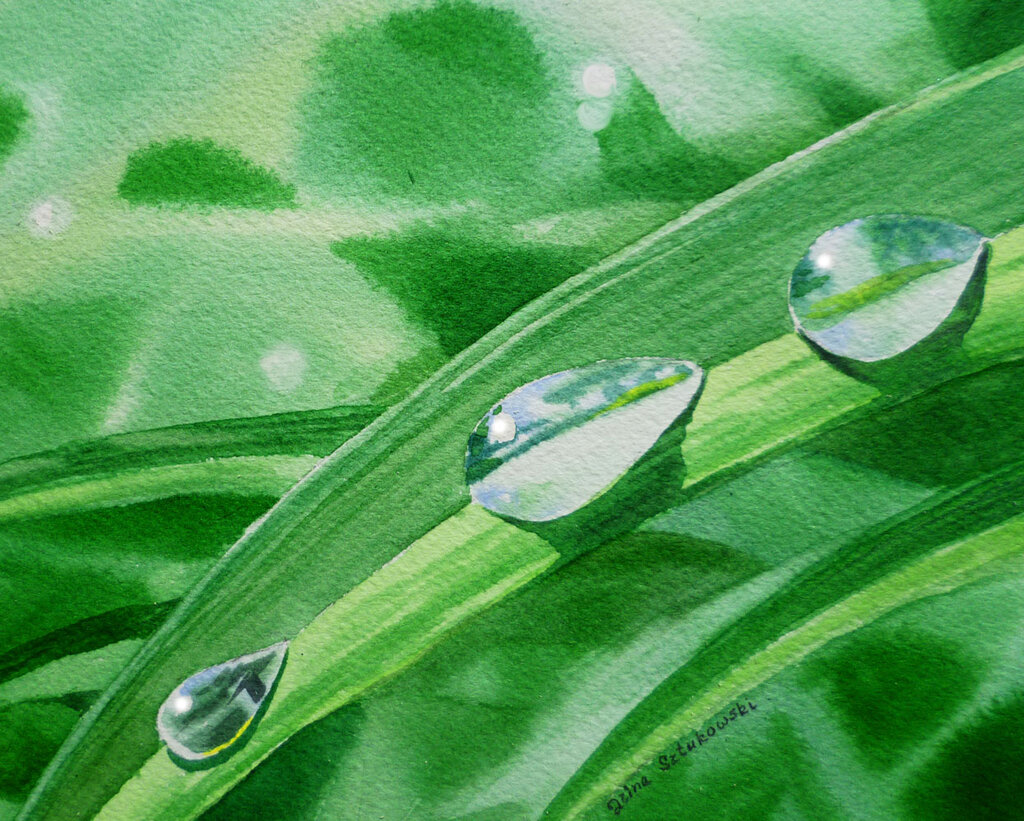
This technique gives you immense control to refine and correct your work as you go.
Your environment also plays a role. On a humid day, your paper will stay damp for longer, extending your blending time. In a dry, heated room, evaporation happens in a flash, requiring you to be decisive and quick with your strokes. Being mindful of these factors is a hallmark of an advanced watercolourist.
Time to test your understanding of these nuanced techniques.
To lay down a light, foundational wash of colour, which consistency is most appropriate?
You've painted a line, but the edge is too sharp and defined. To soften it while it's still damp, you should use a thirsty brush.
Mastering these aspects of water control will fundamentally change your paintings, giving you the confidence to execute your vision with precision.