Mastering Volleyball Rotations and Strategy
Volleyball Positions
Everyone Has a Job
A volleyball team is like a well-oiled machine. It has six players on the court, and each one has a specific role to play. When everyone does their job, the team works together seamlessly to score points. Let's break down the six main positions in volleyball.
The Playmaker
Think of the setter as the quarterback of the team. They run the offense and decide which hitter will get the ball. Their main responsibility is to deliver a precise, hittable ball—a 'set'—to an attacker. A good setter has great hands, understands the flow of the game, and can make quick decisions under pressure. They touch the ball on almost every offensive play, making their role crucial to the team's success.
Setter
noun
The player who orchestrates the team's offense by setting the ball to the hitters.
The Attackers
Hitters, also known as attackers or spikers, are the players who score most of the points. There are three main attacking positions, each with a different job at the net.
First is the outside hitter, who attacks from the left side of the court. They are often the team's most consistent attacker and the go-to player in tough situations. Besides hitting, they are also primary passers and play a key defensive role.
Outside hitter
noun
A versatile player who attacks from the left antenna and is a primary passer.
Next is the middle blocker. Their name says it all. They are the team's main line of defense at the net, responsible for blocking the opponent's attacks. They need to be quick on their feet to move from side to side and shut down hitters. On offense, they often run fast, powerful attacks right in the middle of the court to keep the other team's defense off balance.
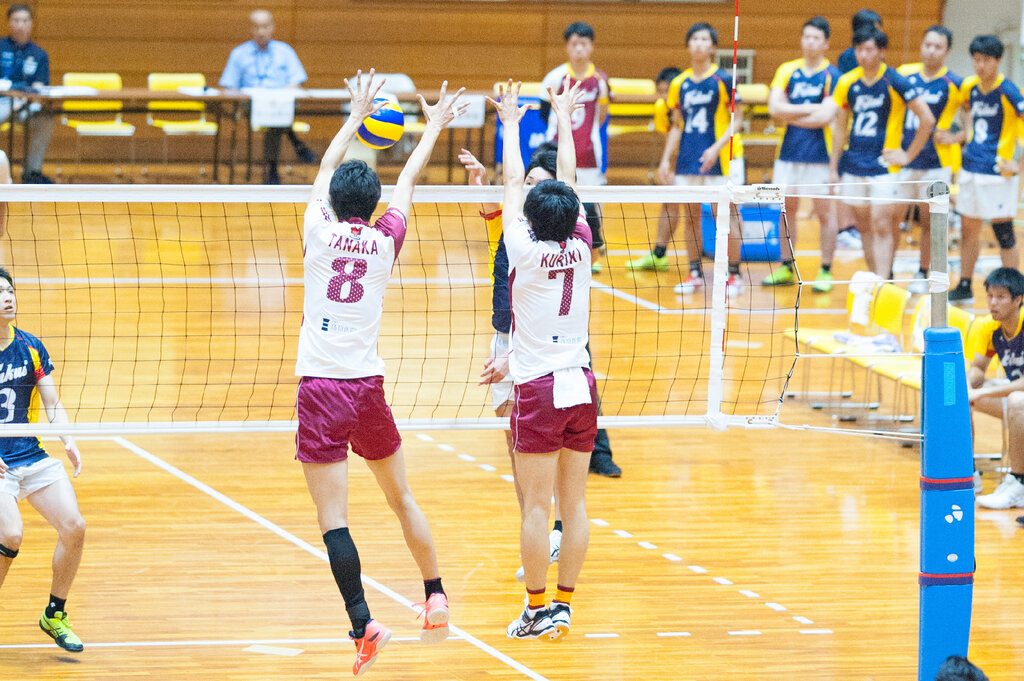
Finally, there's the opposite hitter, who plays on the right side of the court, opposite the setter. This player is a powerful attacker and the primary blocker against the other team's outside hitter. They are often a secondary setting option if the setter can't get to the ball.
Middle blocker
noun
A player who specializes in blocking and quick attacks from the center of the net.
Opposite hitter
noun
A right-side attacker who also serves as a primary blocker and secondary setter.
The Defenders
While hitters score the points, defensive players prevent the other team from scoring. These specialists excel in the back row, focusing on passing the ball to the setter and keeping rallies alive.
The libero is a purely defensive specialist who wears a different colored jersey to stand out. They are masters of serve reception and digging—passing a hard-driven attack. Liberos can substitute freely in the back row for any player, but they aren't allowed to serve or attack the ball from above the net.
Libero
noun
A defensive specialist who plays only in the back row and wears a contrasting jersey.
The defensive specialist, or DS, has a similar role to the libero but with fewer restrictions. They are also experts in back-row defense and passing. Unlike a libero, a DS can substitute for any player and is allowed to serve and perform back-row attacks. Teams often use a DS to sub in for a weaker defensive hitter when that player rotates to the back row.
Understanding these roles is the first step to seeing how a volleyball team works together. Each position is a piece of the puzzle, and when they all fit, a team can play powerful, coordinated volleyball.
Which player is often compared to a quarterback because they run the offense and decide which hitter gets the ball?
What are the two primary responsibilities of a middle blocker?