Mastering VO2 Max
Introduction to VO₂ Max
Your Body's Oxygen Engine
During intense exercise, your body feels like a furnace. Your heart pounds, your lungs heave, and your muscles burn. All this activity demands energy, and the primary fuel for that energy is oxygen. But how much oxygen can your body actually use when you're pushing your limits? The answer to that question is a measurement called VO₂ max.
VO₂ max
noun
The maximum rate at which your body can consume oxygen during maximal exercise. It's expressed in milliliters of oxygen used per kilogram of body weight per minute (mL/kg/min).
Think of VO₂ max as the horsepower of your aerobic engine. A higher VO₂ max means your body is more efficient at taking in oxygen, delivering it to your muscles, and using it to produce energy. This is why it's considered the gold standard for measuring cardiorespiratory fitness.
A higher VO₂ max isn't just for athletes. It's a strong predictor of overall health and longevity. Better aerobic fitness is linked to a lower risk of chronic diseases like heart disease, diabetes, and even some cancers.
The Oxygen Pipeline
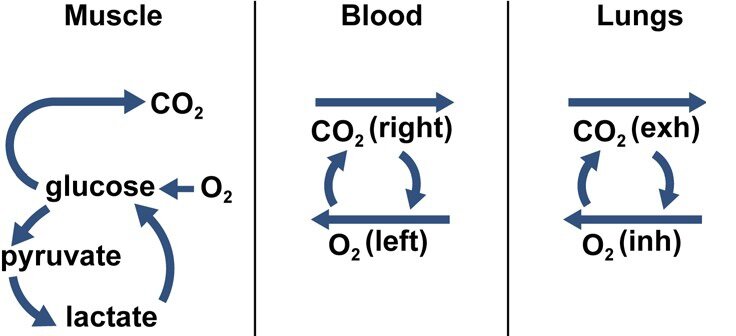
So what's happening inside your body to make this all work? Reaching your VO₂ max involves a complex, coordinated effort from your respiratory and cardiovascular systems. It's like a finely tuned delivery pipeline.
- Lungs: It all starts with your breath. When you inhale, your lungs pull oxygen from the air and transfer it into your bloodstream. The efficiency of this gas exchange is the first critical step.
- Heart and Bloodstream: Your heart then pumps this newly oxygenated blood away from the lungs and throughout your body. The amount of blood your heart can pump per minute (cardiac output) is a major factor. The blood itself, specifically the hemoglobin in red blood cells that carries oxygen, is also key.
- Muscles: Finally, the oxygen-rich blood reaches your working muscles. The muscles must be able to extract the oxygen from the blood and use it inside their cellular power plants, the mitochondria, to generate adenosine triphosphate (ATP), the energy currency of your cells.
Your VO₂ max is the limit of this entire system. A bottleneck in any one of these steps—breathing, pumping blood, or using oxygen in the muscles—will cap your maximum oxygen uptake.
What Determines Your Max
Why do some people have a higher VO₂ max than others? It's not just about who trains the hardest. Several factors, some within our control and some not, play a role.
| Factor | Impact on VO₂ Max |
|---|---|
| Genetics | Accounts for a significant portion of your baseline aerobic capacity. |
| Age | VO₂ max typically peaks in your 20s and declines by about 10% per decade after that. |
| Sex | On average, males have a higher VO₂ max than females, largely due to differences in body composition, blood volume, and hemoglobin concentration. |
| Training Status | This is the big one you can control. Consistent endurance training can significantly improve how efficiently your body transports and uses oxygen. |
| Body Composition | Since VO₂ max is measured relative to body weight, having lower body fat can result in a higher value. |
While you can't change your genes or turn back the clock, understanding these factors provides a complete picture of aerobic fitness. It highlights the powerful role that consistent training plays in maximizing your body's potential, regardless of your starting point.
What does VO₂ max measure?
Which of these components is NOT part of the three-step oxygen pipeline described for achieving VO₂ max?
VO₂ max is a fundamental concept in fitness and health, representing the peak performance of your body's oxygen-processing pipeline. It reflects the integrated function of your lungs, heart, blood, and muscles working together under stress.