Mastering Visual Notetaking
Introduction to Visual Notetaking
More Than Just Doodles
Think back to the last time you sat through a long lecture or meeting. Did your mind wander? Did you find yourself doodling in the margins of your notebook? If so, you were already on the verge of practicing visual notetaking.
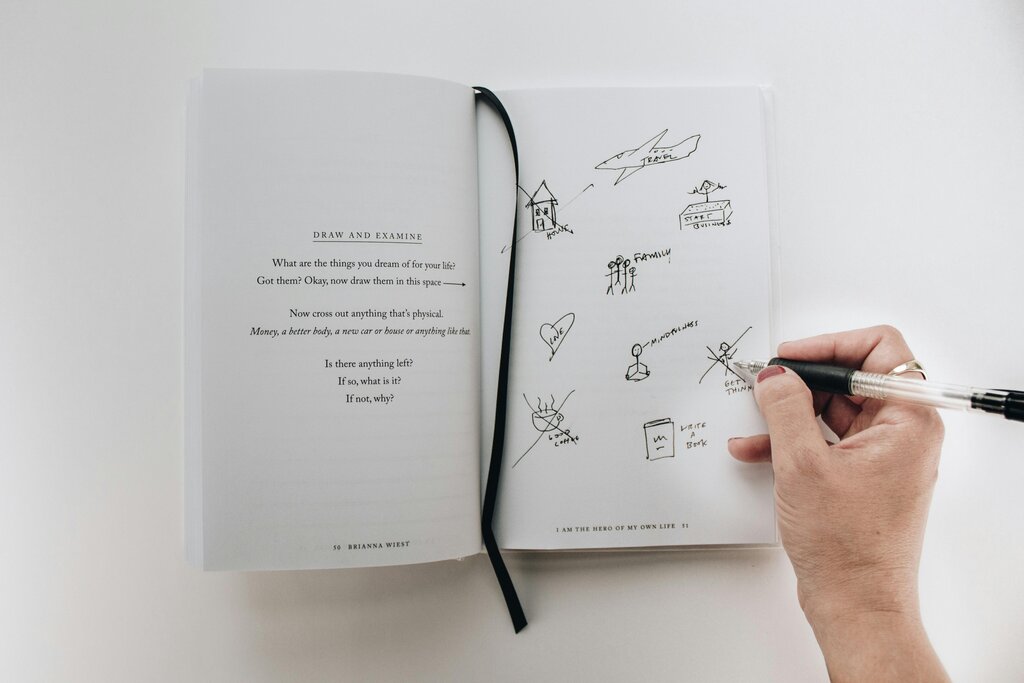
Visual notetaking, or sketchnoting, is a way of capturing ideas using a mix of handwriting, drawings, symbols, and other visual elements. It's not about creating a masterpiece. It's about creating a more effective and personal record of information. Instead of just writing down words verbatim, you process and organize the information in a way that makes sense to you.
Visual note-taking is a technique that blends text and visuals — such as drawings, symbols, and diagrams — to capture information in a way that’s engaging and memorable.
This practice isn't new. People have been using images to record information for millennia, from cave paintings to Leonardo da Vinci's detailed journals. The modern concept of sketchnoting was popularized by designer Mike Rohde, who found that combining simple drawings with text helped him stay focused and recall information from conferences more clearly. He gave a name to what many people already did intuitively.
Why It Works
The power of visual notetaking lies in how it engages your brain. When you only write down words, you're primarily using the verbal processing part of your mind. But when you add visuals, you also activate the visual processing part. Engaging both sides makes the information stickier and easier to recall later.
This method forces you to listen actively. You can't just transcribe everything. You have to synthesize the key points and decide how to represent them visually. This act of processing leads to deeper comprehension and better retention. It turns passive listening into an active, creative exercise.
Busting the Myths
Many people are hesitant to try visual notetaking because they believe they can't draw. This is the biggest misconception. The goal is to capture ideas, not to create fine art. Simple stick figures, arrows, boxes, and symbols are all you need. If you can draw a square, a circle, and a triangle, you have all the skills required.
It’s about ideas, not art. Your notes are for you. As long as they make sense to you, they're successful.
Another common myth is that there is a single “right” way to do it. There isn't. Your visual notes will be as unique as your own handwriting. Some people prefer a structured layout with clear columns, while others prefer a more free-flowing mind-map style. Experiment to find what works for you. The only rule is to make your notes useful for your own learning and recall.

You can use sketchnotes almost anywhere you take notes: in class, during a business meeting, while watching a documentary, or even when planning a project. It’s a versatile skill that makes learning more engaging and effective.
What is the primary goal of visual notetaking, or sketchnoting?
According to the provided text, why is visual notetaking effective for memory?
Visual notetaking is a powerful and flexible tool. By combining simple visuals with text, you can improve your focus, understanding, and memory.