Mastering Vine Training and Display
Architectural Support Selection
The Vine's Skeleton
Choosing a support for a grapevine isn't just about giving it something to climb. It's an architectural decision that will define its shape, health, and productivity for decades. A mature vine is a surprisingly heavy and powerful plant, capable of pulling down flimsy structures. The support system you choose is its permanent skeleton, dictating how it interacts with sunlight, air, and the surrounding landscape.
The fundamental choice is between training the vine overhead, creating a living canopy, or vertically, like a living wall. Each approach has distinct requirements for materials and construction, and creates a completely different aesthetic and microclimate in your garden.
Overhead Structures
Overhead supports like pergolas and arbours are designed to create shade and a sense of enclosure. A pergola typically forms a shaded walk or seating area, often attached to a house, while an arbour is usually a smaller, freestanding archway that serves as a garden entrance or focal point. Both lift the vine's canopy up and away from the ground, creating a ceiling of foliage and fruit.
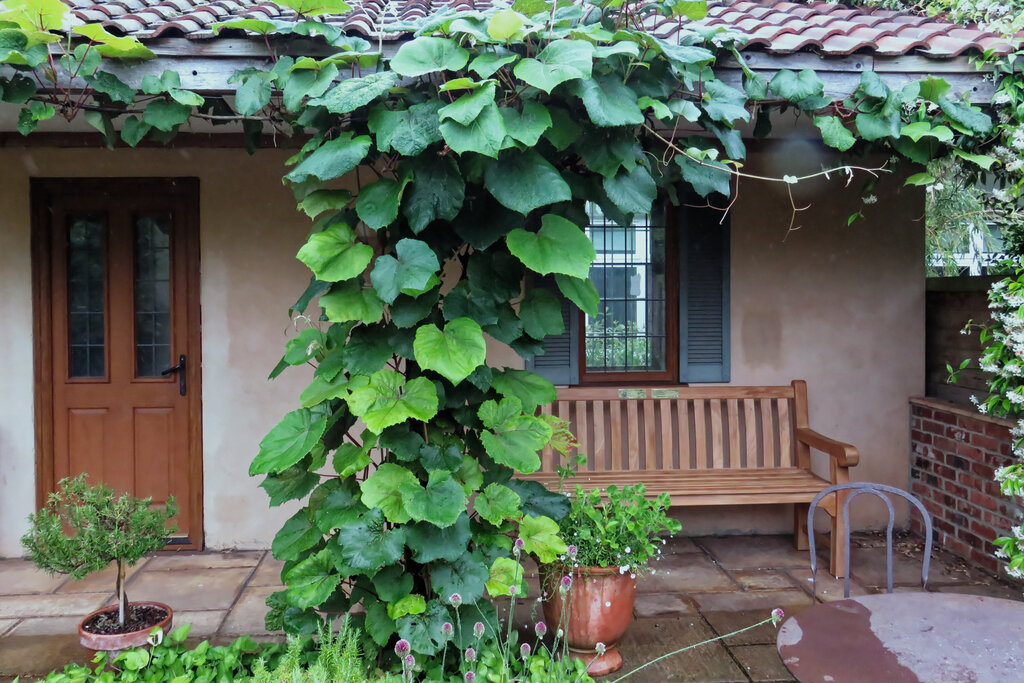
The visual impact is significant. A well-covered pergola transforms a sun-baked patio into a cool, green room. The dappled light and hanging grape clusters create a classic, romantic atmosphere. Arbours offer a more contained statement, framing a view or marking a transition between garden spaces.
When selecting materials, think about longevity and heat. Woods like cedar or oak offer a natural look but require maintenance to prevent rot. Galvanised steel or aluminium are incredibly durable and sleek, but can become scorching hot in direct sun, potentially damaging tender new shoots that touch the surface.
These structures also alter their immediate environment. The dense canopy of a mature vine on a pergola significantly lowers the temperature and raises the humidity underneath. This is ideal for a seating area, but poor air circulation can increase the risk of fungal diseases like powdery mildew. Strategic pruning to maintain airflow is essential.
Vertical Systems
For a more space-efficient and modern look, training vines vertically against a wall or on a freestanding trellis is an excellent option. This method turns a blank surface into a productive, green facade.
The most common system uses high-tensile wires mounted on brackets. When fixing these to a wall, airflow is critical. You must use brackets or straining eye bolts that hold the wires at least 10-15 cm away from the wall surface. This gap prevents moisture from being trapped against the wall, which can lead to damp and rot, and it allows air to circulate freely around the vine's leaves and fruit, reducing disease pressure.