Mastering Vibe Coding with Claude AI
Introduction to Vibe Coding
Coding with a Conversation
Imagine describing a software feature in plain English and watching the code appear, ready to run. That's the core idea behind vibe coding. Instead of writing every line of code yourself, you have a conversation with an AI, guiding it toward the result you want.
Vibe coding is a way of building software where you express intent in natural language, let an AI (usually a large language model) generate runnable code, and iterate on the live behavior rather than painstakingly authoring every line yourself.
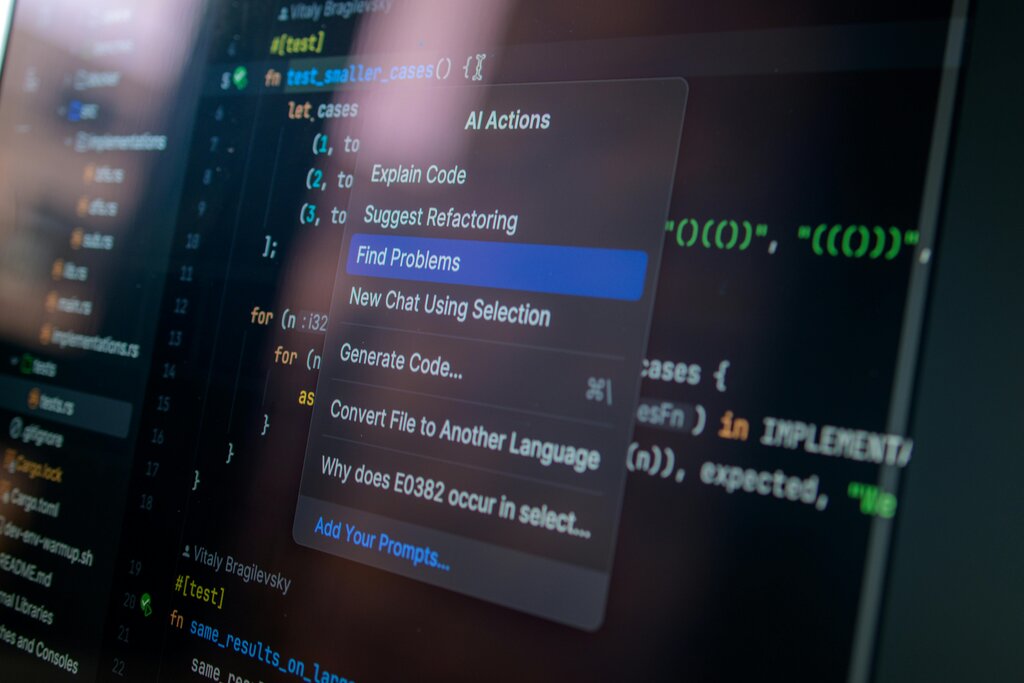
The focus shifts from the precise syntax of a programming language to the overall goal or "vibe" of the project. It's an interactive and experimental process. You give the AI a prompt, it generates code, and you test it. If it's not quite right, you refine your prompt and try again. The developer's role becomes more like a director, providing high-level instructions and evaluating the outcome.
Origins and Principles
The term "vibe coding" was coined by computer scientist Andrej Karpathy in early 2025 to describe this emerging style of AI-assisted development. While AI has been helping with code for years through autocompletion and suggestions, vibe coding represents a more fundamental change in the developer's workflow. It's built on a few key principles.
Natural Language First: The primary input is human language. Instead of writing for (int i = 0; i < 10; i++), you might say, "Create a loop that runs ten times."
Iterative Experimentation: Vibe coding is not a one-shot process. It's a rapid cycle of prompting, generating, testing, and refining. The goal is to converge on a working solution through trial and error.
Focus on Intent: The developer concentrates on the what (the desired outcome) rather than the how (the specific implementation). This allows for more creative, high-level problem-solving.
Evaluation is Key: The programmer's most important skill becomes the ability to critically evaluate the AI's output. Is the code efficient? Is it secure? Does it handle edge cases correctly? The human is the final judge.
Benefits and Limitations
This new approach to programming has clear advantages, but it's not without its drawbacks. It excels at rapidly creating prototypes and exploring new ideas, as you can generate functional code much faster than writing it manually. It also lowers the barrier to entry, allowing people with less formal programming experience to build things.
However, this speed can come at a cost. The code generated by an AI might not be optimized, could contain subtle bugs, or might introduce security vulnerabilities. Developers can also become overly reliant on the AI, potentially stunting their own deep understanding of programming principles and language specifics. It's a powerful tool, but one that requires careful oversight.
| Benefit | Limitation |
|---|---|
| Speed | Lack of Control |
| Quickly generate code for prototypes and ideas. | Generated code may not be precise or optimal. |
| Accessibility | Potential for Errors |
| Lowers the barrier for non-expert programmers. | AI can introduce subtle bugs or security flaws. |
| High-Level Focus | "Black Box" Problem |
| Frees developers from writing boilerplate code. | Difficult to debug or understand the AI's logic. |
| Exploration | Skill Atrophy |
| Easy to test different approaches and solutions. | Over-reliance may weaken core programming skills. |
What is the primary focus for a developer when using the "vibe coding" approach?
Which of the following best describes the typical workflow of vibe coding?
Vibe coding represents a significant shift, turning software development into a more collaborative process between human and machine.