Mastering Vibe Coding
Defining Vibe Coding
From Lines to Intent
You're already familiar with the rhythms of the software development lifecycle. You plan, you code, you test, you deploy. The core of this process has always been translating human ideas into precise, machine-readable syntax. But what if the translation step became a conversation instead of a transcription?
This is the core idea behind a new paradigm where developers collaborate with AI agents. It’s not just about better autocomplete or generating boilerplate. It's about shifting from writing lines of code to orchestrating system behavior through high-level, natural language instructions.
Vibe coding is an intent-driven coding practice where developers interact with AI agents using abstract commands, partial code snippets, and goal-oriented natural language.
In this model, the 'vibe' is your conceptual vision. It’s the answer to questions like, "What should this feature feel like to the user?" or "How should this system handle unexpected loads?" The 'coding' is the AI's job: turning that intent into functional, efficient code. Your role changes from a bricklayer, meticulously placing each line of syntax, to an architect-director, defining the blueprint and guiding the construction.
The Orchestrator's Mindset
This shift demands a new mental model. Instead of thinking about the specifics of an algorithm or the syntax of a for-loop, you focus on defining boundaries and goals. You're less of a hands-on craftsman and more of a system conductor.
Your primary tasks become:
- Articulating Intent: Clearly describing the desired outcome, including edge cases and constraints.
- Guiding Refinement: Reviewing the AI's output and providing corrective feedback.
- System Integration: Ensuring the generated code fits seamlessly into the larger architecture.
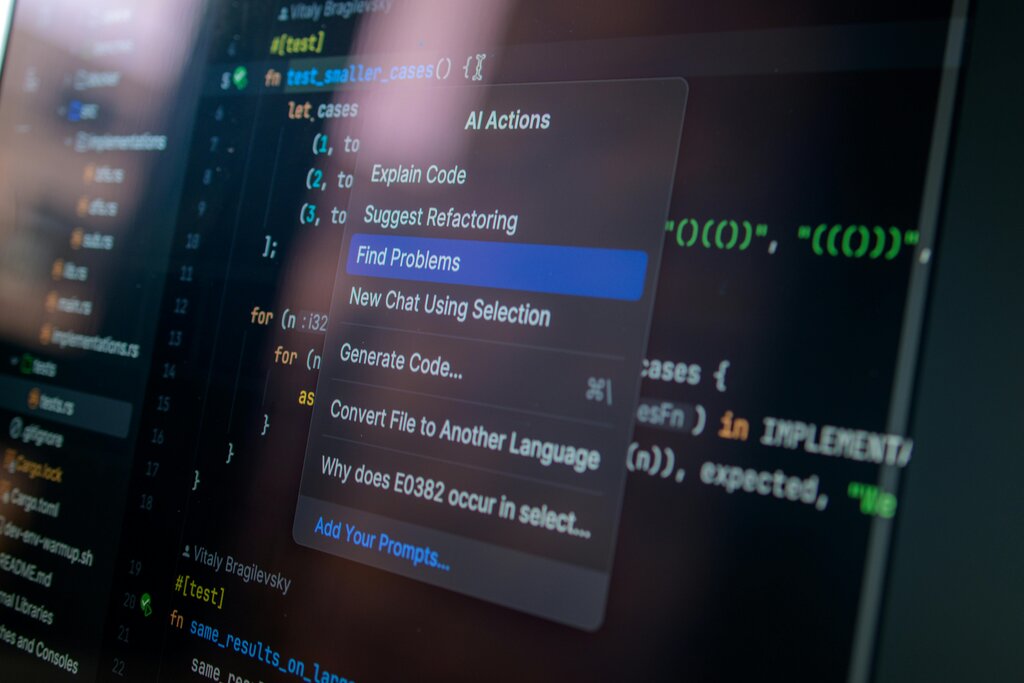
Consider building a user authentication flow. In a traditional approach, you'd write the code for the form UI, the client-side validation, the API endpoint, the database query, and the password hashing. With vibe coding, your prompt might be: "Create a secure login page with email and password fields. Add validation for email format and password strength (at least 8 characters, one number, one special character). On successful login, redirect to the user dashboard."
The focus is on what needs to be done, not how to do it line-by-line. This is a move from procedural thinking to declarative direction.
| Traditional Development | Vibe Coding |
|---|---|
| Focus | Syntax, algorithms, implementation details |
| Primary Skill | Writing precise, efficient code |
| Developer Role | Creator, implementer |
| Interaction | Human ↔ Code Editor |
Thinking in Systems
Working at this higher level of abstraction requires a strong grasp of system design. Since you're no longer buried in the details of a single function, you have more cognitive bandwidth to think about how different components interact.
You might spend less time debugging a misplaced semicolon and more time considering questions like:
- How will this new service impact database performance?
- What is the most intuitive API design for this feature?
- Are there security vulnerabilities in the overall workflow?
This is where becomes a critical skill. It’s the art and science of crafting instructions that give the AI the right amount of context, creativity, and constraint. A well-crafted prompt is like a well-written spec, guiding the AI to produce a robust and correct implementation on the first try.
Essentially, vibe coding outsources the tedious parts of programming, freeing you up to focus on the creative and strategic aspects of software engineering. It's a collaboration where you provide the vision and the AI provides the velocity. The goal isn't to replace developers, but to augment them, turning them into 10x thinkers rather than just 10x typists.
Now that we have a shared definition, let's test your understanding.
According to the "vibe coding" paradigm, what is the fundamental shift in a developer's role?
In the context of vibe coding, which of these tasks is NOT a primary responsibility for the developer?
In the next section, we'll explore the tools that make this workflow possible and look at a practical example of vibe coding in action.