Mastering Vibe Coding
Introduction to Vibe Coding
What Is Vibe Coding?
Instead of writing code line by line, what if you could just describe what you want an application to do, and a computer would build it for you? That's the basic idea behind vibe coding. It's a way of developing software by collaborating with an Artificial Intelligence, specifically a large language model (LLM).
Vibe coding is an AI-assisted software development method where a coder provides high-level instructions to a large language model (LLM), allowing it to generate and iteratively refine code.
Think of it as shifting your role from a construction worker, who lays every brick, to an architect, who designs the blueprint and directs the work. You provide the high-level vision—the "vibe"—and the AI handles the syntax and boilerplate. Your job becomes guiding the AI, testing the output, and refining your instructions until the software works as intended.
The term gained popularity after being discussed by computer scientist Andrej Karpathy in early 2025. It captures the intuitive, conversational nature of this new programming style.
The Process in Action
The engine behind vibe coding is a large language model. These models are trained on billions of lines of code from public repositories, programming tutorials, and documentation. This massive dataset allows them to understand the patterns, syntax, and logic of various programming languages. When you give an LLM a prompt in natural language, it uses this training to predict the most likely code that fulfills your request.
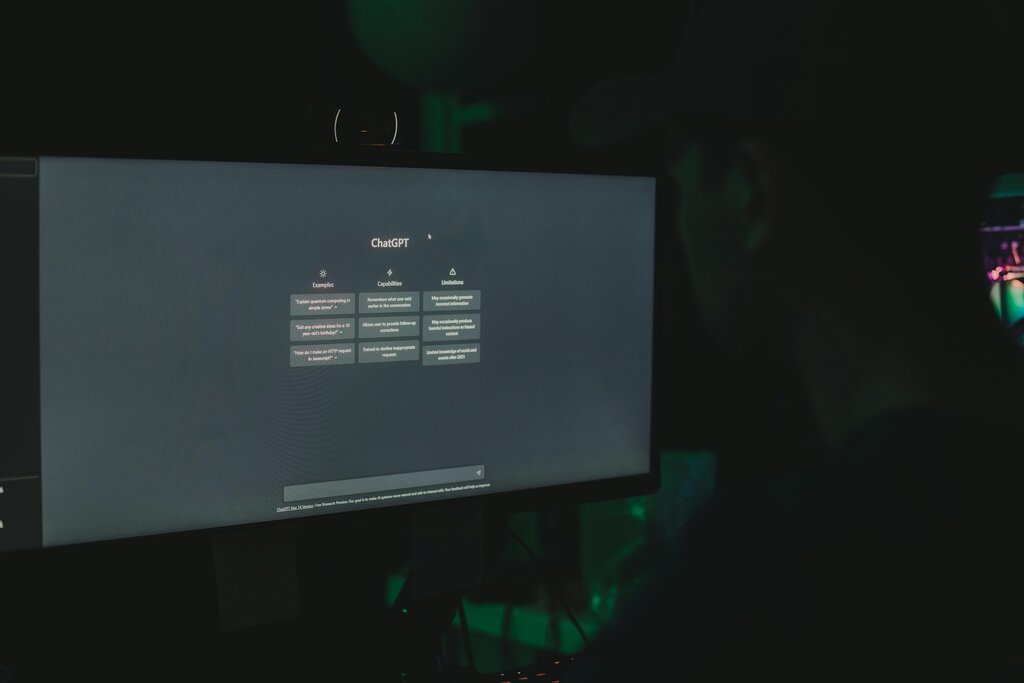
The process isn't a single command. It's an iterative conversation. You might start with a simple prompt like, "Create a web page with a button that shows a random cat fact." The AI generates the initial HTML, CSS, and JavaScript. You then test it and provide feedback: "Make the button green," or "The text is too small," or "Add an image of a cat next to the fact." With each instruction, the AI refines the code.
How It Compares to Traditional Coding
Vibe coding isn't a total replacement for traditional programming, but rather a different approach. The core skills and focus change significantly.
| Aspect | Traditional Coding | Vibe Coding |
|---|---|---|
| Developer's Role | Writer and builder | Director and editor |
| Primary Skill | Syntax and algorithms | Prompting and evaluation |
| Process | Manual, line-by-line creation | Conversational and iterative |
| Focus | Low-level implementation | High-level logic and user experience |
In the traditional model, a developer must know the precise syntax of a language. Forgetting a semicolon or misplacing a bracket can break the entire program. In vibe coding, the developer's primary skill is articulating their intent clearly and evaluating the AI's output for correctness, efficiency, and security.
Benefits and Limitations
Like any new technology, vibe coding has both powerful advantages and significant drawbacks.
Benefits:
- Increased Speed: It dramatically accelerates prototyping and building simple applications.
- Greater Accessibility: It opens up software development to people who aren't expert programmers. Product managers, designers, and scientists can build tools without needing a dedicated engineering team.
- Enhanced Focus: It allows experienced developers to offload tedious tasks and concentrate on more complex architectural challenges.
Limitations:
- Lack of Understanding: It's possible to generate code that works without knowing why it works. This can be a major problem when debugging or trying to modify the code later.
- Potential for Errors: LLMs are not perfect. They can generate inefficient, insecure, or subtly buggy code that a novice might not be able to spot.
- Over-reliance: Relying exclusively on vibe coding can prevent a person from learning the fundamental principles of programming, which are crucial for solving complex problems.
Vibe coding is a powerful tool for rapid development, but it's not a substitute for understanding the code the AI generates.
This new paradigm represents a major shift in how we interact with computers to create software. It transforms programming from a purely syntactical exercise into a collaborative dialogue between human intent and machine execution.
What is the central concept of 'vibe coding'?
The shift in a developer's role from a 'construction worker' to an 'architect' in vibe coding implies that the focus moves from ____ to ____.