Mastering UX Design from Scratch
Understanding UX Foundations
What Is User Experience?
User Experience, or UX, is the overall feeling a person has when using a product or service. It's not just about how something looks, but how it works, how easy it is to use, and how it makes you feel.
Think about a well-designed teapot. It feels balanced in your hand, the handle stays cool, and it pours without dripping. That's good UX. The designer thought about your entire experience, from picking it up to pouring the tea. In the digital world, UX designers do the same thing for websites, apps, and software.
User Experience (UX) is the 'what,' 'when,' 'where,' 'why,' and 'how' someone uses a product — as well as 'who' they are.
A common point of confusion is the difference between UX and User Interface (UI). UI is about the visual elements: the buttons, the colours, the fonts. It's the 'look' of the product. UX is the entire journey. If a product is a house, UI is the paint colour and the furniture. UX is the architectural blueprint, the flow from room to room, and whether the light switches are in logical places.
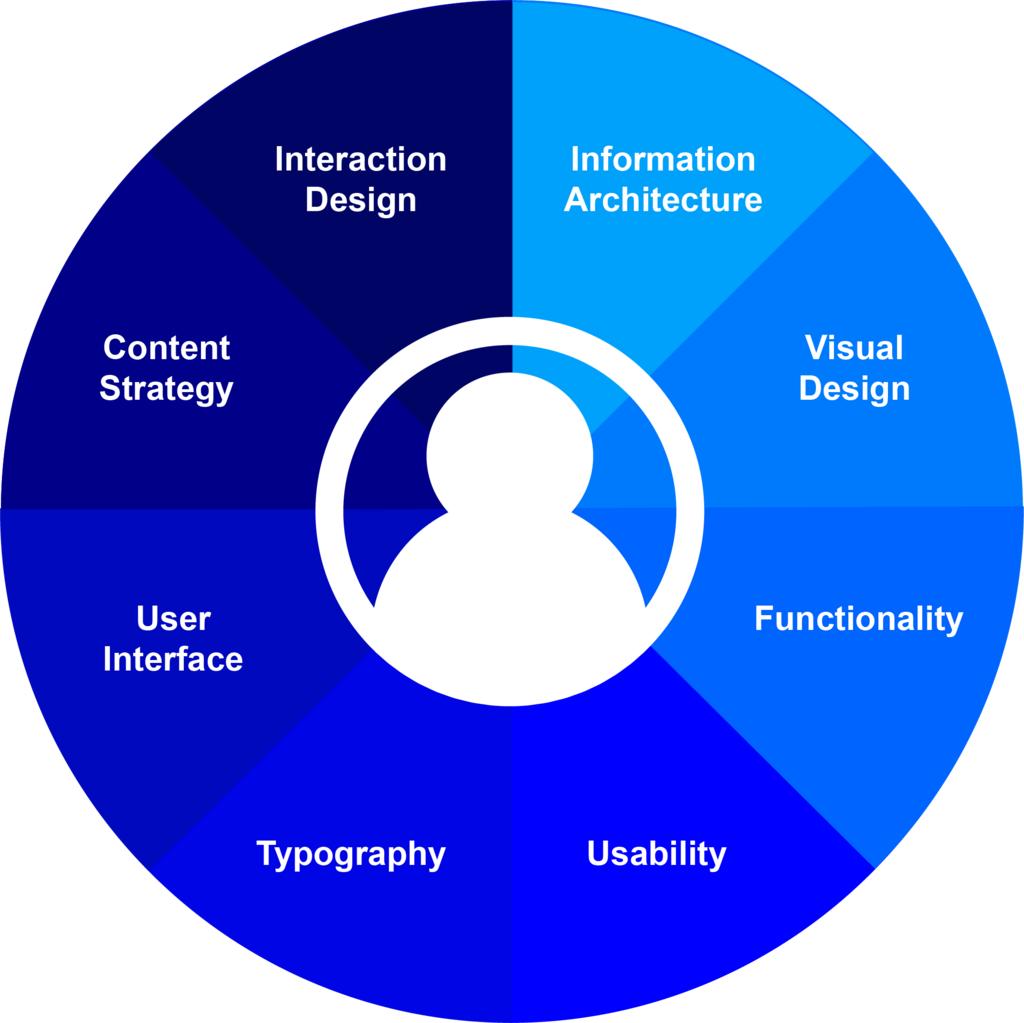
Throughout this course, we'll apply these concepts to a practical project: designing a food delivery app for the elderly. This isn't just a random example. It forces us to think about a specific user group with unique needs.
An 80-year-old using an app for the first time has different challenges than a 20-year-old. They might have poorer eyesight, less steady hands, or be less familiar with digital interfaces. Good UX for them means solving these specific problems.
Thinking Like a Designer
To solve user problems, designers use a few core principles. Two of the most basic are affordance and signifiers. They sound technical, but they're ideas you see every day.
Affordance refers to the properties of an object that suggest how it can be used. A simple door handle affords pulling. You see its shape and instinctively know what to do. You don't need instructions. In our app, a button needs to afford tapping. It should look like something you can press.
Affordance
noun
A quality or property of an object that defines its possible uses or makes clear how it can or should be used.
But what if an affordance isn't clear? A flat panel on a door might afford pushing, but you could also be unsure. That's where a signifier comes in. A signifier is a clue that clarifies an affordance. A small sign on the door that says "Push" is a signifier. It removes ambiguity.
In our food app, an icon of a shopping cart is a signifier. It signals where you can see the items you've chosen. An arrow pointing to the right signifies that you will proceed to the next step. These small clues make the app intuitive, especially for someone who might be hesitant or new to the technology.
It's All About the User
This focus on the user's needs, abilities, and context is called Human-Centered Design. It's the mindset behind all good UX. The goal isn't just to build a functional app; it's to build an app that solves a real problem for a real person.
Does the user feel confident or confused? Can they achieve their goal easily or do they get stuck? Answering these questions is the heart of UX design. It's about empathy. You put yourself in the user's shoes to understand their frustrations and build something that truly helps them.
Start with the user experience, then work backwards to the technology
So, for our food delivery app, we won't start with flashy features. We'll start with questions about our users. What are their biggest challenges with ordering food? What would make them feel secure entering payment information? The answers to these questions will guide every design decision we make.