Mastering Unstructured Data
Introduction to Unstructured Data
Beyond the Spreadsheet
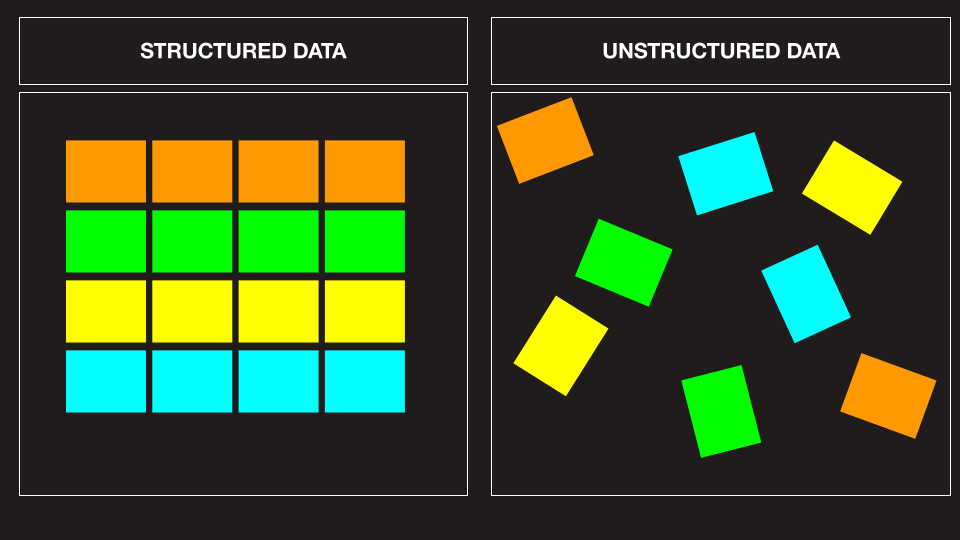
Most of the data we think about is neat and tidy. It fits perfectly into the rows and columns of a spreadsheet or a database. This is called structured data. Think of a list of customer names, addresses, and phone numbers. Each piece of information has a specific place and a clear label.
Structured data is like a well-organized filing cabinet. You know exactly which drawer to open and which folder to look in.
But what about everything else? What about the text from an email, a photo from your phone, or the audio from a customer service call? This is unstructured data. It's information that doesn't have a predefined model or organization. It's messy, varied, and incredibly common.
unstructured data
noun
Information that does not adhere to a predefined data model and therefore isn't a good fit for a mainstream relational database.
Unstructured data is essentially everything that doesn't fit into a neat box. It includes things like:
- Text: Emails, text messages, social media posts, articles, and reports.
- Images: Photographs, illustrations, and medical scans like X-rays.
- Audio: Phone calls, podcasts, and voice memos.
- Video: Films, security footage, and video conference recordings.
Why It Matters
It might be messy, but unstructured data is also incredibly valuable. Estimates suggest that it makes up over 80% of all data generated. Hidden within this chaos is a wealth of information that can help organizations make better decisions.
In healthcare, doctors' handwritten notes and MRI scans can provide critical context for a patient's diagnosis. In retail, analyzing customer reviews from websites can reveal how people really feel about a product. A law firm can search through thousands of legal documents to find precedents for a case. All of these are examples of pulling valuable insights from unstructured data.
Unstructured data refers to information that does not have a predefined data model or is not organized in a pre-defined manner.
Ignoring this type of data means missing out on a huge part of the picture. Learning to work with it is a key skill in almost every modern industry.
The Challenges
So if this data is so valuable, why isn't everyone using it? The short answer is that it's difficult. Processing unstructured data comes with a few key challenges.
First, its sheer variety is a hurdle. The tools you use to analyze a text document are completely different from the ones you'd use to analyze a video file. There's no one-size-fits-all solution.
Second, human language is complex and full of nuance. A computer program has to be taught to understand context, sarcasm, and cultural references. A product review that says "This is sick!" could be positive or negative, depending on the slang.
Finally, because it lacks a predefined structure, you first have to impose some kind of order on it before you can even begin to analyze it. This often requires specialized techniques and algorithms.
Now, let's check your understanding of these core concepts.
Which of the following best describes structured data?
According to the text, what is a primary reason that analyzing unstructured data is difficult?
While it presents challenges, learning to harness the power of unstructured data opens up a new world of insight and opportunity.