Mastering UI/UX Design Strategy and Advanced Interfaces
Advanced User Research Synthesis
From Data to Decisions
You already know how to gather user feedback. You’ve run interviews, collected survey data, and watched screen recordings. But the real challenge isn’t collecting data—it’s turning a mountain of transcripts, analytics, and observations into a clear product strategy.
Advanced synthesis is the bridge between raw research and smart decisions. It’s about moving past what users say to understand what they truly need. We’re not just looking for quotes; we’re looking for the hidden patterns that drive behavior.
Triangulate Your Data
The most reliable insights come from multiple sources. Relying only on interviews can be misleading because what people say they do is often different from what they actually do. This is where triangulation comes in. It’s the practice of cross-referencing different data types to validate your findings.
Think of it like a detective solving a case. An eyewitness testimony (qualitative interview) is powerful, but it becomes much stronger when supported by forensic evidence (quantitative analytics). By combining what users say with what they do, you create a much clearer and more accurate picture of their experience.
Thematic analysis becomes more powerful here. Instead of just grouping interview quotes by topic, look for patterns that span both datasets. For example, if users say a feature is "confusing" in interviews, check your analytics. Do you see high drop-off rates on that screen? Or repeated, circular click paths? When the stories and the numbers align, you’ve found a high-impact opportunity.
Build Predictive Personas
Traditional personas are useful for building empathy, but they can be static and subjective. To make more reliable design decisions, we need personas that are not just descriptive but predictive. Enter the Vector Persona.
A Vector Persona enriches a qualitative foundation with layers of quantitative, behavioral data. It turns a flat character sketch into a dynamic model that helps predict how different user segments will respond to changes.
Here’s how to build one:
- Start with the Story: Begin with the qualitative insights you've gathered—their goals, motivations, and pain points.
- Add Behavioral Data: Layer in quantitative metrics that represent their actual behavior. This could be feature adoption rates, average session length, purchase frequency, or support ticket volume.
- Identify Key Vectors: These vectors are the core attributes that differentiate user segments. For an e-commerce app, vectors might be Price Sensitivity, Brand Loyalty, and Feature Discovery. Each user segment will have a different score or position along these vectors.
| Persona | Core Goal (Qualitative) | Key Vectors (Quantitative) |
|---|---|---|
| The Planner | "I need to organize my family's finances efficiently." | High adoption of budgeting features. Low engagement with speculative tools. Logs in weekly. |
| The Optimizer | "I want to maximize my investment returns with minimal risk." | High engagement with analytics dashboards. Frequent A/B testing of portfolio allocations. Logs in daily. |
| The Newcomer | "I'm just starting out and feel overwhelmed by financial jargon." | High use of help documentation and tutorials. Short session lengths. High drop-off in complex workflows. |
This approach gives you a much sharper tool for decision-making. When considering a new feature, you can ask: "How would this impact The Optimizer's key metrics?" It grounds design choices in measurable business impact.
Pressure-Test with Synthetic Users
Once you have data-rich Vector Personas, you can take another step into the future of UX research: Synthetic Users.
Synthetic Users are AI agents that simulate user behavior based on the rules and data defined in your Vector Personas. Think of them as crash test dummies for your user flows. Before you even build a high-fidelity prototype, you can unleash these AI agents into a simple wireframe or flow diagram to see where they struggle.
A Synthetic User modeled after "The Newcomer" might repeatedly fail to complete a complex sign-up process, highlighting usability issues long before a real user ever sees the interface.
This isn't about replacing real user testing. It's about augmenting it. By using simulations to catch obvious friction points early, you can reserve valuable time with real users for validating deeper, more nuanced aspects of the design. This accelerates the iteration cycle and helps ensure the solutions you test with humans are already on the right track.
As UX designers, approaching AI with human-centered frameworks means balancing new technical capabilities with responsibility, questioning the readiness and suitability of AI for each use case, and building systems with user feedback loops that drive continuous improvement.
From Insights to Roadmap
Your final task is to translate your synthesized insights into a compelling, strategic report for stakeholders. A common mistake is simply presenting a list of findings. Stakeholders don't just want to know what you learned; they want to know what to do next.
Structure your report as a strategic narrative:
- Start with the Opportunity: Frame your key insight not as a problem, but as an opportunity. For example, instead of "Users are confused by the checkout process," try "Simplifying our checkout could increase conversion by 15% and reduce support tickets."
- Show the Evidence: Briefly present the triangulated data that supports this opportunity. Show a compelling quote alongside a chart of the corresponding analytics.
- Propose a Solution: Clearly state your recommendation. What should be built or changed? Connect your proposal directly to the evidence.
- Map it to the Roadmap: Suggest where this initiative should fall on the product roadmap. Prioritize it based on user impact and business goals. This shows you're thinking not just as a researcher, but as a strategic partner.
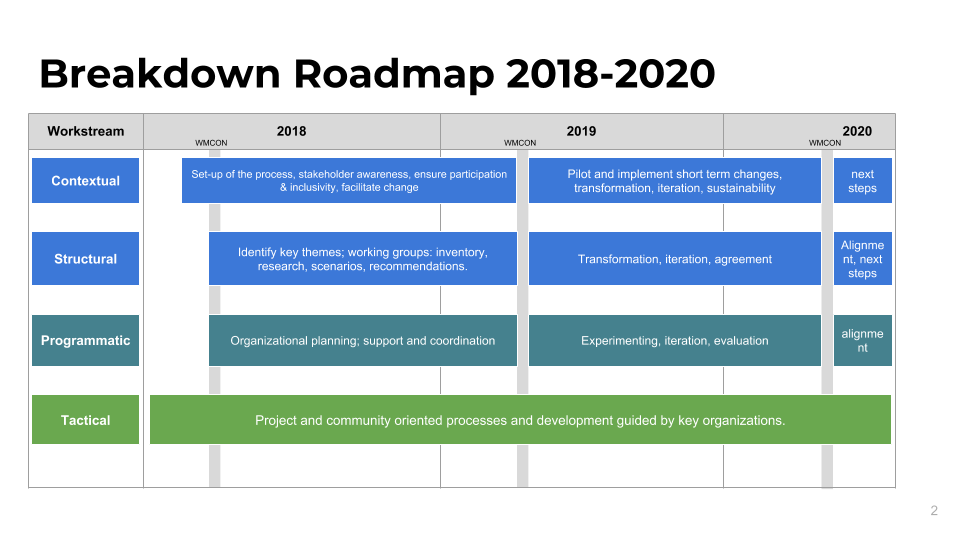
By connecting deep user understanding directly to business strategy, you elevate the role of research from a fact-finding exercise to a core driver of product success.
What is the primary purpose of triangulation in user research?
How does a Vector Persona primarily differ from a traditional persona?
These advanced techniques provide a framework for turning complex, fragmented data into clear, defensible product strategy. They help ensure that what you build is not just beautiful, but also impactful.