Mastering Tycando Techniques
Kinetic Energy Transfer
Power from the Ground Up
A powerful strike doesn't start in the fist or the shoulder. It starts in the feet. Every punch, kick, and block you throw is the final expression of a chain reaction that begins with your connection to the floor. This is the core principle of Tycando's power generation: we don't just use our limbs, we use the entire planet as a backboard.
The force you exert on the ground is met with an equal and opposite reaction. This is called ground reaction force, and it's the raw energy we channel into a strike. Pushing off the ground initiates a wave of energy that travels up through your body. Think of it like cracking a whip. The power isn't generated at the tip; it's transferred from the handle in a fluid, accelerating wave. Your body is that whip, and your feet are the handle.
The goal isn't to push with your arm, but to transmit force through it. Your limbs are the delivery system, not the engine.
This sequence of energy transfer is called kinetic linking. Each segment of the body adds to and directs the energy from the previous one. The legs drive, the hips rotate, the torso whips around, and finally, the arm unleashes the accumulated force. A breakdown anywhere in this chain bleeds power. A stiff hip or a slow core rotation means the energy fizzles out before it ever reaches the target.
The Engine of Rotation
Linear force from the ground is useful, but the real power amplifier in Tycando is rotation. By twisting your hips and core, you generate rotational torque, converting the upward drive from your legs into devastating rotational power. This is where a key trade-off emerges. A strike driven primarily by hip rotation is immensely powerful. It engages the large, strong muscles of your core and legs, putting your entire body mass behind the blow. The downside is that it takes slightly longer to execute.
Alternatively, a strike can be initiated more from the shoulder. This is faster and more direct, but it sacrifices the massive power amplification from the hips. It's a jab versus a knockout punch. Tycando practitioners learn to blend these two, adjusting the amount of hip involvement based on the situation—speed when you need it, power when you can afford the split-second to generate it.
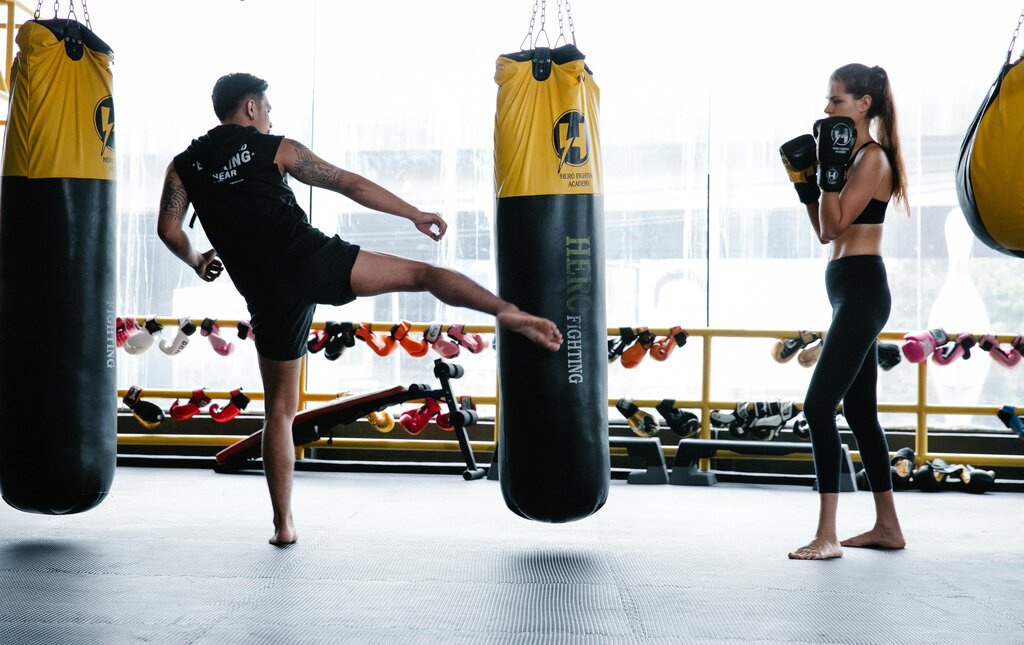
Mastering this isn't just about raw strength; it's about timing and sequence. The muscles must fire in the correct order, from proximal to distal—from the center of your body outwards. This is the essence of efficient movement. An uncoordinated movement is like a car with spinning tires; there's a lot of motion, but no energy is being effectively transferred to the road.
Managing Your Center
All this force generation is useless without a stable platform. Your is the anchor point for all movement. During a strike, you are intentionally shifting your weight and rotating your body at high speed. Without constant management of your center of gravity, you'll either lose balance or leak massive amounts of power.
Think of firing a cannon from a solid stone fortress versus firing it from a canoe. The fortress provides a stable base, allowing all the cannon's explosive force to propel the projectile forward. In the canoe, much of that force is wasted rocking the boat, and the cannonball loses significant power. Your body is the same. A stable base, achieved by keeping your center of gravity controlled and connected to your base of support, ensures that the maximum amount of energy is transferred into your strike, not wasted on correcting your own instability.
Regardless of the type of strike the power for that strike begins in your feet, is developed in your legs, directed by your waist, and delivered by your hands.
The final piece is the efficiency of mass in motion. Power is not just about speed; it's about how much of your body's mass is effectively contributing to the impact. A light, flicking motion might be fast, but it carries little mass. A well-executed Tycando strike feels effortless because it uses timing and mechanics, not brute muscular force, to move the body as a single, unified weight. Every part moves in concert, ensuring your full body mass is behind the point of impact.
Let's review these core principles of power generation.
According to Tycando principles, where does the power for a strike originate?
What term describes the sequence of energy transfer from the ground, through the legs, hips, torso, and finally to the limb delivering the strike?
Understanding these mechanics transforms your training. You stop just throwing punches and start channeling energy, turning every movement into an efficient and powerful expression of force.