Mastering Translation Tools for Language Learning
Evaluate Translation Platforms
Beyond One-Size-Fits-All Translation
Not all translation tools are created equal. While it's tempting to pick one and stick with it, the best tool for the job depends entirely on your goal. Are you trying to understand the gist of a news article, or are you crafting a formal email in a new language? The answer dictates your choice.
Modern platforms have moved far beyond the clunky, word-for-word translations of the past. The technology powering today's best tools is called Neural Machine Translation, or NMT. Instead of translating phrase by phrase, NMT models analyse entire sentences to grasp context, leading to much more natural and accurate results.
Neural Machine Translation
noun
An approach to machine translation that uses a large artificial neural network to predict the likelihood of a sequence of words. It models the entire sentence as a single integrated model, resulting in more fluid and contextually aware translations than older statistical methods.
The Right Tool for the Task
Let's compare three of the most popular platforms: DeepL, Google Translate, and Reverso Context. Each has distinct strengths tailored to different learning needs.
DeepL: The Nuance Specialist
Think of DeepL as the specialist for formal and professional language, especially within European languages. Its NMT model excels at producing natural-sounding prose that captures subtle nuances. For language learners, two features are particularly useful:
- Formality Toggle: You can switch between formal and informal tones ('you' as Sie vs. du in German, for instance). This is invaluable for learning politeness conventions.
- Glossary: This allows you to define how specific terms should always be translated, ensuring consistency in technical or personal documents.
DeepL is your best bet when you need a polished, high-quality translation for an important email or for analysing professional writing styles.
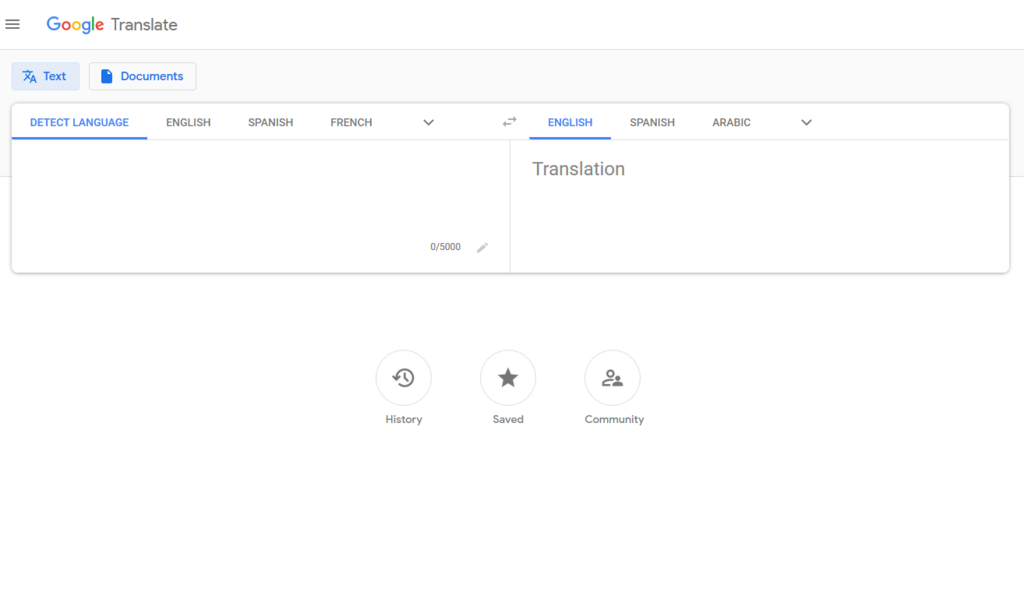
Google Translate: The Versatile Explorer
Google's strength is its incredible breadth. It supports a massive number of languages, including many low-resource languages and regional dialects that other services miss. While its translations can sometimes be less nuanced than DeepL's, its versatility is unmatched for immersive, on-the-go learning.
Key features for learners include:
- Camera Translation: Point your phone's camera at a sign or menu for an instant translation.
- Voice Translation: Have a real-time conversation with someone speaking another language.
- Handwriting Input: Draw characters that you don't know how to type.
Use Google Translate when you need a quick translation in the real world or when working with a language that has less digital presence. It's built for breadth and practicality.
Reverso Context: The Context Detective
Reverso Context operates on a different principle. Instead of just providing a single translation, it scours a vast database of existing bilingual texts (like film subtitles and official documents) to show you how a word or phrase is used in real-world examples.
This is incredibly powerful for linguistic analysis. You can see a word's different meanings, common collocations, and idiomatic uses. It helps you answer the question, "How would a native speaker actually say this?"
Turn to Reverso Context when you encounter a tricky phrase or want to understand the subtle connotations of a word. It’s less about getting a quick translation and more about deepening your understanding.
Making an Informed Choice
The quality of any translation tool often depends on the amount of data it was trained on. High-resource languages like Spanish or German have billions of words of translated text available, leading to highly accurate machine translations. Low-resource languages, such as many indigenous or regional languages, have far less data, which means translations can be less reliable.
Always consider the language pair you're working with. For a French-to-English text, all three tools will likely perform well. For a less common pairing, Google Translate's massive dataset might give it an edge, even if the phrasing isn't perfect.
| Platform | Best For | Key Features | When to Use |
|---|---|---|---|
| DeepL | Nuance & Formality | Formality toggle, glossary | Professional emails, academic texts, understanding tone |
| Google Translate | Breadth & Immersion | Camera, voice, handwriting | On-the-go translation, low-resource languages, gist understanding |
| Reverso Context | Linguistic Analysis | Bilingual text examples, usage frequency | Understanding idioms, word choice, and real-world phrasing |
The key is to think like a linguist. Use these platforms as aids, not crutches. For a quick gist, Google is fine. For drafting an important message, DeepL is better. To understand why a certain word was chosen over another, Reverso Context is your best resource. By switching between them based on your needs, you can accelerate your language acquisition.
You need to write a formal email to a potential client in German. According to the text, which translation tool would be your best choice for a polished, high-quality result?
What is the name of the technology that allows modern translation platforms to analyse entire sentences for context, leading to more natural results?