Mastering Traditional Chinese Script
Character Evolution and Radicals
The Logic Behind the Scripts
When the Chinese government began simplifying characters in the 1950s, the goal was to boost literacy. The changes weren't random; they followed specific patterns, often by altering or merging the fundamental components of characters, known as radicals, or 部首 (bùshǒu). Understanding these changes is the key to bridging the gap between Simplified and Traditional scripts.
The foundation for traditional characters is the Kangxi radical system , a comprehensive list of 214 radicals compiled in the 18th century. This system organizes nearly every character by a primary component that often hints at its meaning. The simplification process modified many of these radicals, sometimes combining several traditional radicals into a single simplified one.
Radicals are the building blocks of Chinese characters, providing clues to their meaning and pronunciation.
Semantic Clues
Traditional characters, or 繁體字 (Fán Tǐ Zì), often preserve clearer semantic clues within their radicals. When these components were simplified, some of this built-in logic was lost. For example, the traditional character for love, 愛 (ài), contains the radical for heart, 心 (xīn), right in the middle. The simplified version, 爱, removes the heart, replacing it with a component for friend, 友 (yǒu).
This pattern of modification is common. A learner familiar with Simplified Chinese can learn to spot these transformations, essentially learning a set of rules rather than memorizing thousands of new characters from scratch. It’s like learning a cipher.
| Traditional Radical | Pinyin | Meaning | Simplified Radical |
|---|---|---|---|
| 言 | yán | Speech | 讠 |
| 絲 | sī | Silk | 纟 |
| 馬 | mǎ | Horse | 马 |
| 門 | mén | Gate | 门 |
| 食 | shí | Food / To Eat | 饣 |
Consider the 'speech' radical, 言. In traditional script, characters related to speaking, like 說 (shuō, to speak) and 語 (yǔ, language), clearly feature this seven-stroke component. In simplified script, it's reduced to a two-stroke symbol (讠), as seen in 说 and 语. Once you recognize this single change, you can instantly decode dozens of related traditional characters.
Decoding Character Construction
Most complex Chinese characters, both traditional and simplified, are not arbitrary pictures. They are logical constructions, typically combining a semantic radical with a phonetic component . The radical gives a clue about the meaning category, while the phonetic part hints at the pronunciation.
For example, the character 媽 (mā), meaning 'mother,' combines the semantic radical for 'woman' (女 nǚ) with the phonetic component 'horse' (馬 mǎ). The pronunciation isn't identical, but it's close enough to serve as a mnemonic guide. This structural logic is a powerful tool for learners. By breaking a character down into its parts, you can often deduce its general meaning and a hint of its sound, transforming an intimidating symbol into a solvable puzzle.
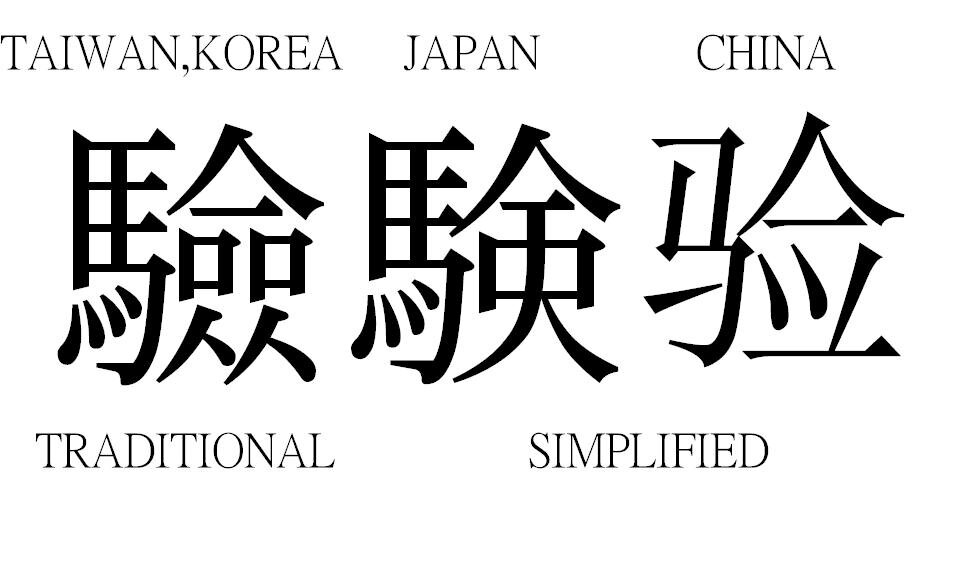
For learners who started with Mandarin, this structural approach is far more efficient than rote memorization . Instead of treating each traditional character as a new, isolated fact, you can leverage your existing knowledge. You learn to see patterns of simplification and reversal. The character for 'gate' (門) becomes '门,' and the character for 'horse' (馬) becomes '马.'
Recognizing these systematic shifts allows you to read and understand traditional texts with much less effort. It's not about learning a new language, but rather a new orthography for a language you already know.
Ready to test your knowledge on these character components?
What was the primary goal of the Chinese government's character simplification process that began in the 1950s?
The traditional system of 214 radicals, which forms the basis for organizing most characters, is known as the ______.
By understanding the logic of radicals and their transformation, you've gained a powerful key to unlock the world of traditional Chinese characters.