Mastering Trading Strategies
Introduction to Financial Markets
The Global Marketplace
Think of a bustling farmers market. You have sellers with fresh produce and buyers looking for ingredients. A financial market is similar, but instead of apples and bread, people buy and sell financial instruments like stocks and bonds. It's a vast network where buyers and sellers trade assets, determining prices through supply and demand.
These markets are essential to the economy. They allow companies and governments to raise money for new projects, and they give individuals and institutions a place to invest their savings, hopefully growing their wealth over time.
Market Structure
Financial markets are typically split into two main categories: the primary market and the secondary market.
The primary market is where new securities are born. When a company wants to raise money, it can sell new stocks or bonds directly to investors. The most famous example is an Initial Public Offering (IPO), where a private company first offers its shares to the public.
Once those securities have been sold in the primary market, they can be traded among investors in the secondary market. This is what most people think of as the "stock market." It's where you'd buy shares of a company like Apple or sell bonds you previously purchased. The company itself isn't directly involved in these day-to-day trades; it's a transaction between two investors.
Key Participants
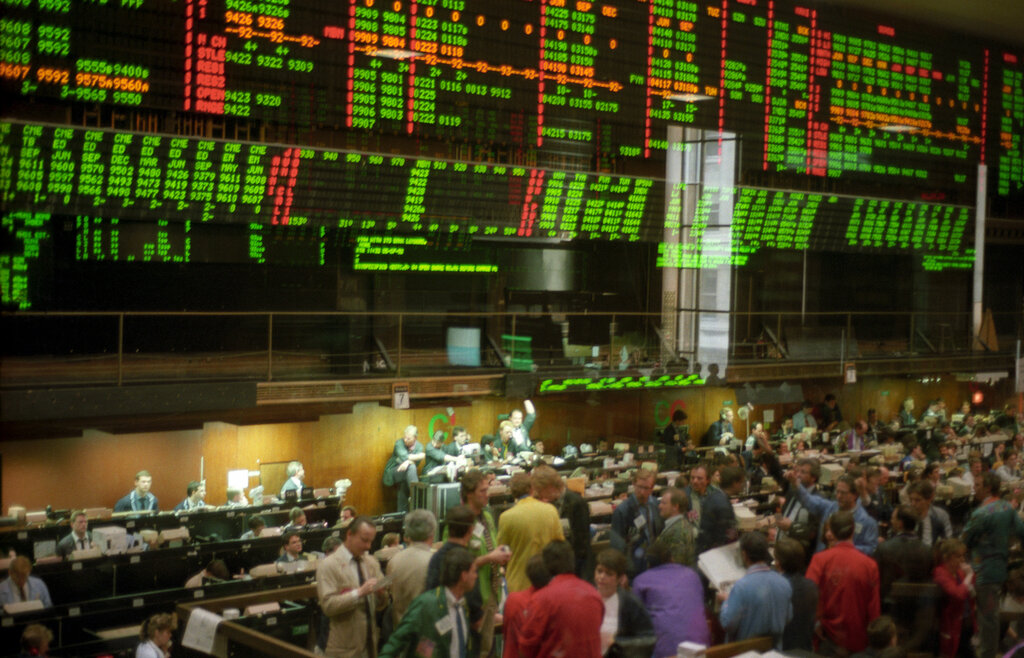
Several key players keep the market running smoothly. You have investors, of course, who are the buyers and sellers. But there are also important intermediaries.
Broker
noun
A person or firm that arranges transactions between a buyer and a seller for a commission when the deal is executed.
Most individual investors can't just walk onto a trading floor. They need a broker to execute trades on their behalf.
Stock exchanges, like the New York Stock Exchange (NYSE) or NASDAQ, are the organized marketplaces where these trades happen. Think of them as the official venue for the market.
Then there are market makers. These are firms that stand ready to buy or sell a particular security at any time. They provide liquidity, ensuring that there's always someone to trade with, which keeps the market flowing efficiently.
What's Being Traded
A huge variety of assets are traded on financial markets. They are often grouped into categories called asset classes. Here are the three main ones you should know.
Equity
noun
The value of the shares issued by a company; a stock.
Bonds are essentially loans. When you buy a bond, you're lending money to a government or a corporation. In return, they promise to pay you interest over a set period and return your original investment, the principal, at the end. They are generally considered less risky than stocks.
Derivatives are more complex. These are contracts whose value is derived from an underlying asset, like a stock or a commodity. Options and futures are common types of derivatives. They are often used for hedging risk or for speculation.
Now that you understand the basic landscape of financial markets, let's test your knowledge.