Mastering Time Management
Understanding Time Management
What Is Time Management?
Time management is the process of planning and controlling how to divide your time between specific activities. It’s not about squeezing more tasks into your day, but about being more intentional with the time you have. Good time management enables you to work smarter, not harder, so that you get more done in less time, even when time is tight and pressures are high.
Time management
noun
The practice of using your time wisely to be more productive.
Think of your time like a budget. Just as you allocate money to different expenses, you can allocate your time to various tasks. Without a plan, it's easy to overspend your energy on unimportant things, leaving you with a deficit when it's time for what truly matters. By actively managing your time, you take control of your day instead of letting it control you.
The Payoff
When you manage your time well, the benefits extend far beyond an empty inbox. The most immediate reward is a significant reduction in stress. A clear plan for your day eliminates the frantic feeling of not knowing what to do next. It provides a sense of control and calm, even when your to-do list is long.
Productivity naturally increases. By focusing on your most important tasks, you make real progress toward your goals. This creates a positive feedback loop: accomplishing meaningful work boosts your motivation, which in turn helps you stay focused and manage your time even better.
Perhaps most importantly, effective time management carves out space for a healthier work-life balance. It ensures that your responsibilities don't bleed into your personal time, giving you the freedom to rest, pursue hobbies, and spend quality time with loved ones.
Good time management isn’t about doing more; it’s about doing what matters efficiently and without unnecessary stress.
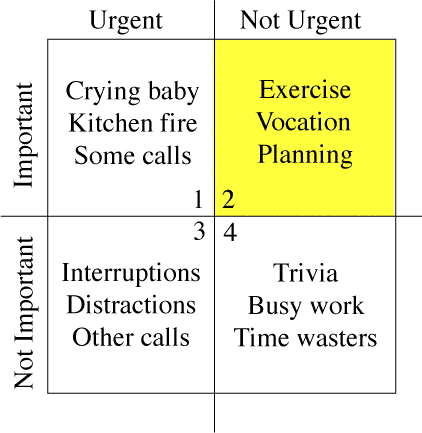
A simple way to visualize this is the Eisenhower Matrix, which divides tasks into four quadrants based on urgency and importance. The goal is to spend more time on important, non-urgent tasks—the ones that contribute to long-term goals and personal growth.
Common Roadblocks
Understanding time management is one thing; practicing it is another. Several common challenges can get in the way.
Procrastination is a major hurdle. It's the act of delaying or postponing a task, often by focusing on less important, more enjoyable activities. This can lead to a last-minute rush, increasing stress and lowering the quality of your work.
Distractions are another significant barrier, especially in our hyper-connected world. Constant notifications from emails, social media, and messaging apps can fragment your attention, making it difficult to achieve the deep focus required for complex tasks.

Finally, simply feeling overwhelmed can derail your efforts. When a to-do list seems endless, it's easy to feel paralyzed and not know where to start. This can lead to a cycle of inaction and anxiety. Recognizing these challenges is the first step toward overcoming them.
Now, let's test your understanding of these core concepts.
What is the primary goal of time management?
Effective time management directly contributes to a reduction in stress.
By understanding what time management is, why it's beneficial, and what obstacles you might face, you're building a solid foundation for improving how you use your time.