Mastering the Warburton Voice
Nasal Resonance Placement
Finding the Nasal Buzz
The foundation of Patrick Warburton's iconic voice isn't just its depth; it's the unique, buzzing resonance that seems to live in the front of his face. This is called high nasal placement. It's not about sounding whiny or congested. Instead, you're aiming to direct the sound waves up into your nasal cavity before they exit your mouth, creating a rich, forward-placed hum.
To do this, you need to control your soft palate—the fleshy part at the back of the roof of your mouth. Think about the very beginning of a yawn. Feel that slight lift and opening at the back of your throat? That's your soft palate raising. By consciously lowering it, you can open the gateway for sound to travel up into the nasal passages.
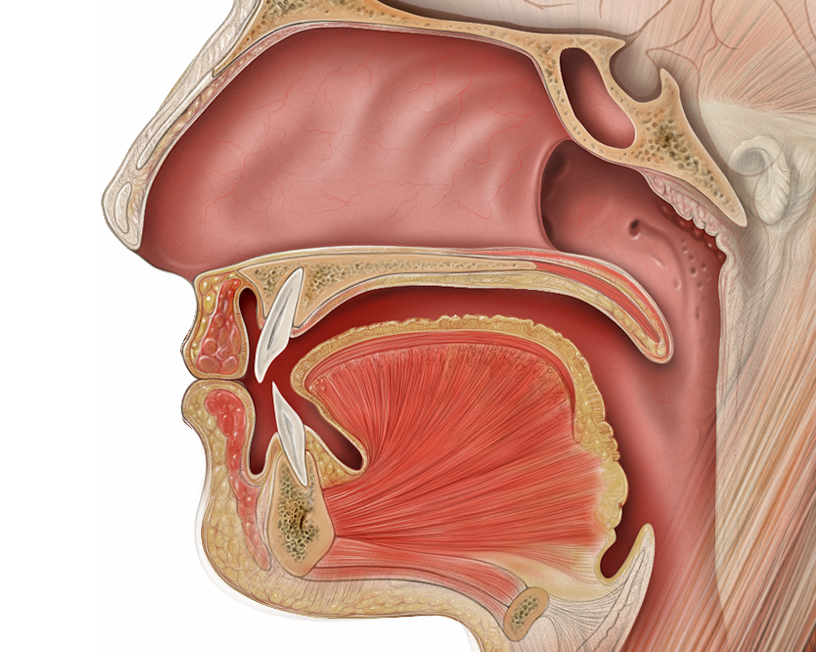
When you direct the sound correctly, you'll feel a distinct vibration in the front of your face. Vocal coaches call this area the "mask". It encompasses your nose, upper lip, and cheekbones. The goal is to make this whole area buzz with sound. This forward resonance is what gives the voice its carrying power and that signature Warburton hum without straining your vocal cords.
Let's try a simple exercise. Close your mouth and hum a comfortable, low note. Place your fingertips lightly on the bridge of your nose and on your upper lip. Can you feel a vibration? Now, try to intensify that buzz without getting louder. Play with lowering your soft palate slightly, as if you were about to make an "ng" sound, to push more resonance into the mask.
Focus on the feeling, not the force. The buzz should feel effortless, like a gentle tickle in your nose and upper teeth.
Anchoring the Larynx
Here's the crucial counterbalance: while the resonance is high and forward, your larynx—or voice box—must remain low and relaxed. This is the secret to the "nasal-bass" blend. If your larynx rises, the sound will become thin and pinched, losing all of its power. You want the deep, grounded tone from your chest to travel up and resonate in the nasal mask.
Maintaining a low laryngeal position creates the physical space needed for a deep, full sound. It's the same principle opera singers use to project over an orchestra. Think of your throat as an open, relaxed column. As you send sound into the mask, consciously keep your Adam's apple in a neutral or slightly lowered position. Avoid any tension in your neck or jaw, as this will cause the larynx to rise instinctively.
Now, let's combine these two elements. Start by sighing out a gentle "ah" on a low pitch, feeling your larynx relax downward. From there, transition into a hum ("mmmm") on that same low note. Without letting your larynx pop up, guide the buzzing sensation from your chest up to the front of your face. The goal is to feel a dual vibration: a deep, subtle rumble in your chest and a prominent, ticklish buzz in your mask. This balance is the core of the sound.
What is the primary goal of "high nasal placement" when aiming for a Patrick Warburton-style voice?
To achieve the deep, 'nasal-bass' blend, what must your larynx (voice box) do while you send resonance into your facial mask?