Mastering the Val/Val COMT Genotype for Peak Health
Fast COMT Biochemistry
The Speed of COMT
The gene for Catechol-O-methyltransferase, or COMT, contains a well-studied single nucleotide polymorphism (SNP) called Val158Met. This variation determines how efficiently your body breaks down a class of neurotransmitters known as catecholamines. Individuals with the Val/Val genotype, also referred to as the GG variant, have what's known as 'Fast COMT.' This means their version of the COMT enzyme is highly active.
Catecholamine
noun
A class of neurotransmitters derived from the amino acid tyrosine. The three main catecholamines are dopamine, norepinephrine (noradrenaline), and epinephrine (adrenaline). They play critical roles in mood, attention, stress response, and motivation.
Why So Fast?
The difference in speed comes down to a single amino acid change at position 158 of the enzyme. The 'Fast COMT' variant has the amino acid valine (Val) at this spot. The presence of valine results in a more stable enzyme structure that can be produced in greater quantities and operates more efficiently at normal body temperature. In contrast, the 'Slow COMT' variant has methionine (Met), which makes the enzyme less heat-stable and thus less active.
This structural advantage means the Val/Val genotype results in an enzyme that clears catecholamines up to 40% more quickly than the Met/Met version. This rapid degradation has the most significant impact in a part of the brain called the prefrontal cortex.
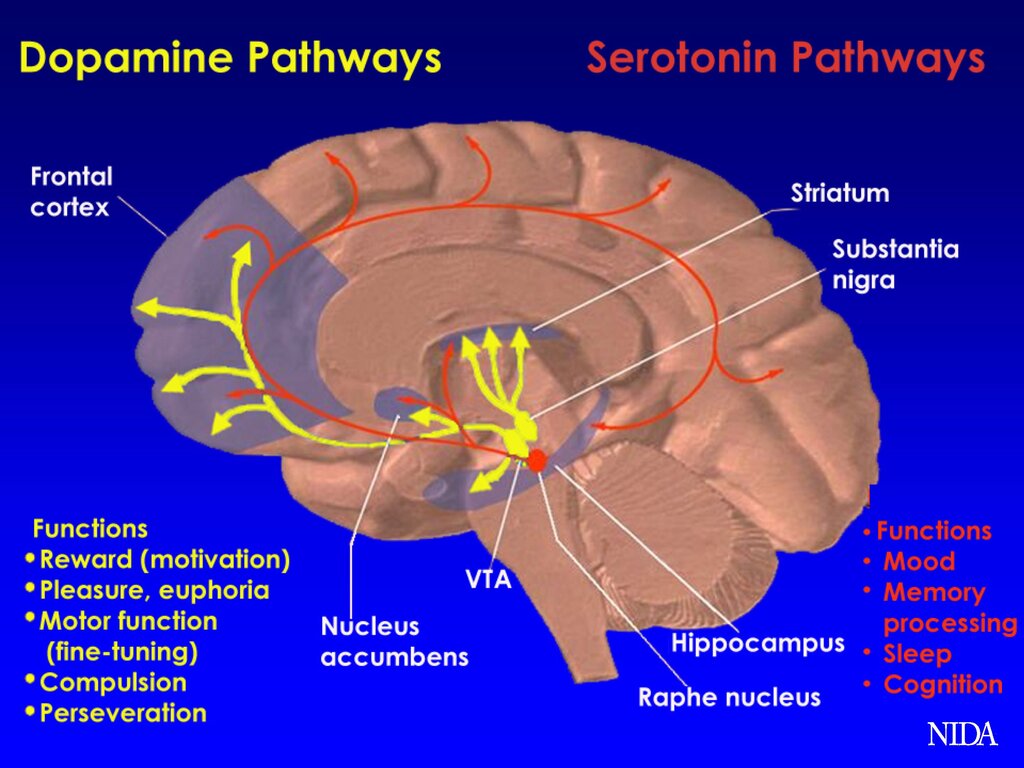
The prefrontal cortex (PFC) is the hub of executive functions like planning, decision-making, and working memory. Unlike other brain regions, the PFC has very few dopamine transporters (DATs), which are typically responsible for pulling dopamine out of the synapse after it's been released. Without many DATs, the brain relies almost entirely on the COMT enzyme to break down dopamine and end its signal.
For someone with Fast COMT, this means dopamine doesn't stick around for long in the PFC. The highly efficient enzyme quickly degrades it, leading to lower baseline levels of this critical neurotransmitter.
The Inverted-U Model
The relationship between dopamine in the PFC and cognitive performance isn't linear. It follows a principle known as the 'Inverted-U' model. This model suggests that both too little and too much dopamine can impair executive function. Optimal performance is achieved at a moderate, 'Goldilocks' level of dopamine stimulation.
Individuals with the Fast COMT (Val/Val) genotype tend to operate on the left side of this curve. Their rapid dopamine clearance results in a lower baseline level, meaning their PFC might be under-stimulated for certain tasks requiring intense focus. This provides a biochemical basis for why they might benefit from activities or substances that increase dopamine. For them, a boost doesn't push them into an overstimulated state; instead, it moves them closer to the peak of the curve, enhancing cognitive function.
For example, polymorphisms in the COMT (catechol-O-methyltransferase) gene affect dopamine metabolism, influencing susceptibility to schizophrenia and mood disorders.
Understanding this mechanism helps explain why responses to stress, medication, and even diet can vary so much from person to person. It's not just about having more or less dopamine, but about the dynamic system that regulates its availability in key brain regions.