Mastering the UPSC Framework
UPSC Constitutional Mandate
The Constitutional Mandate
The Union Public Service Commission (UPSC) isn't just another government agency; it's a constitutional body, deriving its authority directly from the supreme law of the land. Part XIV of the Constitution, spanning Articles 315 to 323, lays out the foundation for both the UPSC and the State Public Service Commissions (SPSCs). This placement wasn't an accident. The framers of the Constitution envisioned a permanent, independent body to ensure that the civil services, the steel frame of India's administration, would be filled based on merit, not patronage.
Article 315 provides for the creation of these commissions. It states, "...there shall be a Public Service Commission for the Union and a Public Service Commission for each State." This simple line establishes the UPSC as a mandatory institution, central to the governance of the country.
| Article | Subject Matter |
|---|---|
| 315 | Public Service Commissions for the Union and for the States. |
| 316 | Appointment and term of office of members. |
| 317 | Removal and suspension of a member of a Public Service Commission. |
| 318 | Power to make regulations as to conditions of service of members and staff. |
| 319 | Prohibition on holding of offices by members of Commission on ceasing to be such members. |
| 320 | Functions of Public Service Commissions. |
| 321 | Power to extend functions of Public Service Commissions. |
| 322 | Expenses of Public Service Commissions. |
| 323 | Reports of Public Service Commissions. |
A Shield of Independence
The UPSC's credibility hinges on its autonomy from executive interference. The Constitution builds several safeguards to protect this independence, making the UPSC a true 'watchdog' of the merit system.
First, the removal of the Chairman or any other member is exceptionally difficult. Under Article 317, they can only be removed from office by order of the President on the ground of misbehaviour after the Supreme Court, on a reference being made to it by the President, has reported that the member ought to be removed. This process of impeachment-like proceedings ensures that members cannot be dismissed for politically inconvenient decisions.
Second, their financial independence is secured. Article 322 specifies that the salaries, allowances, and pensions of the members and staff of the UPSC are charged upon the . This means their expenses are not subject to the annual vote of the Parliament, shielding the Commission from financial pressures.
Finally, Article 319 places restrictions on the post-retirement employment of UPSC members. The Chairman is ineligible for further employment in the Government of India or a state. Other members are eligible for appointment as the Chairman of UPSC or a State PSC, but not for any other government employment. This prevents the possibility of members favouring the government in hopes of a future appointment.
Functions and Responsibilities
Article 320 outlines the core functions of the UPSC. Primarily, it is responsible for conducting examinations for appointments to the services of the Union. This recruitment role is its most visible function. However, its duties are broader, encompassing advice on a range of personnel management matters.
The UPSC is consulted on:
- All matters relating to methods of recruitment to civil services and for civil posts.
- The principles to be followed in making appointments, promotions, and transfers from one service to another.
- All disciplinary matters affecting a person serving under the Government of India in a civil capacity.
An important distinction to note is the advisory nature of the UPSC's role. While the government is required to consult the Commission on these matters, the advice is not binding. The government can accept or reject the advice. However, any instance of non-acceptance must be explained to the Parliament. This is done through the annual report submitted by the UPSC to the President under Article 323, which is then laid before both Houses of Parliament. This requirement for public justification acts as a strong check against arbitrary action by the executive.
The Civil Servant's Shield
While the UPSC recruits civil servants, the Constitution also provides them with certain protections against arbitrary dismissal. This is where the '' and its safeguards come into play. Article 310 states that a civil servant holds office during the pleasure of the President (or the Governor, in the case of a state). This means their service can be terminated at any time by the government.
However, this 'pleasure' is not absolute. Article 311 places two crucial restrictions on this doctrine to protect civil servants from political victimisation.
- A civil servant cannot be dismissed or removed by an authority subordinate to the one that appointed them.
- A civil servant cannot be dismissed, removed, or reduced in rank except after an inquiry in which they have been informed of the charges and given a reasonable opportunity to be heard.
These safeguards ensure due process and procedural fairness, allowing civil servants to perform their duties impartially and without fear. The UPSC is often consulted in such disciplinary matters, further strengthening this protective framework.
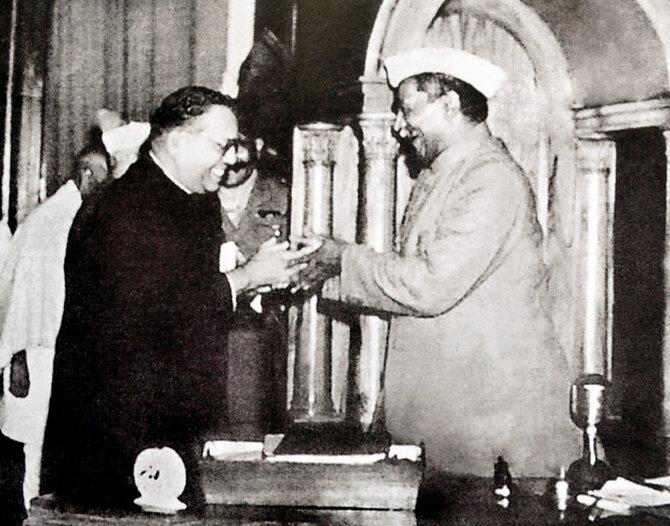
So, the UPSC is more than an examination authority. It is a constitutional mechanism designed to uphold the principles of merit, impartiality, and integrity in public administration. Its independence is the bedrock of its authority, and its functions are integral to the governance of the nation.
Time to test your understanding of the UPSC's constitutional foundation.
Under which Part of the Indian Constitution are the provisions for the Union Public Service Commission (UPSC) established?
What is the primary purpose of charging the salaries and expenses of the UPSC on the Consolidated Fund of India?
Understanding these articles is key to appreciating the role and significance of the UPSC in India's administrative framework.