Mastering the Trot Transition
Trot Preparation Biomechanics
The Quality Walk
Before you ask for a trot, you need a good walk. Not a lazy, meandering stroll, but an active, purposeful walk. Think of the difference between someone shuffling their feet versus someone walking with energy and intention. The same applies to your horse. A quality walk has rhythm and energy, which riders call impulsions. This energy doesn't come from the front legs pulling; it's generated by the hind legs pushing.
Your job is to encourage this. By engaging your core muscles and sitting tall, you signal to your horse to match your energy. Your seat and legs can gently encourage the horse to step more actively underneath its body. This creates a connection, turning a passive walk into a dynamic one where the horse is engaged, listening, and ready for your next instruction. The walk should feel like a coiled spring, full of potential energy.
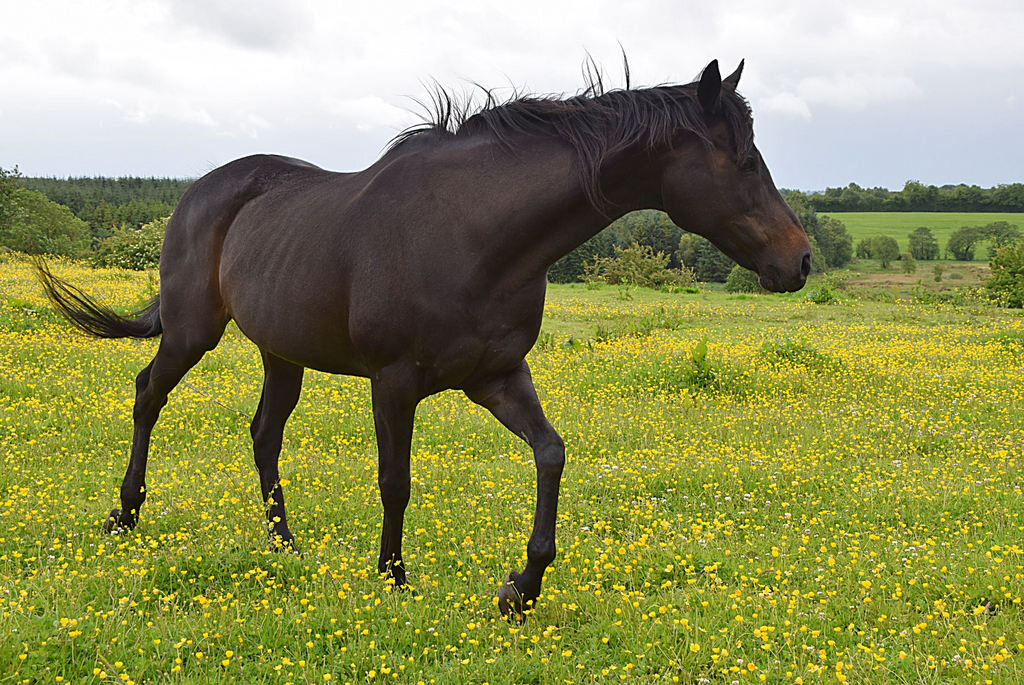
Timing Your Request
To ask for a trot smoothly, you need to time your signal, or aid, with the horse's footfalls. The walk is a four-beat gait, meaning each foot lands independently. The typical sequence is: right hind, right fore, left hind, left fore.
You'll ask for the trot just as a hind leg is stepping forward and under the horse's body. This is the moment the engine is engaged. Squeezing with your leg at this precise time tells the correct leg to push off with more energy, initiating the two-beat trot. You can feel this moment: as the horse's right hip drops slightly, the right hind leg is coming forward. That's your cue to ask with your right leg, and vice versa for the left.
The Half-Halt
Before you ask for more forward movement, you need to get the horse's attention and rebalance it. This is done with a half-halts. It’s not about pulling back; it's a brief, coordinated signal from your seat, legs, and hands that essentially says, "Listen, something is about to change."
To execute a half-halt, you simultaneously deepen your seat, close your legs on the horse's sides, and gently squeeze the reins for a moment, as if squeezing water from a sponge. Then you immediately soften. This action encourages the horse to shift its weight slightly back onto its powerful hindquarters, lightening the forehand. A horse that is balanced on its haunches can push into a transition gracefully, rather than stumbling or rushing onto its front feet.
Half-Halt Checklist:
- Sit deeper in the saddle and engage your core.
- Close your legs as if asking for forward movement.
- Briefly close your fingers on the reins.
- Immediately soften everything.
Finally, synchronize your breathing. Just before you ask for the trot, take a quiet breath in during the half-halt. As you give the aid to trot, exhale smoothly. This helps keep your body relaxed and communicates a clear, calm intention to your horse, setting you both up for a seamless transition.
Ready to test your knowledge?
What is the primary purpose of a half-halt before asking for a trot?
The energy and rhythm in a quality walk, known as 'impulsion', is generated primarily from where?
With these elements in place—an active walk, precise timing, and a balancing half-halt—you have the foundation for a beautiful upward transition.