Mastering the Transition Metals
D-Orbital Electron Patterns
An Exception to the Rule
When filling an atom's orbitals with electrons, we generally follow a predictable path, starting with the lowest energy level and working our way up. This roadmap is known as the (from the German for "building up"). For the first 18 elements, this is straightforward: 1s, 2s, 2p, 3s, and 3p. But as we enter the fourth period of the periodic table, things get interesting.
You might expect the 3d subshell to fill right after the 3p. However, the 4s orbital is actually slightly lower in energy than the 3d orbital. Because of this, electrons will occupy the 4s orbital first. So, potassium (element 19) has the configuration [Ar] 4s¹, and calcium (element 20) is [Ar] 4s². Only after the 4s is full do we begin filling the 3d orbitals, starting with scandium ([Ar] 4s² 3d¹).
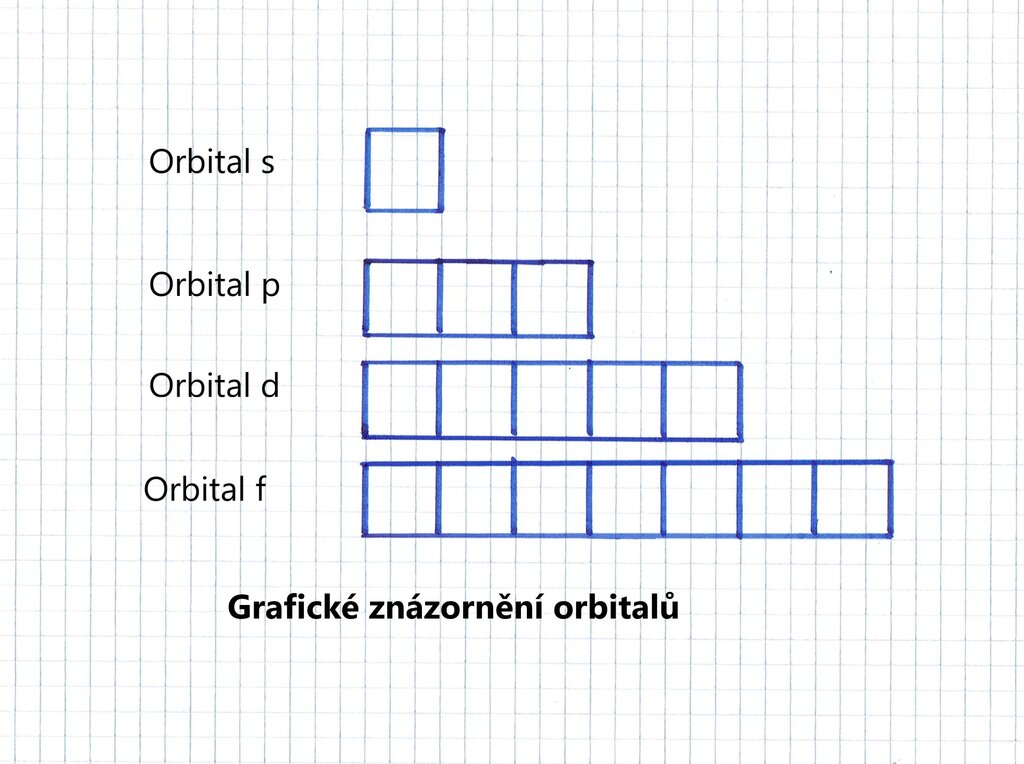
When writing the electron configuration of a d-block element we need to remember that the 4s orbital is of lower energy than the 3d orbital so it is usually filled first.
The Chromium and Copper Surprise
This filling pattern works well for the first few d-block elements. But when we get to chromium (Cr), element 24, we encounter a deviation. Based on the Aufbau principle, we'd predict its configuration to be [Ar] 4s² 3d⁴. The actual, experimentally verified configuration is different: [Ar] 4s¹ 3d⁵. One electron moves from the 4s orbital to the 3d orbital.
A similar jump happens with copper (Cu), element 29. Its predicted configuration is [Ar] 4s² 3d⁹. But its actual configuration is [Ar] 4s¹ 3d¹⁰.
| Element | Atomic # | Predicted Configuration | Actual Configuration |
|---|---|---|---|
| Chromium (Cr) | 24 | [Ar] 4s² 3d⁴ | [Ar] 4s¹ 3d⁵ |
| Copper (Cu) | 29 | [Ar] 4s² 3d⁹ | [Ar] 4s¹ 3d¹⁰ |
Why does this happen? The answer lies in stability. Atoms, like most things in nature, prefer to be in the lowest possible energy state. It turns out that half-filled (d⁵) and completely filled (d¹⁰) subshells are exceptionally stable. The energy cost of promoting a 4s electron to the 3d orbital is more than compensated for by the significant stability gained from achieving a half-filled or fully-filled d-subshell. This increased stability is due to a combination of electron symmetry and a quantum mechanical effect called an effect that lowers the overall energy of the atom.
Defining Transition Metals
This unique behavior of d-orbitals is what defines a whole class of elements. The term "d-block elements" refers to any element whose highest-energy electron occupies a d-orbital. This includes Groups 3 through 12 of the periodic table.
However, there's a more specific chemical definition for a "transition metal." A transition metal is an element that forms at least one stable ion with an incompletely filled d-subshell. This subtle distinction is important.
transition metal
noun
An element that has an incompletely filled d subshell or which can give rise to cations with an incompletely filled d subshell.
By this definition, almost all d-block elements are transition metals. The exceptions are at the very end of the block. Zinc (Zn), for example, has an electron configuration of [Ar] 3d¹⁰ 4s². When it forms its only common ion, Zn²⁺, it loses its two 4s electrons, leaving it with a configuration of [Ar] 3d¹⁰. Because both its atomic form and its common ion have a completely full d-subshell, zinc is considered a d-block element but not always a transition metal, depending on the specific definition being used. The same logic applies to cadmium and mercury.
Understanding these electron configurations is the first step. They explain many of the signature properties of transition metals, such as their ability to form colored compounds and their variable oxidation states, which we will explore next.
According to the Aufbau principle, why is the 4s orbital typically filled with electrons before the 3d orbital?
The standard Aufbau principle would predict the electron configuration for chromium (Cr, element 24) to be [Ar] 4s² 3d⁴. What is its actual, experimentally determined electron configuration?