Mastering the Thai Language
Thai Script and Sounds
The Thai Alphabet
The Thai script might look intricate at first, but it's a remarkably logical system. It’s an abugida, which means that each consonant has an inherent vowel sound. Vowels are then written as marks that can appear above, below, before, or after the consonant they modify.
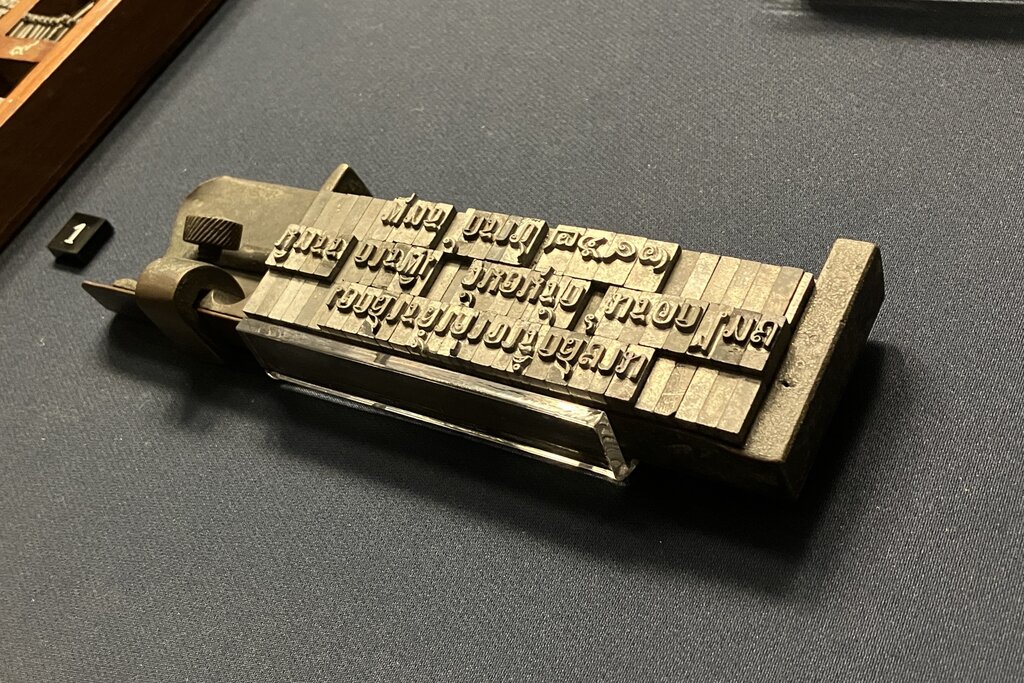
This system is almost entirely phonetic, meaning words are pronounced as they are written once you know the rules. The key is to learn the building blocks: consonants, vowels, and tones.
Consonants and Classes
Thai has 44 consonant letters. Before you get intimidated, there's a crucial detail to know.
Thai has 42 consonant characters, but here’s the good news: you don’t need to memorize 42 different sounds! Many characters share the same pronunciation, so there are only 21 distinct consonant sounds to learn.
So why are there so many letters? The consonants are grouped into three classes: low (เสียงต่ำ), mid (เสียงกลาง), and high (เสียงสูง). The class of the initial consonant in a syllable helps determine its tone. This is one of the most important rules for Thai pronunciation.
For now, let's just get familiar with a few key characters from each class.
| Class | Letter | Name | Sound |
|---|---|---|---|
| Mid | ก | gaw gai (chicken) | g (at start), k (at end) |
| Mid | จ | jaw jaan (plate) | j (at start), t (at end) |
| High | ข | khaw khai (egg) | kh |
| High | ฉ | chaw ching (cymbals) | ch |
| Low | ค | khaw khwaai (buffalo) | kh |
| Low | ง | ngaw nguu (snake) | ng |
Notice that ข and ค both make a 'kh' sound, but one is high class and the other is low. This distinction is what will later guide you to the correct tone.
Vowels and Their Forms
Thai has 32 vowel sounds, which are created using about 18 different vowel signs or combinations of signs. A key feature is that they can be short or long. This is not just a matter of pronunciation, it changes the meaning of a word entirely. For example, khao (ข้าว) with a long vowel means "rice," while khao (เขา) with a short vowel can mean "he/she/they" or "mountain."
Vowel markers are placed around a consonant. Let's take the mid-class consonant ก (gaw gai) as our base to see how this works.
| Placement | Symbol | Syllable | Sound |
|---|---|---|---|
| After | า | กา | gaa (long 'a') |
| Before | เ | เก | gay (long 'e') |
| Above | ี | กี | gee (long 'ee') |
| Below | ู | กู | goo (long 'oo') |
| Combination | เีย | เกีย | gia (complex vowel) |
The Five Tones
Now for the most defining feature of the language.
Thai is a tonal language with five distinct tones: mid, low, falling, high, and rising.
The tone of a syllable can completely alter its meaning. Think of the English sentence, "You're going home." If you say it with a flat intonation, it's a statement. If your voice rises at the end, it becomes a question. Thai takes this concept and applies it to every single syllable.
The five tones follow distinct pitch contours.
Let's see this in action with the syllable mai. Depending on the tone, it has completely different meanings. Tone is indicated in writing by a combination of the consonant class, the vowel length, the final sound, and sometimes one of four tone marks ( ´ ˆ ˜ ).
| Tone | Written Thai | Romanized | Meaning |
|---|---|---|---|
| Low | ใหม่ | mài | new |
| Falling | ไม่ | mâi | no, not |
| High | ไม้ | mái | wood, stick |
| Rising | ไหม | mǎi | silk / (question word) |
Don't worry about memorizing the tone rules right now. The first step is to simply train your ear to hear the difference. Listen to native speakers and try to mimic the sounds.
Time to check your understanding.
What is the defining characteristic of an abugida writing system, like Thai?
What is the primary function of the three consonant classes (low, mid, and high) in the Thai script?
Mastering the Thai script and its sounds is the single most important step you can take toward fluency. It unlocks pronunciation, reading, and a deeper understanding of the language's structure.