Mastering the Synergy of Yoga and Pranayama
Bio-mechanics of Breath
The Engine of Breath
When we breathe, we have a choice. We can take shallow sips of air using the muscles in our chest and shoulders, or we can engage in a deeper, more efficient process: diaphragmatic breathing. The diaphragm is a large, dome-shaped muscle at the base of the lungs. On an inhale, it contracts and flattens, creating a vacuum in the chest cavity that pulls air into the lungs. This is the body's primary, most efficient breathing mechanism.
Chest breathing, on the other hand, relies on the intercostal muscles between the ribs to lift the rib cage. It's a secondary system, often activated during stress or intense physical exertion. In asana, the goal is to consciously recruit the diaphragm. Poses that lengthen the spine, like Tadasana (Mountain Pose), create space for the diaphragm to move freely. In contrast, deep twists or forward folds can compress the abdomen, making diaphragmatic breathing more challenging and requiring greater awareness.
This conscious control of the diaphragm is more than just a physical exercise; it's a direct line to our nervous system.
The Nervous System Connection
The autonomic nervous system (ANS) governs our involuntary bodily functions, like heart rate and digestion. It has two primary branches: the sympathetic system, which prepares us for 'fight or flight', and the parasympathetic system, which promotes 'rest and digest' functions. Our breathing pattern is a powerful tool for influencing which system is dominant.
Rapid, shallow chest breathing signals threat to the brain, activating the sympathetic nervous system. In contrast, slow, deep, diaphragmatic breathing stimulates the parasympathetic nervous system, inducing a state of calm. This is largely thanks to the vagus nerve.
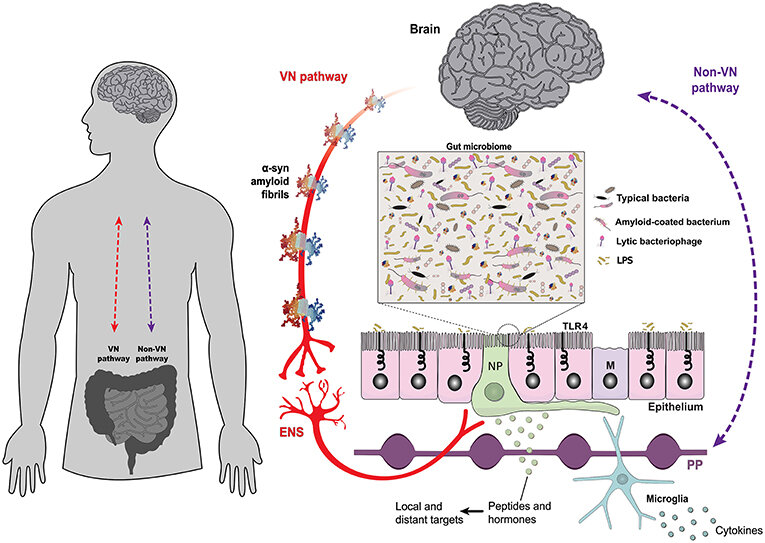
The vagus nerve is the longest cranial nerve and the main component of the parasympathetic nervous system. It wanders from the brainstem down through the neck and chest to the abdomen, connecting with nearly every major organ along the way. Crucially, it passes right through the diaphragm. As the diaphragm contracts and relaxes during deep breathing, it physically massages and stimulates the vagus nerve. This stimulation sends signals to the brain that all is well, activating the relaxation response. In this way, breath serves as a bridge between the somatic nervous system (our voluntary control over the diaphragm) and the autonomic nervous system (the involuntary response of calming down).
Stability from Within
Synchronising breath with movement is about more than just finding a rhythm; it's a bio-mechanical tool for creating spinal stability. This is achieved by managing Intra-Abdominal Pressure (IAP).
IAP is the pressure within the abdominal cavity. Think of the core as a canister. The diaphragm is the lid, the pelvic floor muscles are the base, and the deep abdominal muscles (like the transverse abdominis) form the walls. When we consciously coordinate our breath with the engagement of these muscles, we can increase or decrease the pressure inside this canister. A controlled increase in IAP creates a rigid, supportive structure that protects the spine from excessive load, much like an internal weightlifting belt. This is why teachers often cue an exhale on exertion. During a challenging part of a pose, a controlled exhale combined with core engagement firms the abdominal wall, increases IAP, and stabilises the lumbar spine.
By consciously using the diaphragm and core muscles, we turn breath into a dynamic stabiliser for the spine.
Understanding this mechanism allows us to move beyond simple 'inhale up, exhale down' cues. We can begin to use our breath with more intention, modulating pressure to support the spine in deep forward bends, maintain integrity in twists, and find lightness in balances. It transforms breathing from an automatic process into a sophisticated tool for both physiological regulation and structural support.
What is the primary muscle responsible for the body's most efficient breathing mechanism?
Deep, diaphragmatic breathing activates the parasympathetic nervous system primarily by stimulating which nerve?